Artichoke

Artichokes 101 – The Basics

Artichokes are an interesting item found in the produce section of some grocery stores. Many of us have no idea what to do with them. Yet they have been enjoyed as food since ancient times. A little know-how can go a long way when preparing these flower buds. In the video below, I cover the basics of what artichokes are, how to prepare them, cook them and enjoy them, and more. To access my video notes, please see below the video link. Enjoy!

I hope this helps!
Judi

Artichokes 101 — The Basics

About Artichokes
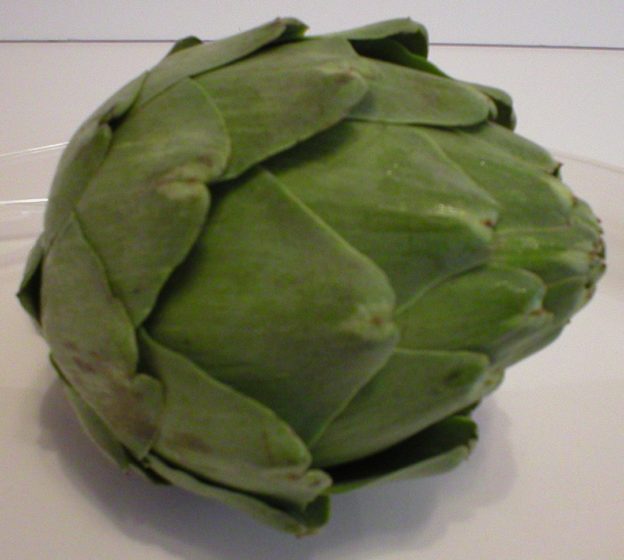
The globe artichoke (also known as French or green artichoke) is a flowering bud of a thistle plant. It is believed to be native to the Mediterranean area. We typically eat the flower buds of the plant before they come into bloom, and also the “heart” or the base of the plant. The mention of the artichoke as a garden plant goes back as far as the 8th century BC. Ancient Greeks and Romans are known to have enjoyed it as a food. Today, artichokes are grown in Europe, South America, and the United States, with California producing almost all of the artichokes consumed in this country.

Nutrition Tidbits
Artichokes are an excellent source of fiber, vitamin C, folate, magnesium. They are also good source of vitamin B complex, vitamin K, vitamin E, calcium, iron, phosphorus, potassium, sodium and zinc. Artichokes also contain high levels of antioxidants, so they are VERY healthful vegetables to eat!

How to Select Artichokes
Choose artichokes that are heavy for their size, with bright green leaves, and tightly compacted leaves. Avoid those with discolored or brown-tipped leaves or with a dried brown stem. The smaller heads are more tender than larger ones.

How to Store Artichokes
Store unwashed artichokes in the refrigerator in a plastic bag. They should keep for about a week.

How to Preserve Artichokes
Artichokes can be frozen. But, they should not be frozen raw since they will become discolored and have a poor flavor when cooked. To prepare them for freezing, remove all of the outer leaves and the fuzzy choke, leaving the pale, inner leaves attached to the base or heart. Trim the tops and stems. Wash the hearts in cold water and drain well.

Blanch the trimmed artichokes in a mixture of 1/2 cup lemon juice or 1 tablespoon of ascorbic acid to 2 quarts water. Boil small artichokes for 3 to 5 minutes, and medium sized artichokes for 7 minutes. Place face down on a towel to drain. Placed the drained pieces on cookie sheets, face-side up, in the freezer until fully frozen. Once frozen, place desired portions into suitable containers and return to the freezer. Steamed artichokes can also be wrapped in foil, placed in plastic bags and frozen whole. Frozen artichokes should keep for 6 to 8 months.

To thaw artichokes, remove them from the freezer and wrap them tightly in aluminum foil. Place the artichokes in foil over steaming water until thawed and cook as desired.

Fresh vs Frozen vs Canned
More people eat the tender artichoke hearts than those who eat the leaves. This makes frozen and canned artichoke hearts excellent, convenient choices. Choosing canned or frozen artichoke hearts can save money and time in the kitchen, and is often the preferred way to enjoy artichokes.

This website provides an excellent comparison of frozen vs canned artichoke hearts, how to prepare them, along with some proven serving suggestions. It’s well worth visiting if you’re serious about eating artichoke hearts… https://www.thecitycook.com/articles/2011-03-31-canned-and-frozen-artichokes-101

How to Prepare Artichokes
First peel away the loose petals at the base by the stem. Cut the stem away at the base of the artichoke, leaving about one-fourth of an inch. Trim the top points by cutting away an inch from the top to expose the inner part of the petals. Use kitchen shears to trim the thorns from the outer petals. Rinse under cold, running water to remove any trapped dirt or debris, or soak briefly in a bowl of lukewarm water. Allow them to drain upside down on a towel to remove trapped water. Rub a cut lemon half against the trimmed parts of the artichoke or place them in a bowl of lemon juice with water to prevent browning.

Whether you are cooking and serving it whole, or removing the leaves first, the fuzzy choke deep inside must be removed and discarded. It is not edible. The prized “heart” of the artichoke if found below the fuzzy, prickly thistle or “choke.”

Cooking/Serving Methods
When cooking artichokes, avoid using iron or aluminum cookware because they can discolor the artichokes and change the flavor. Instead, use glassware, stainless steel, or enamelware cookware to prepare artichokes. Also, they tend to turn brown easily, so adding some lemon juice to them or to the cooking water will help to prevent that reactions. The following cooking suggestions are provided by https://producemadesimple.ca

To boil, place trimmed whole artichokes in a deep pot and fully submerge in cold water seasoned with 1 tablespoon of salt, 1 tablespoon of lemon juice and 2 of your favorite fresh herb sprigs like thyme or basil [optional]. Boil artichokes for 30 to 40 minutes, depending on their size, just until tender. They are done when you can insert a sharp knife with little pressure.

To steam, place trimmed whole artichokes on a steaming insert in a pot filled with water barely touching the bottom of the insert. Steam for about 45 minutes, or until you can easily pull away a petal from the base. Depending on size, cooking times will vary.

To roast, after trimming, slice artichokes vertically in half. Use a spoon to scrape out the fuzzy choke, rub the cut side with half a lemon, drizzle with olive oil and season with garlic powder, salt and pepper. Roast at 375ºF cut side down on a baking sheet until tender, about 30 to 40 minutes. Serve cut side up with grated Parmesan cheese.

To grill, after trimming sliced artichokes in half vertically, remove the fuzzy choke and submerge in a bowl of water mixed with the juice of a lemon. This will keep artichokes from turning brown while you prep the remaining other ones. Bring a large pot of water to a boil, add artichokes. Boil for about 15 minutes, or until slightly firm. Remove from the pot and drain. Drizzle with olive oil, more lemon juice, garlic powder, salt and pepper and finish on the grill, cooking for 5 to 10 minutes, while turning the artichokes often to prevent burning.

To microwave, after trimming place whole artichokes in a microwavable baking dish with enough water to almost submerge and cover. Microwave on high for 20 to 30 minutes until tender. Cooking times may vary based on microwave and size of artichoke.

To enjoy, remove the pedals of the artichoke and arrange them around your favorite dip. Meanwhile, prepare the heart of the artichoke by twisting off the small tender inner leaves to reveal the soft, fuzzy but inedible choke. Use a spoon to scrape out the choke to reveal the soft fleshy base of the artichoke known as the “heart”. Serve with melted butter as a side dish.

Artichokes are served as a hot vegetable often with a sauce or as a cold salad or appetizer. To eat it, break off the leaves and slide a leaf between your teeth to remove the softer edible portion.
The following are some artichoke serving ideas from the website https://producemadesimple.ca/goes-well-artichokes/

• Use melted butter, garlic butter, or hollandaise as a dipping sauce for hot artichokes.
• Blend artichoke hearts with sautéed spinach, sour cream, cream cheese and parmesan cheese to make a dip for pita chips or your favorite cracker.
• Add artichoke hearts to a grilled cheese sandwich or pizza, or stuff them for an impressive and beautiful dish.
• Toss artichoke hearts, celery and parmesan together for a modern update on a regular green salad.
• Here’s an inspired idea: deep fry artichoke leaves in beer batter and serve with a creamy, herb dipping sauce.

Herbs/Spices That Go Well With Artichokes
Olive oil, salt, pepper, thyme, lemon pepper, and basil

Foods That Go Well With Artichokes
Dairy: melted butter, cream cheese, goat cheese, sour cream, cream sauces, Parmesan cheese, and feta cheese

Produce: spinach, lemon, garlic, onion, avocado, eggplant, sundried tomatoes, shallots, potatoes and arugula

Protein: chicken, fish, seafood, and eggs

Other: hollandaise sauce, mayonnaise, bread, pasta, beans, lentils and peas

Recipe Links
Artichoke and Spinach Dip https://www.southernliving.com/recipes/artichoke-and-spinach-dip-recipe

Stuffed Baked Artichokes https://producemadesimple.ca/stuffed-baked-artichokes/

The Most Amazing Roasted Artichokes https://www.gimmesomeoven.com/amazing-roasted-artichokes/

Mediterranean Roasted Artichokes https://www.themediterraneandish.com/Mediterranean-roasted-artichoke-recipe/

How to Cook and Eat an Artichoke https://www.simplyrecipes.com/recipes/how_to_cook_and_eat_an_artichoke/

20 Amazing Artichoke Recipes http://www.californiagrown.org/blog/20-amazing-artichoke-recipes/

Roasted Whole Artichokes https://www.thespruceeats.com/simple-roasted-artichokes-recipe-102108

Artichoke Pesto Pasta https://bitesofwellness.com/artichoke-pesto-pasta-sunday-supper/

Whole30 Spinach Artichoke Dip https://bitesofwellness.com/whole30-spinach-artichoke-dip/

Easy Paleo Artichoke Hummus https://bitesofwellness.com/easy-paleo-artichoke-hummus/

Paleo Artichoke Pesto Hummus https://bitesofwellness.com/paleo-artichoke-pesto-hummus/

Steamed Whole Artichokes https://www.foodnetwork.com/recipes/tyler-florence/steamed-whole-artichokes-recipe-1938266

The Ultimate Stuffed Artichoke Recipe https://cookingontheweekends.com/the-ultimate-stuffed-artichoke-recipe/

24 Recipes for Artichokes, Both Fresh and Jarred https://www.bonappetit.com/recipes/slideshow/artichoke-recipes

About Judi
Julia W. Klee (Judi) began her journey enjoying “all things food” in elementary school when she started preparing meals for her family. That love of food blossomed into a quest to learn more and more about health and wellness as related to nutrition. She went on to earn a BS Degree in Food and Nutrition, then an MS Degree in Nutrition. She has taught nutrition and related courses at the college level to pre-nursing and exercise science students. Her hunger to learn didn’t stop upon graduation from college. She continues to research on a regular basis about nutrition as it relates to health. Her hope is to help as many people as possible to enjoy foods that promote health and wellness.

Resources
https://en.wikipedia.org/wiki/Artichoke

http://topfoodfacts.com/16-interesting-facts-about-artichokes/

http://justfunfacts.com/interesting-facts-about-artichokes/

https://www.southernliving.com/food/how-to/in-season-artichokes

https://producemadesimple.ca/stuffed-baked-artichokes/

https://producemadesimple.ca/goes-well-artichokes/

https://producemadesimple.ca/artichokes/

https://www.thecitycook.com/articles/2011-03-31-canned-and-frozen-artichokes-101
https://www.thriftyfun.com/tf73359897.tip.html

Dragon Fruit

Dragon Fruit 101 – The Basics

Dragon fruit are gaining in popularity. I recently found one in the grocery store and had never seen one before. I HAD to buy it and do a little research on it, then test it out myself. So, I’m sharing that with you. Below are video links where I share basic information about dragon fruit and also how to cut one. I also have another blog post where I did a complete review of the fruit itself. My 101-video notes are below the video links. I hope this helps!!

Enjoy!
Judi

Dragon Fruit 101 – The Basics

About Dragon Fruit
Dragon fruit grows on the Hylocereus cactus, also known as the Honolulu queen, whose flowers only open at night. It is the fruit of a climbing cactus, so it’s related to prickly pears. The plant is native to southern Mexico and Central America, but now it is grown all over the world. It has different names, including pitaya, pitahaya and strawberry pear.

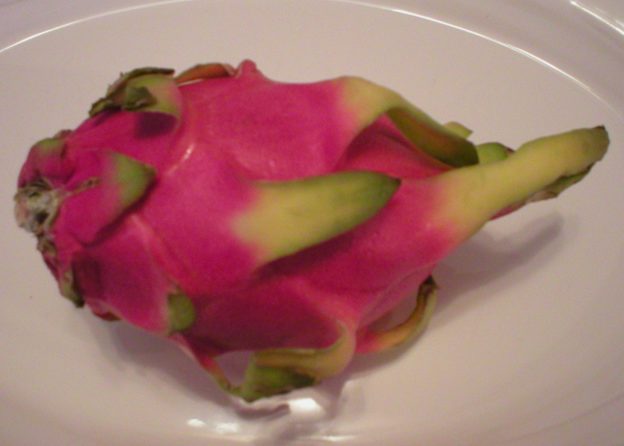
The two most common types have bright red skin with green scales. The most common type has white pulp with black seeds. Another less common type has red pulp and black seeds. The red pulp variety is a bit sweeter than the white pulp fruit. There is also a yellow dragon fruit that has yellow skin and white pulp with black seeds. Its flavor has been described as a slightly sweet cross between a kiwi and a pear.

Nutrition Tidbits
Dragon fruit is a good source of fiber, magnesium, and other nutrients as well. The red flesh variety has a little higher nutritional value with added carotene, which helps in eye health and immune function. It is considered to be a low-calorie fruit with about 60 calories in a 3.5 ounce serving. It does contain some antioxidants that are known to help protect fatty acids from free radical damage.

Dragon fruit’s fiber and antioxidants have been shown to reduce insulin resistance and fatty liver disease. Its prebiotic fiber has been shown to help promote healthful gut bacteria. These properties make dragon fruit helpful in treating diabetes, heart disease, digestive issues, and even preventing some cancers.

In rare cases, people have had allergic reactions to dragon fruit. So, if you’ve never had it before, try a small amount at first, just to be sure. Signs of an allergic reaction include tingling or itchy feeling in the mouth, hives, swelling of the lips or tongue, nausea or vomiting.

How to Select Dragon Fruit
Select a ripe fruit with bright, evenly colored skin, that gives a little when squeezed. A very firm dragon fruit will ripen up on the counter after a few days.

Freeze-dried pitaya powder is also available commercially.

How to Store Dragon Fruit
Dragon fruit can be stored on the counter for a few days. Store ripe dragon fruit in a plastic bag in the refrigerator.

How to Preserve Dragon Fruit
Once cut, it should be stored in a tightly sealed container in the refrigerator. It will keep this way for only a day or so. If it begins to turn brown or gets mushy, it’s time to discard it.

How to Prepare Dragon Fruit
With a sharp knife, cut it in half lengthwise. The pulp can be spooned out or the peel can be removed with a knife and the fruit cut into desired size pieces. The skin of the dragon fruit is not edible, although some people will use the skin of half of a dragon fruit as a little serving dish for the inside flesh of the fruit.

Cooking/Serving Methods
Dragon fruit is eaten raw. It can be cut up and eaten as it is, or cut into bite-size pieces and topped with yogurt and nuts, or added to a salad. It is also used in salsas, smoothies, drinks, sorbets, and mixed into sauces served on fish.

Dragon fruit would be excellent in a fruit salad mixture including pineapple, kiwi, blueberries, and/or strawberries. Topping that with yogurt would be delicious!

Foods That Go Well With Dragon Fruit
Dragon fruit pairs perfectly with fish dishes, particularly cod, tuna, and mahi-mahi. Serve the fruit whole on the side or drizzle your dish with a sauce or chunky salsa.

Also dragon fruit goes well with lemon, mango, strawberry, milk, yogurt, chia seeds, pancakes.

Recipe Links
Berry Dragon Fruit Smoothie https://gratefulgrazer.com/home/recipes/dragon-fruit-smoothie/

9 Healthy and Creative Dragon Fruit Recipes https://dailyburn.com/life/recipes/dragon-fruit-pitaya-recipes/

Dragon Fruit Recipes and Ideas https://wiki.ezvid.com/m/foods-that-go-well-with-dragon-fruit-IcWxQEn_iQjU1

Atlantic Cod with Dragon Fruit Coulis https://www.sizzlefish.com/blogs/recipes-to-try/atlantic-cod-with-dragon-fruit-coulis

Fajita-Spiced Shrimp Tacos with Dragon Fruit Salsa https://www.chocolatemoosey.com/2014/05/12/fajita-spiced-shrimp-tacos-with-dragon-fruit-salsa/

Dragon Fruit Salad https://wanderspice.com/dragon-fruit-salad/

Dragon Fruit and Guava Popsicles https://senseandedibility.com/dragonfruit-guava-popsicles/

Dragon Fruit Tastes Amazing in These 23 Fruity Recipes https://youshouldgrow.com/dragon-fruit-taste-recipes/

About Judi
Julia W. Klee (Judi) began her journey enjoying “all things food” in elementary school when she started preparing meals for her family. That love of food blossomed into a quest to learn more and more about health and wellness as related to nutrition. She went on to earn a BS Degree in Food and Nutrition, then an MS Degree in Nutrition. She has taught nutrition and related courses at the college level to pre-nursing and exercise science students. Her hunger to learn didn’t stop upon graduation from college. She continues to research on a regular basis about nutrition as it relates to health. Her hope is to help as many people as possible to enjoy foods that promote health and wellness.

Resources
https://www.healthline.com/nutrition/dragon-fruit#what-it-is

https://www.healthline.com/nutrition/dragon-fruit#antioxidants

https://www.everydayhealth.com/diet-nutrition/diet/dragon-fruit-how-eat-benefits-taste-more/

https://draxe.com/dragon-fruit-benefits/

https://www.organicfacts.net/health-benefits/fruit/health-benefits-of-dragon-fruit.html

https://www.thespruceeats.com/dragon-fruit-overview-nutritional-information-3217090

https://wiki.ezvid.com/m/foods-that-go-well-with-dragon-fruit-IcWxQEn_iQjU1

https://www.chowhound.com/food-news/203053/how-to-cook-with-dragon-fruit/

https://www.quora.com/Whats-the-difference-between-red-dragon-fruit-and-white-dragon-fruit

Fermented Cauliflower

Easy Fermented Cauliflower

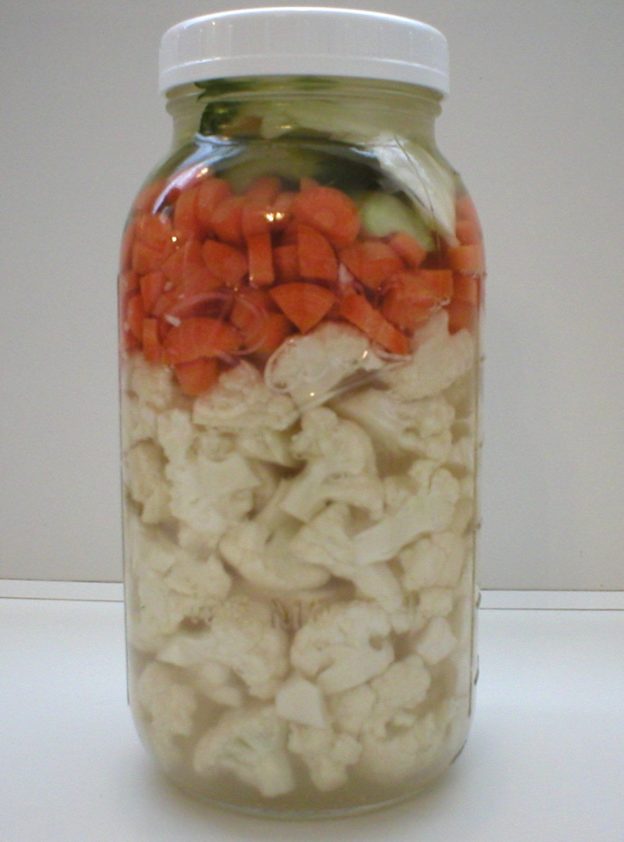
I’ve been enjoying fermented vegetables with my salads and other meals for quite some time. After trying a series of fermentation methods, some with success and some without, I’ve settled on this really simple way to ferment vegetables. For me, it’s been a no-fail method with success literally 100 percent of the time. In the video below I detail how I ferment cauliflower. This same method could be used to ferment just about any fresh vegetable you want. Enjoy!

I hope this helps,
Judi

About Judi
Julia W. Klee (Judi) began her journey enjoying “all things food” in elementary school when she started preparing meals for her family. That love of food blossomed into a quest to learn more and more about health and wellness as related to nutrition. She went on to earn a BS Degree in Food and Nutrition, then an MS Degree in Nutrition. She has taught nutrition and related courses at the college level to pre-nursing and exercise science students. Her hunger to learn didn’t stop upon graduation from college. She continues to research on a regular basis about nutrition as it relates to health. Her hope is to help as many people as possible to enjoy foods that promote health and wellness.

Cauliflower

How to Cut a Cauliflower

If you’re not familiar with them, cutting up a fresh cauliflower can be an intimidating task! It’s a compact globe surrounded by tightly adhering leaves and stems. By appearance, there’s no starting point! In the video below, I show how to easily tackle that daunting cauliflower.

I hope this helps!
Judi

About Judi
Julia W. Klee (Judi) began her journey enjoying “all things food” in elementary school when she started preparing meals for her family. That love of food blossomed into a quest to learn more and more about health and wellness as related to nutrition. She went on to earn a BS Degree in Food and Nutrition, then an MS Degree in Nutrition. She has taught nutrition and related courses at the college level to pre-nursing and exercise science students. Her hunger to learn didn’t stop upon graduation from college. She continues to research on a regular basis about nutrition as it relates to health. Her hope is to help as many people as possible to enjoy foods that promote health and wellness.

Cauliflower

Cauliflower 101 — The Basics

Cauliflower is growing in popularity in the United States. With the low-carb movement, people are discovering ingenious new ways to prepare this vegetable that our grandmothers would never have dreamed of! In the video below, I cover a lot of basic information about this interesting cruciferous vegetable, from what it is, to nutritional aspects, to how to prepare it and what foods and flavorings go well with it. To see my notes, please look below the video. Enjoy!

I hope this helps!
Judi

Cauliflower 101 – The Basics

About Cauliflower
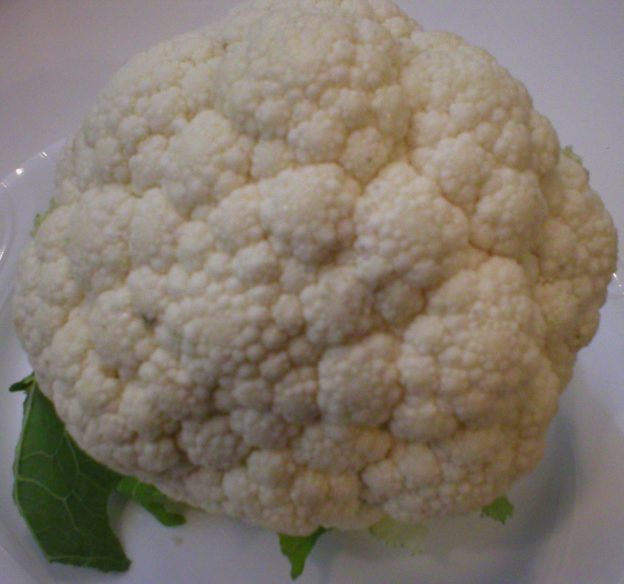
Cauliflower is a member of the cruciferous vegetable family, so it is related to cabbage, kale, Brussels sprouts, broccoli, and other such vegetables. There are many different types of cauliflower, including different colors in orange, green and purple. In the United States, most cauliflower sold is white with a fairly large compact head (or “curd”) with undeveloped flower buds that resemble broccoli florets.

The history of cauliflower dates back about 2,000 years. It appears to have originated in the area of modern day Turkey. Many cultures prefer a loose curd variety of cauliflower over the tight compact head type often seen in our grocery stores. Cauliflower is more popular in other parts of the world than in America, although popularity is increasing with the new ways of preparing it with the “low carb” trend. China and India produce 74% of the world’s cauliflower.

Nutrition Tidbits
Like other vegetables in the cruciferous family, cauliflower is low in calories and high in specific nutrients. One cup of raw cauliflower has only 25 calories, 3 grams of fiber, 77% of the RDI for Vitamin C, 20% of the RDI for Vitamin K, and notable amounts of some B vitamins and potassium, manganese, magnesium, and phosphorus.

Also like other members of the cruciferous family, cauliflower is high in antioxidants that help to boost our immunity, reduce inflammation, and help to protect against cancer and heart disease. Cauliflower also is one of the plant foods (along with its cousin broccoli) that contains choline, a compound that protects our nervous system and helps ward off dementia and Alzheimer’s disease.

Many people who are following low carbohydrate diets are now using cauliflower in ingenious ways to create interesting food alternatives such as cauliflower rice, pizza crust, hummus, tortillas, and mashed in place of potatoes.

To learn more about the nutritional wonders of cauliflower, visit Dr. Michael Greger’s website, https://nutritionfacts.org/ and watch some of his videos where cauliflower is discussed https://nutritionfacts.org/?s=cauliflower

How to Select Cauliflower
Look for cauliflower with a clean, firm, compact head that is creamy white in color. It should feel heavy for its size. Avoid those that are soft, have brown areas, or dark spots on the curds. Those with more leaves will usually be fresher.

How to Store Cauliflower
Store uncooked cauliflower in a plastic bag in the refrigerator. Place it stem side down to protect the florets from excessive moisture. It will usually keep well in the refrigerator for 3 to 5 days.

How to Preserve Cauliflower
Fresh cauliflower can be frozen, fermented, pickled, and dehydrated.

To freeze cauliflower: Blanch cauliflower pieces for 3 minutes in boiling water, or steam for 3 to 5 minutes, depending on the size of the pieces. Then immediately place it in ice water to quickly cool it down. Leave the cauliflower in the ice water for as long as it was boiled or steamed. Then drain well and place in freezer containers or bags. It will keep for 10 to 12 months in the freezer. Here’s a link to an excellent explanation on how to freeze cauliflower. http://pickyourown.org/freezing_cauliflower.htm

Fermented cauliflower: The website https://www.culturesforhealth.com is renowned for information and products for culturing foods. At this link, they share a way to ferment cauliflower with carrots and garlic: https://www.culturesforhealth.com/learn/recipe/lacto-fermentation-recipes/lacto-fermented-cauliflower-carrots-garlic/

Pickled cauliflower: Cauliflower pickles can be added to salads or used to flavor or accompany many foods. Here’s a delicious-sounding recipe with instructions on how to pickle cauliflower: https://www.freshpreserving.com/pickled-cauliflower-br2760.html

Here’s another link with instructions on making quick refrigerator cauliflower pickles or canning pickles https://www.finecooking.com/recipe/pickled-cauliflower-with-carrots-red-bell-pepper

Dehydrated cauliflower: There is mixed information available on how and even whether cauliflower should be dehydrated. Some sources say it doesn’t need to be blanched; however, when you read the “fine print” they do state that it will darken after being dried if not blanched. Others state it should be blanched first, which I agree with, since blanching will stop the enzyme activity that will continue the aging process even after being dried. Follow your dehydrator manufacturer’s instructions on how to dry cauliflower in your machine.

Fresh vs Frozen
Cauliflower is available in most grocery stores both fresh and frozen. Fresh cauliflower is obviously more versatile than frozen, since it can be used both raw and cooked. Frozen cauliflower is a great convenience since it’s already washed, cut up and blanched. It will only be suitable for use in cooked dishes, but since it’s already blanched, it will require very little cooking time. Overcooking frozen cauliflower will make it soggy and mushy, so cook it quickly with as little water as possible (if you’re using water).

How to Prepare Cauliflower
The simplest way to wash cauliflower is to cut or break it into desired size pieces, then wash it. First, remove the leaves then remove the florets by cutting the central stem out where it meets the floret stalks. The florets can easily be removed and cut down or broken into smaller pieces, if desired.

If you are making cauliflower “steaks” then simply cut through the entire head into the desired width of slices needed for your recipe. The leaves and any undesired stem pieces can easily be removed after slicing.

Submerge the pieces into a bowl of water to rinse away any dirt or tiny insects that may be in there. It would be unusual to find insects in grocery store-purchased cauliflower. However, if the cauliflower was picked from your garden or bought at a farmer’s market, insects may be among the florets. In this case, soak your prepared pieces for 15 minutes in a bowl of salt water or a bowl of water with either lemon juice or vinegar mixed in. This will kill any insects that are lurking inside and also helps to remove any trapped dirt. After soaking, rinse the cauliflower well in fresh water, then proceed with your recipe.

Most people just eat the cauliflower florets. However, the stems and leaves are also edible, so include them if you want to enjoy the full benefit of the vegetable. Some people reserve the leaves and stems for soups or vegetable stock.

If you are opting to cook the cauliflower whole, then submerge the entire head for 15 minutes in a bowl of water, or one with salt or vinegar added, depending on where it was purchased. Rinse it well under running water afterward.

How is it usually eaten…raw or cooked?
Although cauliflower is edible both raw and cooked, it seems that Americans enjoy this vegetable cooked more than raw. Roasting has been the latest favorite way to prepare cauliflower.

Cooking/Serving Methods
Like broccoli, cauliflower contains sulfur compounds that can be released with extended cooking. To prevent that strong sulfur odor and flavor, cook cauliflower quickly and with as little water as possible. This will also help to retain its crispness.

Cauliflower can be boiled, steamed, roasted in bite-size pieces or steaks, sautéed, stir-fried, made into soups, crumbled into rice, mashed like potatoes, braised, added to stews, battered and fried, added to casseroles, baked into mock bagels, breads and muffins, and served raw in salads.

Below are some serving ideas from the website https://producemadesimple.ca/goes-well-cauliflower/

Cauliflower Serving Ideas:
• Top hot cooked cauliflower with melted butter and season with your choice of chives, dill, nutmeg, minced parsley, or lemon juice for a delicious side dish.
• Try roasting it with a drizzle of olive oil and your favorite seasonings. Nuts pair nicely with cauliflower and can be roasted alongside the florets, if desired. Toss together in a bowl before serving.
• Raw cauliflower is delicious on a crudité platter and makes a crunchy addition to seasonal salads.
• Add chopped cooked cauliflower to a quiche, or stir it into scrambled eggs.
• Roast cauliflower and broccoli together, tossed with garam masala and olive oil.
• Cauliflower can be used to create kid-friendly dishes thanks to its ability to take on the flavors and seasonings of a recipe.
• Cut down on the carb content of decadent dishes like pizza and pasta by replacing the flour, grain or glutinous component with cauliflower.
• Bring classic Indian flavors to the table with a cauliflower aloo gobi.

Herbs/Spices That Go Well With Cauliflower
Basil, bay leaf, cardamom, chervil, chives, cilantro, cinnamon, coriander, cumin, dill, garam masala, ginger, marjoram, mint, mustard, nutmeg, oregano, paprika, parsley, saffron, tarragon, thyme, and turmeric

Foods That Go Well With Cauliflower
Because of its neutral flavor, cauliflower goes well with just about anything. It’s only limited to your imagination! Here are some suggestions:

Produce: apples, asparagus, bell pepper, bok choy, broccoli, Brussels sprouts, carrots, celery, citrus, corn, garlic, lime, lemon, kale, mango, mushrooms, olives, onions, peas, potatoes, pumpkin, sweet potatoes, spinach, squash, and tomatoes

Dairy: yogurt, cream, milk, blue cheese, cheddar cheese, feta cheese, Gruyere cheese, Parmesan cheese, browned butter, and butter

Other: beef, anchovies, pork, tofu, chickpeas, grains, pine nuts, walnuts, seeds, rice, almonds, tahini, and wine

Recipe Links
Asian Sautéed Cauliflower http://www.whfoods.com/genpage.php?tname=recipe&dbid=182

Cauliflower, Fennel and White Bean Winter Salad https://www.thekitchn.com/recipe-cauliflower-fennel-and-74484

Five Ways to Eat Cauliflower https://www.thekitchn.com/five-ways-to-eat-cauliflower-99565

Recipe Roundup: Roasted Cauliflower (links to many recipes for roasted cauliflower) https://www.thekitchn.com/recipe-roundup-roasted-caulifl-74401

25 Ways to Cook with Cauliflower https://www.tasteofhome.com/collection/ways-to-cook-with-cauliflower/

Everything Bagel Style Cauliflower Rolls https://thefeedfeed.com/lexiscleankitchen/everything-bagel-style-cauliflower-rolls

Everything Bagel Cauliflower Steaks https://itdoesnttastelikechicken.com/everything-bagel-cauliflower-steaks/

Roasted Garlic Cauliflower https://www.allrecipes.com/recipe/54675/roasted-garlic-cauliflower/

Cauliflower Parmesan Crisps https://www.willcookforsmiles.com/cauliflower-parmesan-crisps/

Our 41 Best Cauliflower Recipes https://www.epicurious.com/ingredients/our-favorite-cauliflower-recipes-gallery

Crispy Sea Salt & Vinegar Cauliflower “Popcorn” https://www.blissfulbasil.com/crispy-sea-salt-vinegar-cauliflower-popcorn/#wprm-recipe-container-23883

30 Life-Changing Cauliflower Recipes for Every Comfort Food Craving https://blog.bulletproof.com/cauliflower-recipes-keto-paleo-2g3c/

13 Healthy Cauliflower Recipes https://health.facty.com/food/nutrition/13-healthy-cauliflower-recipes/?utm_source=adwords&utm_medium=c-search&utm_term=cauliflower%20recipes&utm_campaign=f-h-13-healthy-cauliflower-recipes&gclid=Cj0KCQiAk-7jBRD9ARIsAEy8mh50R8Si3aHqZtGX266QI_icxPG4IXNrHiUVaQkazB7dFEBZXomlkgIaAk2ZEALw_wcB

About Judi
Julia W. Klee (Judi) began her journey enjoying “all things food” in elementary school when she started preparing meals for her family. That love of food blossomed into a quest to learn more and more about health and wellness as related to nutrition. She went on to earn a BS Degree in Food and Nutrition, then an MS Degree in Nutrition. She has taught nutrition and related courses at the college level to pre-nursing and exercise science students. Her hunger to learn didn’t stop upon graduation from college. She continues to research on a regular basis about nutrition as it relates to health. Her hope is to help as many people as possible to enjoy foods that promote health and wellness.

Resources
http://www.whfoods.com/genpage.php?tname=foodspice&dbid=13

http://www.berkeleywellness.com/healthy-eating/food/article/types-cauliflower

https://www.healthline.com/nutrition/benefits-of-cauliflower#section5

http://pickyourown.org/freezing_cauliflower.htm

https://www.freshpreserving.com/pickled-cauliflower-br2760.html

https://www.finecooking.com/recipe/pickled-cauliflower-with-carrots-red-bell-pepper

https://www.culturesforhealth.com/learn/recipe/lacto-fermentation-recipes/lacto-fermented-cauliflower-carrots-garlic/

http://www.sweetwater-organic.org/veggies/cauliflower/

https://articles.mercola.com/sites/articles/archive/2014/02/22/cauliflower-health-benefits.aspx

https://articles.mercola.com/sites/articles/archive/2014/02/22/cauliflower-health-benefits.aspx

https://producemadesimple.ca/goes-well-cauliflower/

Roasted Parsnip Fries

Simple Roasted Parsnip Fries

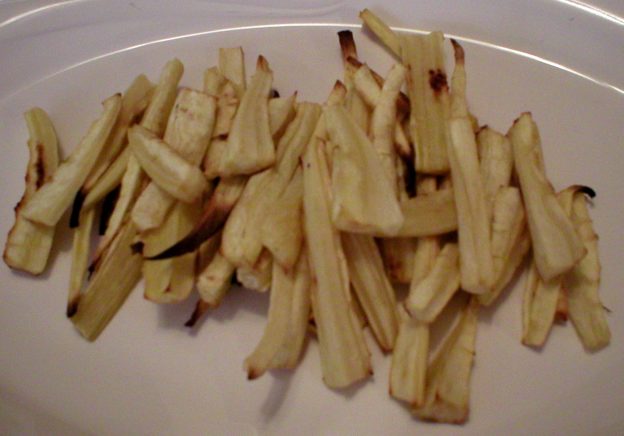
Looking for something different? Try parsnips! They look like white carrots and are usually found in the grocery store not far from their carrot cousins. If you haven’t tried them, parsnips are naturally sweet with a hint of honey flavor. Some describe the flavor as almost nutty. However you describe it, they’re worth a try. Here’s a simple recipe for oven roasted parsnip fries. The recipe is below the video link. I hope this helps!

Enjoy,
Judi

Roasted Parsnip Fries
Makes About 4 Servings

1 lb of fresh parsnips
Up to 1 Tbsp extra virgin olive oil
Salt to taste

Preheat oven to 400F.

Wash and peel the parsnips. Cut a small slice off both ends of each parsnip and discard. Cut them in half crosswise. Cut each half into lengthwise strips, like French fries. Place them in a single layer on a parchment paper lined baking sheet. Drizzle them with oil and sprinkle with salt to taste. Toss them to coat all pieces with the oil and salt. Be sure they are in a single layer and no pieces are on top of others.

Roast in preheated oven for about 20 minutes. Remove the pan and toss the fries to turn them over. Be sure they are in a single layer, then return them to the oven. Roast for another 10 minutes (total roasting time about 30 minutes), or until they are as brown as you like. Remove from oven and enjoy!

Cabbage

Cabbage 101 – The Basics

Cabbage is a vegetable that most of us are familiar with. If nothing else, we eat it in coleslaw. Cabbage is a very versatile vegetable that should be included in our menus as much as possible. It is low in calories, high in nutrients, and has valuable other compounds that help to protect our health. Furthermore, it’s a very inexpensive vegetable to eat, so why not go for it?

Below is a video where I discuss the basics of cabbage, from what it is to how to use it and everything in between. Below the video are my notes for your personal use. Enjoy!

I hope this helps!
Judi

Cabbage 101 – The Basics

About Cabbage
Cabbage is a member of the cruciferous vegetable family and is related to kale, broccoli, collards, mustards, cauliflower, kohlrabi, and Brussels sprouts.

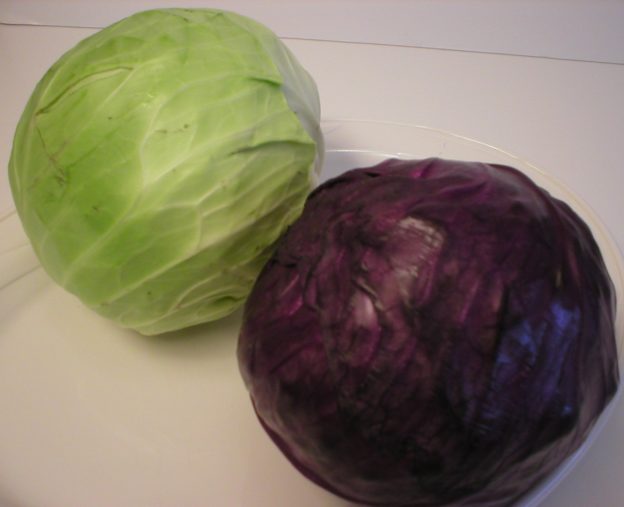
There are MANY types of cabbage, but we have four main types in the United States. They are (1) Green cabbage, which is the cabbage most of us are familiar with. It is round with smooth, tightly packed leaves that wrap around each other. (2) Red or purple cabbage, resembling green cabbage, but with purple leaves instead of green. (3) Savoy cabbage, with curly leaves that are less densely packed than the green or red/purple varieties. This variety is great in stir-fries and wraps. (4) Napa or Chinese cabbage, that looks more like a head of lettuce than the round green cabbage we commonly buy. This type is often used when making kimchi and stir-fries. Pictures of different types of cabbages can be seen here … https://www.pinterest.com/cabbagesoupdiet/cabbage-types/?lp=true

There are two basic color types of cabbage: red/purple and green. The green cabbages can range in color from very dark to very light. The red cabbage can also range in shades from darker to lighter purple. It’s interesting that we call it “red” cabbage when the color is actually purple. Sometimes the very dark purple cabbages are called “black cabbage.”

According to the Economic Research Service at the U.S. Department of Agriculture (USDA), cabbage is the second most economical vegetable in terms of price per edible cup.

In 2014, the average adult ate about 7 pounds of cabbage a year. That places cabbage as being the tenth most popular vegetable in America. In America, about half of all cabbage sold in the retail market is made into coleslaw. The production of sauerkraut accounts for another 12 percent.

Nutrition Tidbits
Cabbage has few calories, with only 22 in one cup (raw). Yet, that one cup of cabbage contains 85% of the recommended daily intake (RDI) of Vitamin K and 54% of the RDI for Vitamin C. It also contains notable amounts of folate, manganese, Vitamin B6, calcium, potassium, and magnesium.

Green cabbage is the type that is most commonly eaten, and has many health-promoting qualities including antioxidants that help keep inflammation in check, reducing the risk for certain cancers, helping improve digestion through its insoluble fiber, and benefiting heart health. However, red or purple cabbage has those benefits and even more special qualities that make it a valuable addition to your diet. The red or purple color reflects its content of compounds that have unique antioxidant and anti-inflammatory properties. So, red or purple cabbage is especially valuable to include in your diet on a regular basis.

How to Select Cabbage
Choose a head of cabbage that is firm and seems heavy for its size. Look for leaves that appear fresh, crisp, and tightly packed, with little blemishes. Larger heads tend to have a milder flavor than smaller heads.

Cabbage can also be purchased pre-shredded, which is a great convenience if your time in the kitchen is short. Even though it is already washed, it’s a good idea to wash it again just before using it. Be sure to use it before the “Best by” date to ensure freshness. It is noteworthy that the Vitamin C content of cabbage diminishes when it is cut, so pre-cut cabbage will have less Vitamin C content than a whole head.

How to Store Cabbage
Keep cabbage in the refrigerator, wrapped in plastic to retain moisture. Most resources say cabbage will keep for two weeks this way.

How to Preserve Cabbage
Freeze: Cabbage may be frozen and used later in cooked dishes. Cabbage that has been frozen would not be suitable for raw dishes, like coleslaw, because the texture will change after being frozen. To freeze cabbage, wash the leaves and cut them into desired size pieces. Blanch shredded cabbage or small pieces in boiling water for 1-1/2 minutes and cabbage wedges for 3 minutes, then immediately place them in a bowl of ice water until completely cooled. Drain well and place in freezer bags or containers. Frozen cabbage will keep for 10 to 12 months.

Some people freeze cabbage without blanching it first. Cabbage frozen this way should be used within 4 to 8 weeks.

Dehydrate: Fresh cabbage may be dehydrated. Some resources say cabbage can be dehydrated without being blanched. However, this method does not stop enzymes that will cause the vegetable to continue to age, nor does it kill any pathogens that may be on the food. Reliable sources emphasize blanching cabbage before drying it. Process as for the freezer then follow your dehydrator manufacturer’s instructions for the temperature and length of time to dry your cabbage. Dehydrated cabbage can actually be eaten as a snack and is sometimes used by backpackers as a lightweight food to carry along the trail.

Fresh vs Frozen
Fresh cabbage is commonly found at most grocery stores, whereas frozen cabbage is only found in select stores. Fresh is the most versatile since it can be used raw or cooked, whereas frozen cabbage must be used in cooked dishes because the texture is not suitable for raw use.

How is it usually eaten…raw or cooked?
Cabbage is eaten both raw and cooked in a variety of ways. Some people don’t care for cooked cabbage because of a sulfur odor that it can produce. This happens only when the cabbage is overcooked. So, to prevent the unpleasant odor that can come from cooked cabbage, cook it with as little water as possible and for as short a time as possible (unless you’re adding it to a soup or stew).

How to Prepare
Remove and discard any withered outer leaves. Rinse the remaining leaves and cut as needed for your intended use.

If you are using cabbage that was freshly picked, such as from your garden or the farmer’s market, you may want to take extra measures to remove any insects that may be lurking among the leaves. In this case, soak the head in salt water or vinegar water for 15 to 20 minutes first, then rinse it well to remove any insects, dirt, and salt or vinegar. Then proceed as usual.

Cooking/Serving Methods
Cabbage can be eaten raw, as in salads and slaws.

Cabbage can be cooked in a number of ways including being stuffed, sautéed, steamed, boiled, braised, roasted, added to soups and stews, pickled, and fermented.

Herbs/Spices That Go Well With Cabbage
Thyme, sugar, mustard, honey, ginger, caraway seeds, fennel, dill, paprika, coriander, parsley

Foods That Go Well With Cabbage
Mushrooms, apples, carrots, potatoes, leeks, onions, garlic, fennel, beets, lemon and lime, tomatoes and tomato sauce

Savory: Bacon, sausage, rice, white beans, turkey, ground beef, corned beef, chicken, ham

Dairy & other: Sour cream, butter, and vinegar

Cabbage is very versatile, so this is certainly not an all-inclusive list!

Recipe Links
5-Minute Healthy Sautéed Red Cabbage http://www.whfoods.com/genpage.php?tname=recipe&dbid=240

Cabbage, Smoked Sausage and Apple Soup https://producemadesimple.ca/cabbage-smoked-sausage-and-apple-soup/

Cabbage Roll Casserole https://producemadesimple.ca/cabbage-roll-casserole/

Hearty Brussels Sprouts and Cabbage Salad https://producemadesimple.ca/hearty-brussels-sprouts-and-cabbage-salad/

20 Ways to Eat More Cabbage https://www.thekitchn.com/20-ways-to-eat-more-cabbage-237481

18 Delicious Ways to Eat More Cabbage This Year https://www.justapinch.com/blog/articles/read/165980/18-delicious-ways-to-eat-more-cabbage-this-year

39 Recipes to Make Anyone Love Cabbage https://www.bonappetit.com/test-kitchen/ingredients/slideshow/cabbage-recipes

26 Creative Cabbage Recipes That Are Way Better Than Coleslaw https://www.delish.com/cooking/g1237/cabbage-recipes/?slide=5

Our 35 Best Cabbage Recipes https://www.tasteofhome.com/collection/favorite-cabbage-recipes/view-all/

About Judi
Julia W. Klee (Judi) began her journey enjoying “all things food” in elementary school when she started preparing meals for her family. That love of food blossomed into a quest to learn more and more about health and wellness as related to nutrition. She went on to earn a BS Degree in Food and Nutrition, then an MS Degree in Nutrition. She has taught nutrition and related courses at the college level to pre-nursing and exercise science students. Her hunger to learn didn’t stop upon graduation from college. She continues to research on a regular basis about nutrition as it relates to health. Her hope is to help as many people as possible to enjoy foods that promote health and wellness.

Resources
http://www.whfoods.com/genpage.php?tname=foodspice&dbid=19

https://www.healthline.com/nutrition/benefits-of-cabbage#section1

http://www.unlockfood.ca/en/Articles/Budget/All-about-cabbage.aspx

https://www.wikihow.com/Select-and-Store-Cabbage

https://frugallysustainable.com/how-to-preserve-cabbage/

https://stilltasty.com/fooditems/index/16658

https://www.thespruceeats.com/how-to-freeze-cabbage-1388391

https://producemadesimple.ca/what-goes-well-with-cabbage/

https://lancaster.unl.edu/factsheets/115-94.htm

https://www.spendwithpennies.com/guide-to-cabbage/

https://www.reddit.com/r/recipes/comments/1v5duu/what_spices_go_good_with_cooked_cabbage/

Garlic

Garlic Powder vs Fresh Garlic

Fresh Garlic vs Garlic Powder

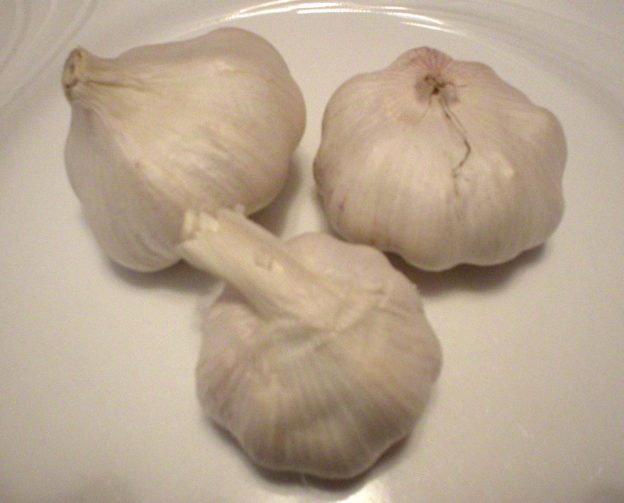
Most people have a jar of garlic powder somewhere in their kitchen arsenal of flavorings. It is simply ground up dehydrated garlic. Garlic powder has a somewhat different, milder flavor than its fresh counterpart. It is often called for marinades and dips since it disburses well in liquids and imparts a mild garlic flavor. Even though fresh garlic is called for in many recipes, we’ll sometimes opt for the powdered version depending on the time we have available, the desired outcome, or even our mood at the moment. So, the question came up…what’s the difference between the two? Does garlic powder have the same health properties as fresh garlic?

Garlic powder contains many of the same nutrients found in fresh garlic, but in lesser amounts. This is to be expected since processing food usually decreases nutrients to some degree.

While garlic powder does contain alliin and allinase, the components found in fresh garlic that produce the valuable compound allicin, allicin itself if not found in garlic powder. Allicin is produced when fresh garlic is crushed or finely chopped and allowed to sit for about 10 to 15 minutes before being used. It has antimicrobial benefits, reduces inflammation and is an antioxidant that can help fight heart disease.

In an experiment conducted at https://www.cooksillustrated.com, researchers learned that allicin can be produced in garlic powder (and thereby giving the powder a better garlic flavor and the health properties of allicin) by first hydrating the garlic powder in an equal amount of water before being used (ie place ½ teaspoon of garlic powder in ½ teaspoon of water and allow the powder to hydrate or soak up water before using it). This allowed time for allicin to be produced and the flavor of the powder to be more like that of fresh garlic.

Despite the processing needed to produce garlic powder, the powdered version seems to still help to regulate blood pressure, lower cholesterol levels including reducing plaque buildup in arteries, benefit the immune system, lower some cancer risks and help with digestion. To get the most health benefits from your garlic powder, hydrate it first in an equal amount of water and allow it to rest for 10 to 15 minutes to allow allicin to develop. So, although fresh seems to be best, garlic powder appears to be a very close second in terms of health benefits.

To see my video on this subject, click the video below…

About Judi
Julia W. Klee (Judi) began her journey enjoying “all things food” in elementary school when she started preparing meals for her family. That love of food blossomed into a quest to learn more and more about health and wellness as related to nutrition. She went on to earn a BS Degree in Food and Nutrition, then an MS Degree in Nutrition. She has taught nutrition and related courses at the college level to pre-nursing and exercise science students. Her hunger to learn didn’t stop upon graduation from college. She continues to research on a regular basis about nutrition as it relates to health. Her hope is to help as many people as possible to enjoy foods that promote health and wellness.

Resources
https://www.organicfacts.net/garlic-powder.html

https://www.dovemed.com/healthy-living/wellness-center/what-are-differences-between-using-fresh-versus-garlic-powder/

https://www.livestrong.com/article/268286-benefits-of-garlic-powder/

https://www.livestrong.com/article/329968-what-are-the-health-benefits-of-allicin/

https://www.cooksillustrated.com/how_tos/8896-experiment-bringing-out-the-best-in-garlic-powder

https://www.verywellhealth.com/the-benefits-of-allicin-88606

Orange Glazed Carrots

Easy Orange Glazed Carrots (With Frozen Carrots)

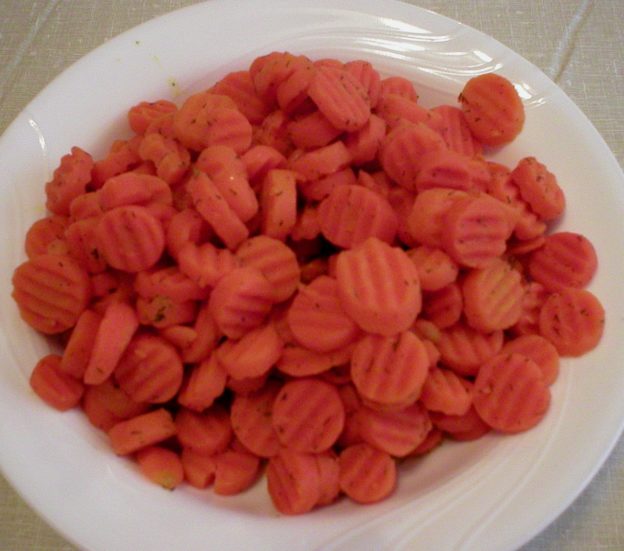
Looking for ways to use frozen veggies? Here’s a simple recipe using frozen carrot slices to make Easy Orange Glazed Carrots. Below is a video demonstration of how to make the carrots. Below the video link is the written recipe. Enjoy!

I hope this helps,
Judi

Easy Orange Glazed Carrots (With Frozen Carrots)
Makes About 5 Servings

1 (1 lb) bag of frozen carrot slices*
1 Tbsp butter
1/3 to ½ cup orange juice**
1-1/2 tsp (or 1/2 Tbsp) honey
1/8 tsp dried ground ginger
¼ tsp dried dill weed

Melt butter in a medium size pot. Add orange juice, honey, and ginger and allow it to warm up enough for the honey to blend in. Add the frozen carrot slices and bring to a boil. Lower the heat to simmer. Allow it to cook until the carrots are as tender as you want and the liquid is reduced and slightly thickened. Do not allow it to dry up, as the sauce is what flavors the carrots! This may take from 9 to 15 minutes. Sprinkle the dill weed on top and stir to combine. Enjoy!

* Carrots can be used in this recipe while frozen. However, the sauce will have a deeper orange flavor if the carrots are thawed first by running warm water over them while they are in a colander. Allow them to drain well before using.

** Use less juice if you like more “bite” to the carrots and don’t want to cook them until soft.

Fennel

How to Cut Fennel

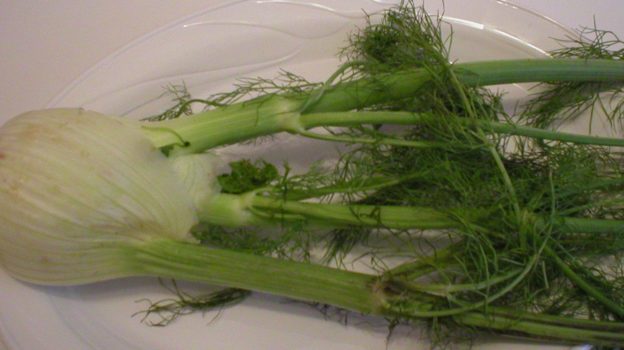
When you first buy a fresh fennel bulb with the stalks and fronds (leaves) attached, cutting it can be intimidating. Yet, it’s not hard at all. To store it in the refrigerator, simply cut the stalks off leaving two or three inches attached. Store everything loosely in a plastic bag until you’re ready to use it.

When you’re ready to cook the fennel, the bulb can be cut in various ways, depending on how it will be used. See the short video below to see how to cut a fennel bulb. Enjoy!

I hope this helps!
Judi

About Judi
Julia W. Klee (Judi) began her journey enjoying “all things food” in elementary school when she started preparing meals for her family. That love of food blossomed into a quest to learn more and more about health and wellness as related to nutrition. She went on to earn a BS Degree in Food and Nutrition, then an MS Degree in Nutrition. She has taught nutrition and related courses at the college level to pre-nursing and exercise science students. Her hunger to learn didn’t stop upon graduation from college. She continues to research on a regular basis about nutrition as it relates to health. Her hope is to help as many people as possible to enjoy foods that promote health and wellness.