
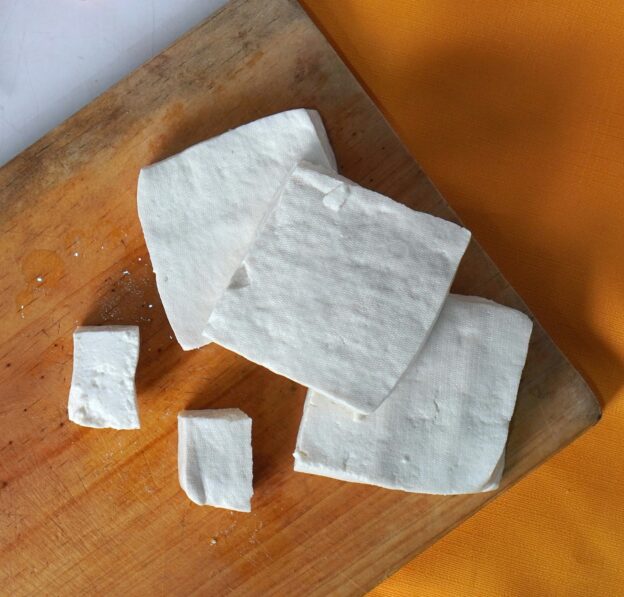
About Tofu
Soy is a type of legume (Glycine max) that is native to East Asia. It is widely grown for its edible bean. Soy is classified as an oil seed and not a pulse because of its fat content. Tofu, also known as bean curd, is made from the milk of soybeans that is coagulated, followed by pressing the curds into solid blocks of varying softness. The blocks are called tofu. Tofu can be silken (the softest form), soft, firm, extra firm, or super firm. There are different types of coagulants used to make the curd, with the three commonly used types being calcium sulfate, magnesium chloride, and calcium chloride. Acids such as glucono delta-lactone, and enzymes such as papain and proteases may also be used in the coagulation process.
There are two general categories of soy foods, fermented and unfermented. Fermented soy foods include natto, tempeh, and miso. Unfermented soy foods include soymilk and tofu. Globally, most soy is consumed in the unfermented form (excluding soy sauce, which is considered to be a condiment, not a food).
Tofu appears to have originated in China around 200 BC, but evidence suggests it may have been cultivated much earlier than that. Tofu has been made into many forms and flavors, including different degrees of firmness, sheets and sticks, fermented, and smoked. Across Asia, it is typically served fried, marinated, and stuffed. Silken tofu is not pressed and can be about the thickness of custard. Firmer varieties of tofu that have been pressed to remove the liquid, can be more like a soft cheese.
Silken tofu is the most common type, often used in making dressings, sauces, smoothies, and yogurt and egg substitutes. The market for tofu us growing, as it is promoted as a good source of protein that can easily be used as a meat substitute in plant-based diets. It is widely used in multiple global cuisines, with its popularity increasing because of its health benefits, and effectiveness in absorbing flavors from spices, seasonings, sauces, and marinades. The growing trend in plant-based cuisine has helped to fuel a sharp rise in the consumption of tofu and other soy products in recent years.
Nutrition and Health Benefits
Tofu is high in protein and contains all of the essential amino acids needed by humans. Tofu and other soy products are eaten as a source of complete protein by many people around the world. Tofu is an easy to digest, inexpensive, and nutritious food.
The nutrient content of tofu depends on the type of coagulant used in the processing and also its degree of firmness. Firmer tofu has a higher nutrient content than does softer tofu. Overall, tofu is naturally low in fat and contains a wide array of nutrients including copper, manganese, phosphorus, iron, magnesium, zinc, potassium, selenium, thiamin, riboflavin, niacin, folate, choline, Vitamin K, calcium, and even a little Vitamin A. It is considered to be a very nutrient-dense food.
Protein: A lot of research has been conducted on the protein quality of soy. Its protein is well-digested and has an essential amino acid content that closely matches human needs. Therefore, soy is considered to be a complete protein. It has been rated slightly higher in protein quality than beef, and much higher than that of some plant proteins including kidney beans, pinto beans, rice, and wheat. Because of these factors, soy products like tofu offer high quality protein comparable to animal protein.
Isoflavones: Soybeans contain natural compounds called isoflavones. These compounds function as phytoestrogens (plant estrogens), potentially attaching to and activating estrogen receptors in the body. Regarding some functions in the body, isoflavones can act like a weak form of estrogen, whereas in other functions, they don’t have any estrogen-like effect. The amount of isoflavones in a soy food varies depending on the type of product examined. For instance, one 3.5 ounce serving of firm, calcium-set tofu has about 60 mg of soy isoflavones, whereas 1 cup of soy milk contains about 28 mg. Many of the health benefits of tofu, including the reduced risk of cancer, diabetes, and heart disease, have been attributed to its high isoflavone content.
Cardiovascular Health. Soy foods such as tofu are becoming known for their cholesterol-lowering effects. The evidence is strong enough that regulators in both the United States and Canada have approved health claims linking soy protein to a lower risk of heart disease. In a meta-analysis of 46 studies reported in the June 2019 issue of the Journal of Nutrition, researchers reported that soy protein was found to lower LDL (bad) cholesterol by 3 to 4 percent while also lowering levels of total cholesterol. Experts believe that tofu’s combination of fiber, protein, and isoflavones may promote its heart health benefits. This specific combination may also explain why whole soy foods, such as tofu, appear to be more beneficial for reducing cholesterol levels than soy supplements.
Eases Hot Flashes of Menopause. The soy in tofu may have benefits for women going through menopause. Researchers have found that when soy is added to a low-fat, plant-based diet, hot flashes in menopausal women were reduced by 84 percent. The level of the hormone estrogen drops as women approach menopause. Isoflavones in soybeans and tofu have been found to mimic the effects of estrogen in the body. This may explain why menopausal women who eat soy products have fewer hot flashes than those who do not consume soy.
Reduced Risk of Some Cancers. Some research studies suggest that regular consumption of soy helps to slow the progression or decrease the risk of certain cancers. A study reported in a 2018 issue of the journal Nutrients revealed that soybean intake may help to keep prostate-specific antigen levels low in men diagnosed with prostate cancer. This effect may slow or even stop the progression of prostate cancer.
Isoflavones in tofu have been found to reduce the risk of developing breast and ovarian cancers in women. However, this effect has not been confirmed in postmenopausal women.
In the September 2022 issue of the journal Frontiers in Nutrition, researchers reported the results of a meta-analysis of 81 studies, and found that a higher intake of soy was significantly associated with an overall 10 percent reduced risk of cancer. Each additional 25 grams per day of soy intake lowered the risk of cancer by 4 percent. The reduced cancer risk was attributed to the isoflavones in soy. The effects were primarily associated with reduced risk of lung and prostate cancers.
In the January 2020 issue of the journal PLOS One, researchers reported the results of a meta-analysis of 14 studies and found that in five case-control studies there was a 10 percent reduction in the risk of breast cancer for each 10 gram per day increase in tofu consumption. Their findings suggested an inverse dose-response association between tofu intake and the risk of developing breast cancer.
In the April 2024 issue of the journal Nutrients, researchers reported the results of a comprehensive meta-analysis of 52 studies on the association between soy consumption and total cancer risk. They found that a high consumption of soy products including tofu and soymilk was associated with reduced total cancer risk. The greater the intake of soy, the greater the protection from cancer, with a 23 gram per day intake of soymilk reducing cancer risk by 28 percent. Among all of the soy products tested, the greatest protection against cancer was associated with a higher consumption of soymilk and tofu.
Tofu is often celebrated for its ability to absorb the flavor of whatever it is cooked or seasoned with. There are almost unlimited ways to include tofu in your diet. Just beware that not all ways are good for you. Do your best to avoid preparations with excess sugar, salt, or saturated fat, so you don’t counteract the health benefits of this versatile food.
The Different Types of Tofu
There are a variety of different types of tofu available in most grocery stores. Knowing about their differences can help you to decide which form will be best for your intended use.
Silken: Silken tofu is the softest form of tofu. It is sometimes referred to as Japanese-style tofu. It is used in creamy and smooth dishes, and can be the base of a creamy pasta sauce or included in a smoothie.
Soft or Medium Tofu: This form of tofu is more dense than silken tofu, but it is still tender. This works well as an egg replacement in scrambles or in recipes where the tofu does not need to hold a specific shape.
Firm: Firm tofu can be cut and will hold its shape relatively well. This type of tofu is a solid block that can be used in stir-fries, as a baked snack, or used in place of meat in recipes.
Extra Firm: This type of tofu is a dense form of tofu that can be used in many ways. It has been pressed with most, but not all, of its water removed. From pan-frying, to grilling (prepared with a non-stick cooking spray or oil), air frying, or baking, extra firm tofu will keep its shape. This type can be marinated since it absorbs flavors well.
Super Firm: Super firm tofu is tofu that has already been pressed with most of its water content removed. It is a block that is both dense and solid. It’s excellent for a “meaty” type of dish, including stir-fries, sandwiches, salads, and burgers.
Smoked: This is tofu for sale that has already been smoked and seasoned. It is available commercially, but you may have to search a bit to find it. If you prefer to make your own, recipes for smoked tofu are plentiful on the Internet.
Tofu Skin (Yuba): Tofu skin, or yuba in Japanese, is the skin of soy milk that forms as a by-product during the making of tofu. It is made by removing the rich, fatty film of coagulated proteins that forms on the surface of the heated soy milk. The skin is then dried and processed into different products. It is like a concentrated version of tofu, being higher in protein, with a rich flavor and smooth texture.
How to Store Tofu
Tofu that has been removed from its original packaging should be placed in an airtight container and stored in the refrigerator. It should be used within one week of purchase. If you cannot use it within that time, remove any liquid from the container and slice the tofu. Place it in the freezer for up to three months. To thaw the frozen tofu, place it in the refrigerator overnight, then use as desired.
Here’s a tip for helping your tofu to last a little longer. If you won’t be using an entire block of tofu at one time, put the unused tofu in a container, cover it with fresh water, place the lid on the container and store it in the refrigerator. Change the water every day and use it within five days.
Tofu should be a creamy white or off-white in color and have a neutral scent. If it darkens in color, begins to smell, or feels slimy, it should be discarded.
Quick Ideas and Tips for Using Tofu
* Tofu can be eaten cooked or uncooked, hot or cold. It can be baked, fried, sautéed, air-fried, scrambled, stir-fried, marinated, blended into dips, sauces, and smoothies, and used in just about any way imaginable.
* Since tofu has a bland flavor, it can easily be included in many recipes for added texture and nutrition without imparting a big change in the flavor of the dish.
* The shelf life of an unopened container of tofu can last for months, so it’s a good staple to have on-hand in case of an emergency where there is a food shortage.
* If you have more tofu than you can eat within a reasonable amount of time, try freezing it. Drain the liquid it came in and pat it dry. Slice the block into thin pieces and place it in an airtight container. Keep it in the freezer for up to three months. To thaw the frozen tofu, place it in the refrigerator overnight. It should be ready to use the next day.
* Tofu can be used as a meatless option that can be swapped out for meat in a variety of recipes. Let your imagination be your guide!
* Recipes often call for pressing tofu to remove excess water and achieve a heartier, denser texture that does not fall apart. To press tofu, remove it from the package and wrap it in a paper or cloth towel. Place the wrapped tofu between two plates and place something heavy on top. A pot or bag of flour should work. Depending on the firmness you want, press the tofu anywhere from 20 minutes to several hours. It may be necessary to remove excess liquid from the bottom plate during the process. For those who do not want to do this procedure, commercial tofu presses are available online, and possibly in your local Asian market.
* If you press your tofu, you can cut it into any shape you want. Cubes, triangles, thin strips, thin slices, crumbled, cut with cookie cutters, or blended into a sauce are just some options.
* Tofu is completely safe to eat raw. Whether pressed or marinated, you can use it raw in salads, smoothies, or enjoy it as a protein-rich snack.
* When using tofu in a stir-fry, add it at the last minute to keep its shape and texture. Overcooking softens tofu.
* Since the flavor of tofu is bland, marinating it is a popular way to give it a flavor of choice. Marinate tofu by using wet or dry seasonings and let it soak in the flavors. Marinating can be done just before cooking or using tofu, or it can be done several hours in advance.
* Tofu is a versatile food that can be eaten with grains (such as rice, quinoa, barley, millet, and more), pasta, vegetables of choice, salads, buddha bowls, and even fruits of choice.
* When baking, finely mashed tofu can be used as a one-for-one substitute for sour cream.
* Baking tofu is an easy way to prepare it. Place the tofu on a baking tray and place it in the oven. The time and temperature can vary according to your specific recipe. Once you follow a recipe one time, you can get an idea of how long to bake it and the temperature you prefer to get the texture/crispness you prefer.
* Tofu can be used in place of meat in a lot of dishes, such as chili. It can also be crumbled and baked dry then added to sloppy joes. Freezing tofu for two days in advance, then thawing it before including it in chili or sloppy joes can help to give it a firmer, meatier texture.
* To cook tofu on the stovetop, warm a pan on the stove with a little oil in it. When the oil is hot, add the tofu and sear the outside of the tofu without overcooking it and drying it out. This should not take long.
* Tofu can be grilled to give it a smokey flavor and crisp outside. This method works well in giving the tofu a grilled, smokey flavor along with appealing grill lines.
* Fresh tofu is often sold as blocks packed in water. Such packages must be kept refrigerated. When opened, the water should be changed daily. Do not purchase such a container if it seems bloated. Discard any tofu with a strong odor.
* Crumble firm tofu like a dry cheese over tacos, taco salad, burritos, and scrambled eggs.
* Make a dip for fresh fruit by blending tofu with a fruit puree and vanilla or almond extract.
* Make a parfait by layering tofu that has been blended with fruit, then crushed cookies, granola, or toasted graham crackers.
* Marinate tofu cubes, then skewer with vegetables for grilled kebabs.
* When blended, tofu has a creamy texture, so it can readily be used in a mousse or pudding, and even as a substitute for ricotta cheese in lasagna or stuffed pasta shells.
* Boiling tofu can help improve its texture. Cube the tofu while bringing a pot of generously salted water to a boil. Add the prepared tofu and boil it in the salted water for 2 minutes. This will make the cubed tofu chewier and better able to absorb flavors.
* Press your tofu to remove excess water. Then soak it with a steak marinade. Grill the marinaded tofu with onions and barbecue sauce, and serve on a toasted bun.
* Coat your pressed tofu with cornstarch, pan fry, and serve it with honey mustard. Add sweet potato fries as a side dish, and it will remind you of chicken nuggets.
* Replace chicken parmesan with pressed tofu that was coated with an Italian marinade mix and bread crumbs. Bake or fry it as you would chicken.
Herbs/Spices That Go Well with Tofu
Basil, cilantro, cinnamon, cumin, curry powder, dill, five-spice powder, ginger, lemongrass, mint, mustard, pepper, rosemary, salt, star anise
Foods That Go Well with Tofu
Proteins, Legumes, Nuts, and Seeds: Beans (esp. black, green, pinto), black bean paste (fermented), cashews, peanuts, peanut sauce, pumpkin seeds, sesame seeds, sesame sauce, walnuts
Vegetables: Asparagus, bell peppers, bok choy, broccoli, broccoli rabe, cabbage (esp. Chinese, Napa), carrots, celery, chard, chiles, daikon, eggplant, garlic, greens, kale, leeks, mushrooms, nori (seaweed), onions, scallions, sea vegetables, snap peas, snow peas, spinach, squash (winter), tomatoes, watercress, zucchini
Fruits: Avocado, coconut, lemon, lime, orange, plum sauce, pumpkin
Grains and Grain Products: Cornmeal, whole grains (in general), millet, noodles, quinoa, rice
Dairy and Non-Dairy: Coconut milk
Other Foods: Hoisin sauce, honey, maple syrup, miso, oil, soy sauce, stock (vegetable), sugar (esp. brown), tamari, vinegar, wine
Tofu has been used in the following cuisines and dishes…
Asian cuisines, grain and vegetable “bowls,” cheesecakes, chili (vegetarian), curries, desserts, dips, dressings, Japanese cuisine, kebabs, Korean cuisine, mayonnaise, pad thai, salads, salad dressings, sandwiches, satays, sauces, scrambles, skewers, soups, spreads, spring rolls, stir-fries, Thai cuisine, vegetable burgers
Suggested Flavor Combos Using Tofu
Add tofu to any of the following combinations…
Asparagus + cashews + mushrooms
Asparagus + sesame
Balsamic vinegar + basil + lemon + soy sauce
Black beans + tomatoes + zucchini
Bok choy + garlic + sesame
Butternut squash + curry + peas
Coconut milk + ginger + lemongrass
Garlic + ginger + honey + mustard + soy sauce
Garlic + ginger + rice vinegar + sesame oil + soy sauce
Garlic + lemon + soy sauce
Garlic + mushrooms + spinach
Ginger + rice + soy sauce
Ginger + scallions + tamari
Lemon + miso + parsley + sesame
Recipe Links
49 Tofu Recipes Everyone Will Devour https://www.foodnetwork.com/recipes/photos/our-top-tofu-recipes
Tofu That Tastes Good: Stir-Fry https://minimalistbaker.com/tofu-that-tastes-good-stir-fry/#wprm-recipe-container-36083
Tofu Stir-Fry https://www.wellplated.com/tofu-stir-fry/#wprm-recipe-container-37123
How to Cook Tofu https://www.loveandlemons.com/how-to-cook-tofu/#wprm-recipe-container-42518
30 Terrific Tofu Recipes https://www.foodandwine.com/beans-legumes/soy/tofu-recipes
27 Killer Tofu Recipes That Give Meat a Run for its Money https://www.delish.com/cooking/g26001696/tofu-recipes/
12 Easy Tofu Recipes Perfect for People Who Have Never Tried It https://workweeklunch.com/tofu-recipes/?gad_source=1&gclid=CjwKCAjwtqmwBhBVEiwAL-WAYT9_T77O-HHW35I5RYVOV4aEK3ga25OV8TadY6bhq6kZmVkusNF8YhoCsHwQAvD_BwE
Easy Tofu Recipe https://www.sharethespice.com/easy-tofu-recipe/#recipe
Basic Tofu and Broccoli https://wicworks.fns.usda.gov/recipe/basic-tofu-and-broccoli
Pink Shake https://wicworks.fns.usda.gov/recipe/pink-shake
TexMex Tofu Scramble https://wicworks.fns.usda.gov/recipe/texmex-tofu-scramble
Tofu “Ground Meat” Crumbles https://wicworks.fns.usda.gov/recipe/tofu-ground-meat-crumbles
Watermelon, Cucumber, Balsamic Salad https://wicworks.fns.usda.gov/recipe/watermelon-cucumber-balsamic-salad
Tofu Pesto Sauce https://wicworks.fns.usda.gov/recipe/tofu-pesto-sauce
The Easiest Crispy Tofu Recipe https://frommybowl.com/crispy-tofu-recipe/#tasty-recipes-4868-jump-target
40 Terrific Tofu Recipes https://rainbowplantlife.com/tofu-recipes/
41 Brilliant Ways to Spice Up Boring Tofu https://greatist.com/health/healthy-tofu-recipes
30 Easy Tofu Recipes https://theplantbasedschool.com/tofu-recipes/
How to Cook Tofu That Actually Tastes Good https://www.goodhousekeeping.com/food-recipes/healthy/a18093/easy-tofu-cooking-tips-47012001/
Crispy Lemon Pepper Tofu (Air Fryer) https://naturallieplantbased.com/lemon-pepper-tofu/
Teriyaki Tofu Recipe https://naturallieplantbased.com/crispy-teriyaki-tofu/#recipe
68 Delicious Ways to Use Tofu https://ohmyveggies.com/68-delicious-ways-to-use-tofu/
Resources
https://wicworks.fns.usda.gov/resources/what-do-i-do-tofu
https://plantbasedandbroke.com/super-firm-vs-extra-firm-tofu/#what-is-super-firm-tofu
http://www.tofupedia.com/en/tofu-bereiden/soorten-tofu/
https://www.bonappetit.com/story/tofu-skin
https://www.latimes.com/archives/la-xpm-1996-09-26-fo-47539-story.html
https://www.loveandlemons.com/how-to-cook-tofu/
https://rainbowplantlife.com/tofu-recipes/
https://www.goodhousekeeping.com/food-recipes/healthy/a18093/easy-tofu-cooking-tips-47012001/
https://www.americastestkitchen.com/articles/7581-how-long-does-tofu-last-how-to-store
https://fdc.nal.usda.gov/fdc-app.html#/food-details/172475/nutrients
https://ussoy.org/what-is-tofu-tofu-nutrition-and-more/
https://www.ncbi.nlm.nih.gov/pmc/articles/PMC9410752/
https://www.healthline.com/nutrition/what-is-tofu#nutrition
https://www.verywellfit.com/tofu-nutrition-facts-calories-and-health-benefits-4113988
https://www.marketresearchfuture.com/press-release/tofu-market
https://www.heart.org/en/news/2022/10/10/clearing-up-questions-on-whether-tofu-is-healthy
https://www.ncbi.nlm.nih.gov/pmc/articles/PMC5409663/
https://www.health.com/nutrition/is-tofu-healthy
https://www.ncbi.nlm.nih.gov/pmc/articles/PMC8931954/
https://www.ncbi.nlm.nih.gov/pmc/articles/PMC6946133/
https://www.ncbi.nlm.nih.gov/pmc/articles/PMC11013307/
https://www.heart.org/en/news/2022/10/10/clearing-up-questions-on-whether-tofu-is-healthy
Page, Karen. (2014) The Vegetarian Flavor Bible. New York, NY: Little, Brown and Company.
About Judi
Julia W. Klee (Judi) began her journey enjoying “all things food” in elementary school when she started preparing meals for her family. That love of food blossomed into a quest to learn more and more about health and wellness as related to nutrition. She went on to earn a BS Degree in Food and Nutrition, then an MS Degree in Nutrition. She has taught nutrition and related courses at the college level to pre-nursing and exercise science students. Her hunger to learn didn’t stop upon graduation from college. She continues to research on a regular basis about nutrition as it relates to health. Her hope is to help as many people as possible to enjoy foods that promote health and wellness.
 English