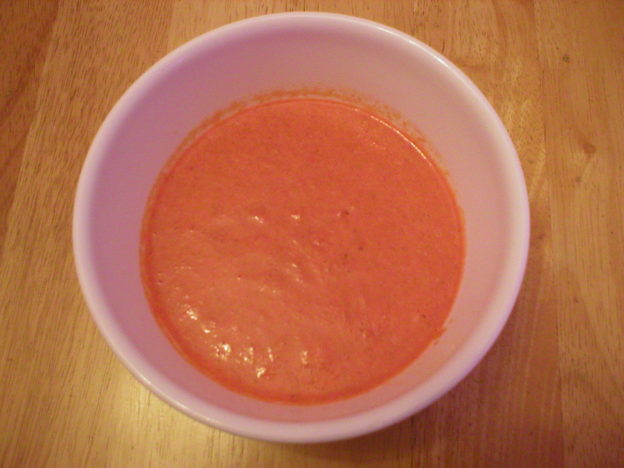
Carrot-Orange Sauce, Dip, or Salad Dressing

Carrot-Orange Sauce, Dip, or Salad Dressing

Here’s an easy and fast dressing to make that can be used as a sauce served over cooked vegetables or grains, as a vegetable dip, or as a dressing over a green salad. It’s versatile and can easily be adapted to your flavor preference with the amount of vinegar or lemon juice added. The key is to taste it along the way then let it sit in the refrigerator overnight for the flavors to blend. Then taste it again and adjust the acid (vinegar or lemon juice) if needed. AND it’s SOS-FREE (no added salt, oil, nor sugar), so it’s worth a try!

Below is a video demonstration of how to make this dressing. The written recipe is below the video.

Enjoy!
Judi

Carrot-Orange Sauce, Dip, or Salad Dressing
Makes About 1-1/4 Cups

This delicious mixture can be used as a sauce over cooked vegetables or grains, as a dip, and as a dressing for green salads. The key is in the amount of lemon juice or vinegar you add. See the suggestion below!

¾ cup chopped carrots (raw, blanched, or frozen and thawed)*
2 Tbsp ground flaxseed
½ cup orange juice
½ tsp ground coriander seed
2 to 4 Tbsp lemon juice or apple cider vinegar**

Place all ingredients in a blender or food processor. (See notes below.)** Pulse or process until smooth. Transfer to a covered container, and place in the refrigerator for at least 20 minutes to allow it to thicken. Use within 1 week.

If you have a high-powered blender, the raw carrots can be pureed until smooth. If you do not own such a blender, using blanched, or frozen and thawed carrots will give you a smoother product since they will be easier to puree.

*Cook’s Note: To blanch fresh carrots, placed diced carrots in boiling water for 2 minutes. Drain and allow to cool some before processing.

** Suggestion: The amount of lemon juice or apple cider vinegar you add to this dressing transforms it from a sauce to a dip, or to a salad dressing. Use less acid (2 to 3 tablespoons) if you want to use this as a sauce over vegetables or a grain. Use a medium amount (3 tablespoons) if you want to use this as a dip. Use the full amount (4 tablespoons) if you use this as a salad dressing, so the tang will bring the flavor out above the salad greens. If you’re not sure, add just 2 tablespoons at first, taste it, and add more acid as desired.

The flavors will blend well when this mixture is allowed to sit in a covered container in the refrigerator overnight. This is especially helpful when adding 4 tablespoons of lemon juice or vinegar. When using this as a sauce with less lemon juice or vinegar, it may be used right away. However, allowing it to rest for 20 to 30 minutes gives the ground flaxseed time to thicken the mixture before it is used.

Pinto Beans

Pinto Beans 101 – The Basics

Below is a comprehensive article all about our beloved pinto beans! Everything from what they are to how to cook and use them is covered. So, if you have a specific question about what to do with pinto beans, you should find what you are looking for below!

Enjoy,
Judi

About Pinto Beans
Most people are familiar with pinto beans, with their beige color with splashes of brown. When cooked, they become pinkish in color with a creamy texture. Pinto beans are among the “common beans” that appear to have originated in Peru. From there, they spread throughout the Americas, then to Europe when Spanish explorers introduced them after returning from voyages to the New World in the 15th century. Spanish and Portuguese traders introduced them to Africa and Asia. Today, the world’s largest producers of dried common beans are India, China, Indonesia, Brazil, and the United States.

Since beans are an inexpensive source of protein, they have become popular in many cultures around the world. Today, pinto beans are the most commonly eaten bean in the United States. They can be eaten whole, mashed, pureed, refried, simmered and stewed.

Nutrition and Health Benefits of Pinto Beans
Pinto beans are an excellent source of the essential trace mineral molybdenum. They are also a good source of fiber, folate, copper, manganese, phosphorus, protein, Vitamin B1, Vitamin B6, magnesium, potassium, and iron. One cup of cooked pinto beans has about 245 calories. Pinto beans are also a good source of some phytonutrients that have been shown to help prevent some cancers, notably stomach cancer.

Fiber. Like other beans, pinto beans are high in fiber. A one cup serving provides 15 grams of fiber. Of that, 4 grams are soluble fiber. This type of fiber forms a gel-like substance in the digestive tract and binds with bile removing it from the body. The body is then prompted to make more needed bile acids, and it uses cholesterol in the process. So, in an indirect way, soluble fiber helps to reduce blood cholesterol. Translation…eating pinto beans helps to lower your cholesterol!

The remaining fiber in pinto beans is the insoluble variety. This is known to help speed the movement of gastrointestinal contents, warding off constipation. It also helps to prevent digestive disorders such as irritable bowel syndrome and diverticulosis.

Heart Attack Risk. In a study that compared the food intake of over 16,000 middle-aged men in various countries, researchers found an 82% decrease in heart attack risk in those who ate the most legumes. In another study published in the Archives of Internal Medicine, researchers followed about 10,000 Americans for 19 years. Those who ate the most fiber (21 grams per day) had far less risk of heart disease than those who ate the least fiber (about 5 grams daily).

The nutrient profile in pinto beans also contributes to their aid in reducing the risk of cardiovascular disease. Folate is known to lower homocysteine levels. Homocysteine is an amino acid that is known to be an independent risk factor for heart disease when its levels are elevated. Having an adequate amount of folate in the diet helps to keep homocysteine levels in check, and eating pinto beans can help with that.

Furthermore, magnesium, also found in pinto beans, acts as nature’s calcium channel blocker. This helps to improve blood flow and the transport of oxygen and nutrients around the body. Researchers have found that a deficiency in magnesium is associated with heart attacks.

Potassium, also plentiful in pinto beans, is an important electrolyte in the body, used in nerve transmission and muscle contraction. This makes potassium important for maintaining normal blood pressure and heart function. A one cup serving of pinto beans provides 746 mg of potassium and only 1.7 mg of sodium, making them a noteworthy food to eat for preventing high blood pressure and preventing atherosclerosis and stroke.

Blood Sugar Control. The benefits of the fiber in pinto beans doesn’t stop with GI transit time and cholesterol removal from the body. It also helps to stabilize blood sugar levels. This is especially helpful for those with insulin resistance or diabetes. People eating high fiber diets have been shown to have lower blood sugar and insulin levels, and lower total cholesterol, triglycerides, and VLDL (very low-density lipoproteins) blood levels. These are all markers for heart disease and are often elevated in those with diabetes and insulin resistance.

Sulfite Sensitivity. Pinto beans are an excellent source of molybdenum, a trace mineral that is part of the enzyme that metabolizes sulfites. Sulfites are added to many foods and even medications as preservatives. Yet, some people are sensitive to sulfites, causing a rapid heartbeat, headache and disorientation. Those who react to sulfites may be deficient in molybdenum. If this is the case, pinto beans may help alleviate that problem.

Iron. Pinto beans are a good source of the essential mineral iron. Iron is a crucial part of hemoglobin, the molecule that transports oxygen in the blood. Iron deficiency leads to fatigue because not enough oxygen is reaching tissues around the body. Furthermore, the mineral copper (which is plentiful in pinto beans) is used in the making of hemoglobin. Anyone who suffers from low iron levels would benefit by including pinto beans in their meals when possible.

Energy Production and Antioxidant Defense. If all that’s not enough, pinto beans are a good source of manganese and copper. These two minerals are key components of an enzyme (superoxide dismutase) that disarms free radicals in the mitochondria (the cellular organelle where energy is produced). Copper is also used in another enzyme (lysyl oxidase) used in the production of collagen and elastin, important in making our blood vessels, bones and joints.

Memory. Vitamin B1 (thiamine) is critical for proper cognitive brain functioning. Thiamine is used in the making of acetylcholine, a vital neurotransmitter used in the memory function. Low levels of acetylcholine have been associated with age-related senility and Alzheimer’s disease. Since pinto beans are a good source of thiamine, it’s another powerful reason to eat these beans when you can!

Protein. Eating pinto beans is an easy way to add protein to your menu when looking for a meat alternative. Combine them with a grain product, like rice, pasta, or a tortilla, and you have an amino acid combination that will rival any animal food you can name. Furthermore, it will be free of cholesterol and saturated fat, and have fewer calories. One cup of pinto beans provides over 15 grams of protein. When combining 1 cup of cooked pinto beans with 1 cup of brown rice, the protein level jumps to 21 grams!

How to Select Pinto Beans
Dried Pinto Beans. Dried pinto beans are usually found pre-packaged in most grocery stores in America. They may also be found in bulk bins. As when purchasing any dried food, whether it is pre-packaged or in bulk bins, be sure there is no sign of moisture or insects in the beans. When purchasing from bulk bins, it’s best to purchase from a store than has a good turnover of product to be sure they are not old.

Canned Pinto Beans. Canned beans are a very convenient alternative to their dried counterparts. Most grocery stores carry them. Read the ingredients list because some canned beans are processed with additives and flavorings that you may or may not want.

If you’re concerned with BPA (bisphenol A) that has been a common anticorrosive component of can liners and other products, check the label or information that was stamped on the can. Many processors are now using BPA-free liners. If the label or can does not state BPA-free, it may contain BPA.

How to Store Pinto Beans
Dried Pinto Beans. Store dried pinto beans in an airtight container in a dry, cool, dark place. They should keep well for 1 to 3 years. Depending on conditions, they may keep well for longer than that, but their quality may deteriorate over time, although they should still be safe to eat. If they have any signs of mold or moisture on them, or insect or rodent damage, they should not be eaten. [Note that the longer dried beans are stored, the longer they may need to cook to get tender. They absolutely should be soaked before being cooked, which will help to shorten the cooking time.]

Canned Pinto Beans. For the longest shelf life, store canned pinto beans in a cool, dry place. An unopened commercially processed can will usually last 3 to 5 years for best quality. They are still safe to eat after the expiration date if the can is not damaged and they were stored in a cool, dry place. Note that the quality may decline with age, with changes in color, flavor, and texture. If the can was bulging, rusting, severely damaged, or if you notice an “off” odor, flavor, or appearance when opened, the beans are not safe to eat and should be discarded.

Cooked pinto beans or unused beans from opened cans will keep well in a covered container in the refrigerator for 3 to 5 days.

How to Preserve Cooked Pinto Beans
If you’ve cooked more dried pinto beans then you can eat within a reasonable amount of time, the extra beans may be frozen. Simply transfer them to a freezer container or bag. Label them with the contents and date and store them in the freezer for up to 6 months for best quality. They will be safe to eat beyond that, but their quality may decline over time.

Dried vs Canned Pinto Beans
Cost. When comparing cost per serving, dried beans are cheaper than canned beans. The cost of a serving of canned beans is usually about twice that of cooked dried beans. Even if we were to take into consideration the cost of the water and electricity used in cooking the dried beans, the dried beans would very likely still be cheaper. So, if you’re looking for ways to save on groceries, buy dried beans and take the time to cook them. To use less water and electricity in the long run, cook a big batch (a pound or two of beans) at one time and store the extra cooked beans in the freezer. They’ll be ready when you need them.

Convenience. Needless to say, canned beans are more convenient than dried beans. You simply open the can, rinse and drain the beans, and they’re ready to use. The canned beans are an excellent choice if you’re always short on time and can’t (or don’t want to) take the time to cook dried beans. Also, canned beans should be a staple item kept in your pantry in case of an emergency. If the power goes out or if you temporarily lose your water supply, canned beans can be eaten straight from the can. They can be a lifesaving source of food when there is no way to cook. It’s better to be prepared, and not need it, then need it and not be prepared!

Many people believe cooking dried beans is a big ordeal. However, when considering “hands on” time, it’s actually very little. It takes little time to sort and rinse the beans then cover them with water in a pot. After being soaked, it takes little time to drain them then refill the pot with water. The cooking process pretty much takes care of itself. Then draining them takes little time, again. So, it’s really not hard nor time-consuming to cook dried beans when considering actual hands-on time. Furthermore, they can be cooked in a slow cooker or pressure cooker to make things a little simpler.

Nutritional Value. The nutritional value of canned pinto beans is about the same as cooked dried pinto beans. Either way, the beans need to be cooked completely before being eaten or canned, so they should have about the same nutrient content. So, this factor should not be a determinant when considering which form of pinto bean to buy.

Additives. If you want to avoid any additives in your foods, cooking dried beans is your best option. In this case, you can control what is added to the beans. Canned beans may have added salt and other ingredients as firming or color retention agents. Organic canned beans will not have firming or color retention agents, but still may have added salt. So, if salt is no issue, organic beans may be a good choice for you. Otherwise, cooking dried beans gives you complete control as to what is added to your beans.

BPA. BPA (bisphenol-A) is an anticorrosive agent that has been used in can linings and other applications such as water bottles, bottle caps, water supply lines and even dental sealants. Research has found that this agent may cause harmful effects such as increased blood pressure and damage to unborn fetuses and young children. If you’re concerned about the possible harmful effects of BPA, it’s wise to look for cans labeled as BPA-free. Progressively, more manufacturers are using BPA-free cans, but not all. So, it pays to read the label or the information that was stamped on the end of the can. To avoid BPA from cans, cooking dried beans ensures you’re not ingesting any of the chemical.

Taste. Taste is subjective and differs from person to person. However, the overall consensus is that cooked dried beans taste better than canned beans. I agree with that statement (in my humble opinion). If taste is a big factor for you, then cooking dried beans is your best option. Also, the advantage of cooking your own dried beans gives you the opportunity to flavor them to your liking. Adding onions, garlic, and/or herbs during the cooking process allows flavors to infuse in the beans that would not otherwise happen. If you still need the convenience of canned beans, adding them to soups, stews or other dishes where they will be combined with a lot of other foods, may mask the flavor difference of canned beans.

How to Prepare Dried Pinto Beans
Dried pinto beans should be soaked before being cooked. This makes them more tender, reduces cooking time, and also reduces their gas-producing tendencies when eaten. Preparing dried pinto beans is not hard, but does take some time.

First, place your dried beans in your cooking pot or a bowl. Sort through them to remove any stones or other debris that may be among them, and any beans that don’t look good. Then rinse the beans and drain the water. Next, cover the beans with fresh water in your pot by at least two inches. There are two methods of soaking to choose from at this point…

Overnight Method. Cover the pot and allow the beans to soak overnight or for at least 6 hours. Drain the water and cover the beans with fresh water by at least two inches. Cook your beans (see directions below).

Quick Soak Method. Cover your sorted, rinsed, and drained beans in your cooking pot with fresh water. Place the lid on the pot and bring them to a boil. Boil them for two minutes. Remove the pot from the heat and allow them to rest in the covered pot for two hours. Drain the water, then fill the pot with fresh water. Cook your beans (see directions below).

Cooking Your Soaked Beans. Place your pot filled with fresh water and soaked beans on the stove. The water level should be at least one inch above the soaked beans. Cover the pot and bring them to a boil, then lower the heat. Tilt the lid on the pot and allow the beans to simmer until they are soft. This can take anywhere from 45 minutes to 2 hours depending upon how fast they are cooked and how long they soaked. Stir them occasionally. Be sure they remain submerged. If needed, add more hot water to the pot. Do NOT add salt or acidic ingredients like vinegar or lemon juice to the water at first. This will cause the beans to be tough and will make them hard to cook. If salted or flavored water is desired, add flavorings when the beans are close to being done. When they are soft, drain the water and use them as desired.

If you want to flavor your beans as they cook, aromatic ingredients such as onions, garlic and herbs may be added to the cooking water from the start. This will infuse a rich flavor into your beans that they would not otherwise have. However, just remember to save the salt and acid ingredients until VERY late in the cooking process. In this case, the bean broth can be saved and stored in the freezer to be used in soups and stews for extra flavoring.

Soaked dried beans may also be cooked in a pressure cooker or slow cooker. Follow the manufacturer’s directions for cooking soaked, dried beans in your appliance.

Quick Tips and Ideas for Using Pinto Beans
* Try using cooked or canned pinto beans in chili recipes instead of kidney beans.

* Make an easy sandwich or tortilla filling or dip by blending pinto beans with sage, oregano, garlic, and black pepper.

* Make a yummy wrap by layering cooked pinto beans, chopped tomatoes, and chopped onions on a tortilla. Top with shredded cheddar cheese. Broil briefly until the filling is hot and the cheese melts. Top with diced avocado and chopped cilantro.

* Add pinto beans to vegetable soup.

* Make a simple one pot meal by heating cooked pinto beans, cooked rice, and cooked vegetables such as carrots, zucchini, and tomatoes. Season to taste and enjoy!

* When cooking dried beans, if you want to flavor them, try adding aromatic ingredients such as garlic, onions, and herbs. These ingredients can be added at the start of cooking, so the flavors will infuse the beans as they cook. Just don’t add any salt or acid ingredients until the end of cooking to avoid making the beans tough. Then save the water when you drain the beans. Freeze it in measured amounts and add the flavored bean water to soups and stews later.

* Even though some people do not soak beans before cooking them, it IS highly recommended to soak them first. This makes them easier to digest, reducing their gas-forming tendencies, and also reduces their cooking time.

Herbs/Spices That Go Well with Pinto Beans
Anise seeds, bay leaf, chili powder, cilantro, cumin, garlic, oregano, parsley, pepper (black), sage, salt, savory, thyme

Foods That Go Well with Pinto Beans
Proteins, Legumes, Nuts, Seeds: Bacon, beans (others such as black, kidney), beef, eggs, ham, pork

Vegetables: Chiles (i.e. ancho, chipotle, jalapeno, poblano, serrano), fennel, kale, mushrooms, onions, scallions, tomatoes and tomato puree

Fruits: Avocados, lemon, lime

Grains and Grain Products: Chips (tortilla), corn, quinoa, rice, spelt, tortillas

Dairy and Non-Dairy: Cheese (esp. cheddar, Jack)

Other Foods: Barbecue sauce, beer, liquid smoke, maple syrup, mustard, oil (esp. olive), stock (i.e. vegetable)

Pinto beans have been used in the following cuisines and dishes…
Burritos, casseroles, chili (meat and meatless), dips, frijoles, Mexican cuisine, nachos, pates, purees, salads (i.e. taco salad), salsas, soups, Southwestern (U.S.) cuisine, spreads, stews, tacos, Tex-Mex cuisine, tostadas, veggie burgers

Suggested Flavor Combos Using Pinto Beans
Add pinto beans to any of the following combinations…

Chiles + Sage
Chili Powder + Cumin
Cilantro + Liquid Smoke + Onions
Cumin + Garlic + Onions + Quinoa
Oregano + Sage + Thyme

Recipe Links

Perfect Pinto Beans https://www.foodnetwork.com/recipes/ree-drummond/perfect-pinto-beans-3339174

Mexican Pinto Beans From Scratch (1 Pot) https://minimalistbaker.com/mexican-pinto-beans-scratch-1-pot/

Easy Refried Beans https://www.camelliabrand.com/recipes/easy-refried-beans/

Pinto Bean Burrito Bowl with Avocado Cilantro Dressing https://www.camelliabrand.com/recipes/pinto-bean-burrito-bowl-with-avocado-cilantro-dressing/

Chipotle Pinto Bean Tortilla Soup https://www.camelliabrand.com/recipes/chipotle-pinto-bean-tortilla-soup/

Cheesy Bean Quesadilla https://www.camelliabrand.com/recipes/cheesy-bean-quesadilla/

Pinto Bean Recipes https://www.foodandwine.com/beans-legumes/pinto-bean/pinto-bean-recipes

10 Amazing Dishes to Make with Canned Pinto Beans https://www.goodhousekeeping.com/food-recipes/g986/canned-pinto-bean-recipes/

Tuscan Pinto Bean Soup https://www.goodhousekeeping.com/food-recipes/a16075/tuscan-pinto-bean-soup-recipe-ghk0414/

Pinto Bean Burritos https://www.goodhousekeeping.com/food-recipes/a10513/pinto-bean-burritos-recipe-ghk1010/

Three Bean Vegan Tamale Pie https://www.connoisseurusveg.com/three-bean-vegan-tamale-pie/#wprm-recipe-container-13289

Vegan Pinto Bean Brownies http://www.exsloth.com/vegan-pinto-bean-brownies/

Homemade Vegetarian Chili https://cookieandkate.com/vegetarian-chili-recipe/#tasty-recipes-23997

Easy Refried Beans https://cookieandkate.com/easy-refried-beans-recipe/#tasty-recipes-28453

Loaded Veggie Nachos https://cookieandkate.com/loaded-veggie-nachos-recipe/#tasty-recipes-28532

Pinto Posole https://cookieandkate.com/pinto-posole-recipe/#tasty-recipes-28231

Mole Pinto Beans https://www.food.com/recipe/mole-pinto-beans-173251

Resources

http://www.whfoods.com/genpage.php?tname=foodspice&dbid=89#descr

https://www.healthline.com/nutrition/what-is-bpa

https://www.stilltasty.com/fooditems/index/18010

https://www.leaf.tv/articles/how-to-tell-if-pinto-beans-are-stale-or-too-old/

https://www.stilltasty.com/fooditems/index/18011

https://www.umassmed.edu/nutrition/Cardiovascular/handouts/beans/

https://beaninstitute.com/dry-vs-canned-beans-which-is-better/

https://www.bonappetit.com/story/dried-beans-worth-effort

https://www.mayoclinic.org/healthy-lifestyle/nutrition-and-healthy-eating/expert-answers/bpa/faq-20058331

https://www.niehs.nih.gov/health/topics/agents/sya-bpa/index.cfm

https://www.camelliabrand.com/dry-beans-vs-canned-whats-the-difference/

https://www.ehow.com/info_8245575_things-make-pinto-beans.html

https://foodcombo.com/find-recipes-by-ingredients/beans-pinto

https://cals.arizona.edu/fps/sites/cals.arizona.edu.fps/files/cotw/Pinto_Beans.pdf

Page, Karen. (2014) The Vegetarian Flavor Bible. New York, NY: Little, Brown and Company.

About Judi
Julia W. Klee (Judi) began her journey enjoying “all things food” in elementary school when she started preparing meals for her family. That love of food blossomed into a quest to learn more and more about health and wellness as related to nutrition. She went on to earn a BS Degree in Food and Nutrition, then an MS Degree in Nutrition. She has taught nutrition and related courses at the college level to pre-nursing and exercise science students. Her hunger to learn didn’t stop upon graduation from college. She continues to research on a regular basis about nutrition as it relates to health. Her hope is to help as many people as possible to enjoy foods that promote health and wellness.

Simple Vegetable Soup

Simple Vegetable Soup

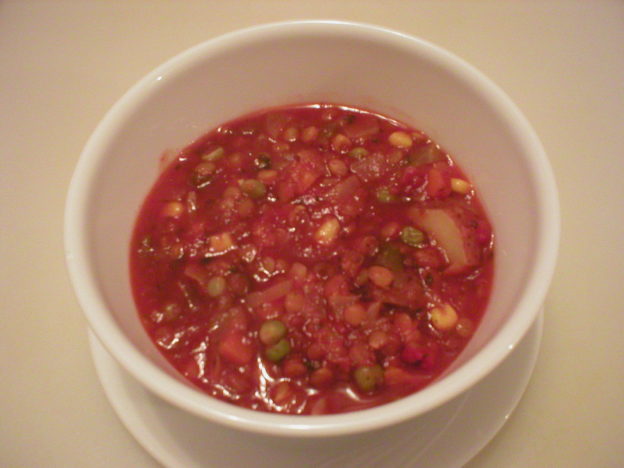
To me (and many people), there’s nothing more comforting than a warm bowl of soup on a cold day. Here’s a delicious vegetable soup that’s easy to put together and cooks up in less than an hour. Other than opening a can, you can’t get much easier than that! As written, this recipe makes four meal-size servings. However, if you need more, it can very easily be increased.

Below is a video demonstration of how to make the soup. The written recipe follows the video. I hope this helps!!

Enjoy!
Judi

Simple Vegetable Soup
Makes 4 Meal-Size Servings

4 cups vegetable broth
1 (28 oz) can crushed tomatoes
1 (12 oz) bag frozen mixed vegetables
1 cup diced cabbage
1 cup diced potato
½ cup diced onion
½ cup brown lentils, rinsed
2 Bay leaves
1 Tbsp dried parsley
1 tsp dried marjoram

Put all ingredients in a large pot. Bring to a boil. Cover the pot, reduce the heat to medium-low and simmer for 45 minutes, until everything is tender and flavors are blended. Stir occasionally while it cooks. Enjoy!

Store leftovers in a covered container in the refrigerator. Use within 5 days.

About Judi
Julia W. Klee (Judi) began her journey enjoying “all things food” in elementary school when she started preparing meals for her family. That love of food blossomed into a quest to learn more and more about health and wellness as related to nutrition. She went on to earn a BS Degree in Food and Nutrition, then an MS Degree in Nutrition. She has taught nutrition and related courses at the college level to pre-nursing and exercise science students. Her hunger to learn didn’t stop upon graduation from college. She continues to research on a regular basis about nutrition as it relates to health. Her hope is to help as many people as possible to enjoy foods that promote health and wellness.

Cumin Seeds

Cumin 101 – The Basics

Here’s a comprehensive article all about the spice cumin. If you need to know a little something about this highly prized spice that has been enjoyed throughout history, you should find your answer below. From what it is, the history of cumin, its nutritional aspects, and how to use it, is all covered, and more!

Enjoy!
Judi

Cumin 101 – The Basics

About Cumin
The spice cumin is native to the Mediterranean region. It has been cultivated in the Middle East, India, China, and Mediterranean countries for thousands of years. Throughout history, cumin has played an important part in the cuisines and medicine of the region. During Biblical times, cumin was used as a spice in soup and bread, and also as a currency to pay tithes to priests. Ancient Egyptians used cumin in the mummification process of pharaohs.

Ancient Greeks and Romans used cumin as a culinary spice, especially since it was readily available. It was often used as a substitute for black pepper, which was very expensive and hard to obtain at the time.

Cumin was commonly used in Europe during the Middle Ages. It became known as a symbol of love and fidelity. People often carried cumin seeds with them when attending weddings, and wives often sent loaves of cumin bread with husbands who were going off to war.

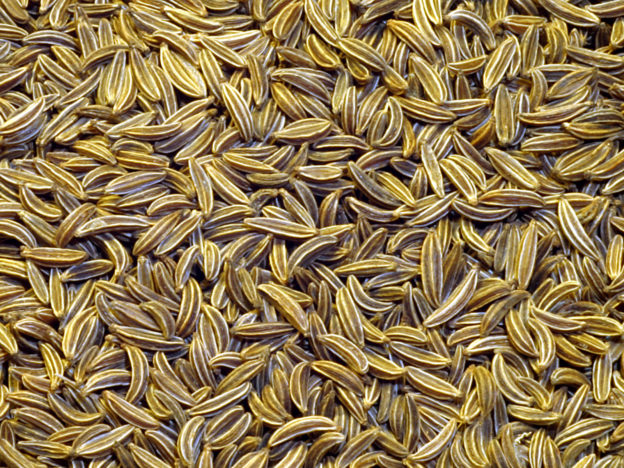
Cumin seeds look similar to caraway seeds. They are yellow-brown, and oblong with longitudinal ridges. Cumin belongs to the same botanical family (Umbelliferae) as caraway, parsley, and dill. It has a strong, earthy flavor that can be described as peppery with slight citrus undertones. Cumin is available in both whole seeds and a ground powder. Cumin is the world’s second most popular spice, second to black pepper. The seeds come in brown, black and white colors.

Nutrition and Health Benefits of Cumin
Cumin in an excellent source of iron, and has appreciable amounts of manganese, calcium, magnesium, phosphorus and Vitamin B1.

Cumin has some important health benefits, as follows…

Iron. Cumin is an excellent source of iron. Since iron is a vital part of hemoglobin in our blood, it plays a key role in transporting oxygen from the lungs to all cells of the body. Iron is also necessary for proper energy metabolism through its role in specific enzymes in the production of energy. Iron is also used in keeping the immune system healthy by being a key component in the reproduction and maturation of immune cells, especially lymphocytes. Two teaspoons of cumin seeds provide almost 3 mg of iron, or about 16 percent of our Daily Value of iron. That’s impressive!

Digestion. Traditionally, cumin seeds have been used to help promote healthy digestion. Recent research has backed that up by finding that cumin promotes the release of pancreatic enzymes which are critical for proper digestion and nutrient absorption.

Cancer prevention. Cumin seeds may also have anticancer properties. Research has shown that cumin protected laboratory animals from stomach and liver tumors. This anticancer effect may be due to cumin’s ability to enhance liver detoxification enzymes in addition to its powerful free radical scavenging properties. Researchers speculate these properties alone may give cumin health-promoting effects yet to be identified.

How to Select Cumin
For the longest shelf-life, select whole cumin seeds. The ground powder is convenient, but tends to lose its flavor quickly. Cumin seeds can be used whole, or ground to a powder in a spice grinder or mortar and pestle.

How to Store
Cumin seeds and powder should be kept in a tightly sealed glass container in a cool, dry, and dark place. Ground cumin keeps well for about six months. Whole seeds will stay fresh for about one year. To extend the life of whole cumin seeds, they may be kept tightly wrapped in the freezer.

How to Prepare Cumin
Whole seeds and ground cumin can be used straight from the jar. However, lightly toasting the seeds before being used brings out their full aroma and flavor.

Quick Ideas and Tips for Using Cumin
* Cumin is often combined with black pepper and honey in middle Eastern countries. This combination is often used to flavor vegetables, chicken and fish dishes.

* A warming cup of cumin tea can be made by bringing seeds to a boil in water, then letting them steep for 8 to 10 minutes. This can help reduce bloating and intestinal gas.

* Cumin is often used to flavor lentils, chickpeas, and black beans. The flavor of cumin blends well with legumes, so remember that as a flavor option the next time you cook beans.

* Flavor up rice by adding toasted cumin seeds, dried apricots, and almonds.

* Cumin goes well with just about any grain. If you want to add a little flavor, sprinkle on a little ground cumin.

* Give vegetables a North African flavor twist by adding a little cumin.

* The flavor of cumin is very strong. If you’re not sure, just sprinkle a little on your food, then taste it, and go from there.

* Whole cumin seeds can be lightly toasted in a hot, dry skillet for 5 minutes. This step intensifies the flavor, giving them a deep, smoky flavor. Keep the seeds moving in the pan so they don’t burn. Add toasted cumin seeds to salads, roasted potatoes or other vegetables, bread doughs, and soups.

* For the best flavor, toast cumin seeds before grinding them into powder.

* Tempering cumin seeds with other spices is a common technique used in Indian cooking. This step releases flavors and aromas from the spices before adding other ingredients. Simply fry them in oil briefly until they are aromatic and start to pop, then add other ingredients. This will infuse the entire dish with the cumin flavor.

* Sprinkle ground toasted cumin on avocado toast.

* Add cumin to pork and lamb dishes.

* Sprinkle a little ground cumin over a boiled egg, along with a little salt.

* Sprinkle a little cumin onto a cheese omelet as it finishes cooking.

* Add whole cumin seeds early in cooking to allow time for the flavors to be released.

* The flavor of ground cumin is more concentrated that that of the whole seeds. When switching one for the other, use less of the ground spice than the whole seed.

Herbs/Spices That Go Well with Cumin
Cardamom, cayenne, chili powder, cilantro, cinnamon, cloves, coriander, curry powder, fenugreek, garlic, ginger, mint, nutmeg, oregano, paprika, pepper, turmeric

Foods That Go Well with Cumin
Proteins, Legumes, Nuts, Seeds: Beans (in general), beef, chicken, chickpeas, eggs, lamb, lentils, peas, seafood, sesame seeds, walnuts

Vegetables: Bell peppers, cabbage, carrots, chiles, chives, eggplant, mushrooms, onions, potatoes, sauerkraut, squash (i.e. kabocha), tomatoes and tomato sauce, vegetables (root)

Fruits: Avocados, lemon, lime, tamarind

Grains and Grain Products: Bulgur, grains (in general), rice

Dairy and Non-Dairy: Cheese (i.e. cheddar, Swiss), yogurt

Other Foods: Cocoa

Cumin has been used in the following cuisines and dishes…
North African cuisines, baba ghanoush, baked goods (i.e. breads), burritos, chili, Cuban cuisine, curries, dals, enchiladas, Greek cuisine, hummus, Indian cuisine, kebabs, Latin American cuisines, marinades, Mediterranean cuisines, Mexican cuisine, Middle Eastern cuisines, Moroccan cuisine, purees, salad dressings, salads (i.e. bean, rice), salsas, sauces (i.e. tomato), soups, Southeast Asian cuisines, Spanish cuisine, stews, tacos, Tex-Mex cuisine, Turkish cuisine

Suggested Flavor Combos Using Cumin
Add cumin to any of the following combinations…

Avocado + black beans + lime + tomatoes
Black beans + cilantro + garlic
Cilantro + curry spices
Garlic + Potatoes
Paprika + tomatoes

Recipe Links
Curried Cumin Potatoes https://www.allrecipes.com/recipe/38033/curried-cumin-potatoes/?internalSource=staff%20pick&referringId=1137&referringContentType=Recipe%20Hub

Boilermaker Tailgate Chili https://www.allrecipes.com/recipe/78299/boilermaker-tailgate-chili/?internalSource=staff%20pick&referringId=1137&referringContentType=Recipe%20Hub&clickId=cardslot%203

Homemade Black Bean Veggie Burgers https://www.allrecipes.com/recipe/85452/homemade-black-bean-veggie-burgers/?internalSource=hub%20recipe&referringId=1137&referringContentType=Recipe%20Hub&clickId=cardslot%205

Refried Beans without the Refry https://www.allrecipes.com/recipe/70312/refried-beans-without-the-refry/?internalSource=hub%20recipe&referringId=1137&referringContentType=Recipe%20Hub&clickId=cardslot%206

Vegan Black Bean Soup https://www.allrecipes.com/recipe/25333/vegan-black-bean-soup/?internalSource=hub%20recipe&referringId=1137&referringContentType=Recipe%20Hub&clickId=cardslot%208

Fish Tacos with Honey-Cumin Cilantro Slaw and Chipotle Mayo https://www.allrecipes.com/recipe/149052/fish-tacos-with-honey-cumin-cilantro-slaw-and-chipotle-mayo/?internalSource=hub%20recipe&referringId=1137&referringContentType=Recipe%20Hub&clickId=cardslot%2015

Moroccan Vegetable Stew https://www.myrecipes.com/recipe/moroccan-vegetable-stew

Wilted Cabbage with Toasted Cumin https://www.myrecipes.com/recipe/wilted-cabbage-with-toasted-cumin

Chickpea Salad with Cumin Vinaigrette https://www.myrecipes.com/recipe/chickpea-salad-with-cumin-vinaigrette

Barbecue-Rubbed Pork Chops https://www.myrecipes.com/recipe/barbecue-rubbed-pork-chops

Chickpea Falafels https://www.theperfectpantry.com/2010/09/cumin-recipe-chickpea-falafel.html

Black Beans and Rice https://www.theperfectpantry.com/2011/07/quick-and-easy-black-beans-and-rice-recipe.html

Cauliflower Tacos with Cashew Crema https://www.bonappetit.com/recipe/cauliflower-tacos-with-cashew-crema

Vegetarian Taco Bowls https://www.bonappetit.com/recipe/vegetarian-taco-bowls

Mixed Bean and Avocado Salad https://www.thekitchn.com/recipe-mixed-be-18056

Resources
http://www.whfoods.com/genpage.php?tname=foodspice&dbid=91#nutritionalprofile

https://www.thekitchn.com/quick-tip-using-whole-cumin-se-47158

https://www.thehomesteadgarden.com/the-spice-series-cumin/

https://www.spicebox.co.uk/blog/cumin-seeds-top-tips-and-recipes-ideas.html

https://www.seriouseats.com/2019/05/cumin.html

https://www.helpwithcooking.com/spice-guide/cumin.html

https://www.thespruceeats.com/what-is-cumin-995638

https://www.ncbi.nlm.nih.gov/pubmed/10971835

https://www.spicesinc.com/p-483-which-spices-do-you-grind.aspx

https://www.spiceography.com/cumin-seeds-vs-ground-cumin/

https://www.mccormick.com/spices-and-flavors/cumin

Page, Karen. (2014) The Vegetarian Flavor Bible. New York, NY: Little, Brown and Company.

About Judi
Julia W. Klee (Judi) began her journey enjoying “all things food” in elementary school when she started preparing meals for her family. That love of food blossomed into a quest to learn more and more about health and wellness as related to nutrition. She went on to earn a BS Degree in Food and Nutrition, then an MS Degree in Nutrition. She has taught nutrition and related courses at the college level to pre-nursing and exercise science students. Her hunger to learn didn’t stop upon graduation from college. She continues to research on a regular basis about nutrition as it relates to health. Her hope is to help as many people as possible to enjoy foods that promote health and wellness.
Black Beans

Black Beans 101 – The Basics

Black beans are a popular and extremely health-promoting legume to include in your meals whenever you can. If you’re wondering about the health benefits of black beans or are looking for ideas on what to do with them, such as what foods, herbs, or spices go well with black beans, you’re in the right place! I’ve answered those questions and a lot more! Read onward for a comprehensive review of black beans.

Enjoy!
Judi

Black Beans 101 – The Basics

About Black Beans
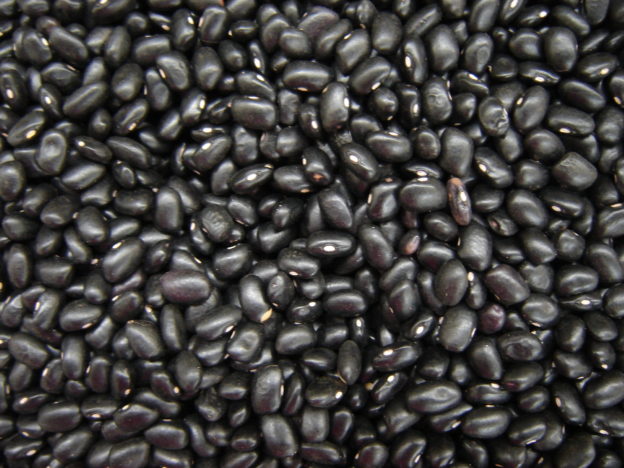
Black beans are native to North, South and Central America. They date as far back as 7,000 years ago when they were a staple food for Central and South Americans. Black beans are about one-half inch long with a shape similar to a pinto bean. They are members of the plant family Phaseolus vulgaris, along with navy, kidney, and pinto beans. Black beans are sometimes referred to as turtle beans or black turtle beans. Today, black beans are grown worldwide and are enjoyed in many cuisines. Cooked black beans are soft in texture with a mild, but slightly sweet flavor.

Nutrition and Health Benefits of Black Beans
Black beans are an excellent source of molybdenum. This trace mineral is critical in the formation of enzymes used in a variety of essential functions including carbohydrate metabolism. They also contain a lot of folate, fiber, copper, manganese, Vitamin B1, phosphorus, magnesium and iron. Furthermore, a one cup serving of black beans provides about 15 grams of protein (about one-third of the day’s needs), 15 grams of fiber, and about 180 mg of alpha-linolenic acid (an omega-3 fatty acid). That’s impressive!

Blood Sugar Control and Resistant Starch. The high fiber content of black beans coupled with the high protein content makes them an excellent food for helping to control blood sugar levels. Both fiber and protein help to regulate the passage of food through the gastrointestinal tract, reducing spikes in blood sugar from absorbed carbohydrates. This property gives black beans (and other legumes) a low rating on the glycemic index.

Also, recent studies have shown that black beans have specific peptides (types of proteins) that inhibit the formation of glucose transport molecules. This further inhibits glucose absorption from the digestive tract, also helping to keep blood sugars level. This can help in the management of blood sugar issues, especially Type 2 diabetes.

In addition to the high fiber content of black beans, much of their carbohydrate content consists of resistant starch. Resistant starch is not easily broken down in the upper digestive tract. Instead, it is carried to the large intestines where bacteria feed on the starch, breaking it down into short chain fatty acids. The fatty acids become fuel for our intestinal cells and may play a key role in the prevention of metabolic syndrome, bowel disorders, and some cancers. Short chain fatty acids have been found to aid in the treatment of ulcerative colitis, Crohn’s disease, and antibiotic-associated diarrhea. These properties help to decrease the risk of colorectal cancer in those who regularly eat black beans and other legumes.

Phytonutrient Content: Black beans are an outstanding source of anthocyanins and other flavonoids. Many of these compounds contribute to the rich, dark color of black beans. Anthocyanins acts as antioxidants, fighting harmful molecules in the body. They may provide anti-inflammatory, anti-viral, and anti-cancer benefits as well.

A 2010 report published in Nutrition Reviews found that anthocyanins may help to protect heart health by improving cholesterol levels and blood sugar levels, in addition to fighting oxidative stress. All of these factors contribute to heart disease. A 2011 study published in the American Journal of Clinical Nutrition found that anthocyanins may help to prevent high blood pressure, further protecting our heart health.

Dried vs Canned Black Beans
Dried Black Beans. Dried black beans should first be soaked, rinsed and drained, then cooked before being eaten. This takes some time and may not be feasible for all cooks. However, the nutrient content of dried, soaked and cooked beans is a little higher than that of the canned variety. Dried black beans are cheaper to buy when considering the amount of cooked beans you get from a one-pound bag vs the amount in one can of beans. If the cost factor is important to you, dried beans are the best option.

Storing Dried Black Beans. Store dried black beans in a cool, dry area in a sealed container. When properly stored, they should stay fresh for 2 to 3 years, although they are usually safe to eat beyond that. If you open a container of dried black beans and do not use them all, return the remaining unused beans to an airtight, sealed container stored in a cool, dry place. Dried beans are usually safe to eat beyond their ‘best by” date, although the quality may decline over time. If your dried beans develop an “off” odor or appearance, or show signs of mold or insect infestation, it’s time to discard them.

Canned Black Beans. Canned black beans are a convenient staple food to have in the pantry, and can be found in just about any grocery store. They should be rinsed and drained before eating. Since they are fully cooked, canned black beans can be eaten cold, cooked, pureed, or baked.

The nutrient content of canned black beans is slightly less than that of their dried counterparts, but not so much that they should be avoided. They are typically sorted before processing, as you would dry beans. The beans are then pre-hydrated before being cooked in their sealed cans. Some varieties of canned black beans have added salt and/or calcium chloride to maintain firmness. If you want to avoid those additives, organic and no salt added varieties of canned black beans are available at many grocery stores. The processing of canned black beans is relatively low when compared with other foods, and are considered to be a healthy alternative to dried black beans.

Storing Canned Black Beans. The quality of unopened cans of black beans can be good for 3 to 5 years if kept in a cool, dry place. They are usually safe to eat beyond that, but the quality may decline. Canned black beans usually have a “best by” date stamped on the can. If kept properly, the beans should be safe to eat beyond that day, but the quality may decline. If you notice a bad odor, off appearance or flavor, or mold, the beans should certainly be discarded. If any canned items are leaking, rusting, bulging, or severely dented, they should be discarded.

[On a personal note…When I was young, my parents had a pantry room off the kitchen where they stored canned foods. Apparently, they didn’t check them routinely. One day, a large can of fruit cocktail exploded in the room. It was everywhere! We did the best we could with clean-up, but that room smelled like old fruit cocktail for a VERY long time after that. So…lesson learned: Monitor your canned goods to be sure they are not bulging and use them within a reasonable amount of time!]

How to Prepare Dried Black Beans
Black beans should be soaked before being cooked. This makes them more tender, reduces cooking time, and also reduces their gas-producing tendencies when eaten. Preparing dried black beans is not hard, but does take some time.

First, place your dried beans in your cooking pot. Sort through them to remove any stones or other debris that may be in the bag, and any beans that don’t look good. Then rinse the beans and drain the water. Next, cover the beans with fresh water by at least two inches. There are two methods of soaking to choose from at this point…

Overnight method. Cover the pot and allow the beans to soak overnight or for at least 6 hours. Drain the water and cover the beans with fresh water by at least two inches. Cook your beans (see directions below).

Quick soak method. Cover your rinsed and drained beans in your cooking pot with fresh water. Place the lid on the pot and bring them to a boil. Boil them for two minutes. Remove the pot from the heat and allow them to rest in the covered pot for two hours. Drain the water, then fill the pot with fresh water. Cook your beans (see directions below).

Cooking your soaked beans. Place your pot filled with water and soaked beans on the stove. Cover the pot and bring them to a boil, then lower the heat. Tilt the lid on the pot and allow the beans to simmer until they are soft. This can take anywhere from 45 minutes to 2 hours depending upon how fast they are cooked and how long they soaked. Stir them occasionally. Be sure they remain submerged. If needed, add more hot water to the pot. Do NOT add salt or acidic ingredients like vinegar or lemon juice to the water at first. This will cause the beans to be tough and will make them hard to cook. If salted or flavored water is desired, add flavorings when they are close to being done. When they are soft, drain the water and use them as desired. Soaked dried beans may also be cooked in a pressure cooker or slow cooker.

Quick Ideas and Tips for Using Black Beans
* To have a supply of freshly cooked black beans readily available, cook a pound or two of dried beans. Cool them down in cold water, drain well, then transfer them to freezer bags or containers and store them in the freezer. You’ll have plenty of cooked black beans ready when you need them.

* Make a simple salad by combining black beans with celery, bell peppers, tomatoes and your favorite spicy dressing. Serve this on its own, on a bed of greens, or with a cooked grain of your choice.

* Make a quick taco by filling shells with cooked black beans, greens of choice, chopped tomatoes, avocado slices, onions and any other veggies you want. Top with chopped cilantro, a sprinkle of cheese, a drizzle of lime juice, and a dollop of sour cream or cashew cream.

* Make a black bean hummus by blending a can of black beans with tahini or avocado, lime, chili powder, and garlic to taste.

* Add cooked blacked beans to a stuffed baked potato.

* Use black beans in a burrito in place of refried beans.

* Make an easy dip by layering black beans with guacamole, diced tomatoes, onions, and chopped cilantro.

* Make a black bean salsa by combining black beans with diced tomatoes, red onion, jalapeno, and chopped cilantro. Add lime juice and salt to taste. Let rest for 20 minutes for flavors to blend, then serve with tortilla chips.

* Stuff baked sweet potatoes with a mixture of black beans, chopped onions, corn, diced tomatoes, all flavored with cumin, chili powder, cilantro and lime juice. Place the mixture in the baked sweet potato and top with cheddar cheese and a dollop of plain yogurt, sour cream or cashew cream.

* Try a black bean and walnut lettuce wrap. In a bowl, combine black beans, chopped walnuts, paprika, chili powder, cumin, chopped onion, diced tomatoes and any other vegetables you want, some lime juice, a little cheese, guacamole, sour cream, and/or salsa. Spoon the filling into large lettuce leaves, wrap and enjoy!

Herbs/Spices That Go Well with Black Beans
Basil, bay leaf, cayenne, chili pepper flakes, chili powder, cilantro, coriander, cumin, garlic, ginger, mint, mustard, oregano, paprika, parsley, pepper, rosemary, salt, savory, thyme

Foods That Go Well with Black Beans
Proteins, Legumes, Nuts, Seeds: Beef, chicken, chickpeas, eggs, pork, seafood, tempeh

Vegetables: Bell peppers, carrots, celery, chiles, chives, cucumbers, jicama, mushrooms, onions, potatoes, scallions, spinach, squash (winter), sweet potatoes, tomatoes

Fruits: Avocado, citrus fruits (esp. lemon, lime, orange), mangoes, olives, plantains

Grains and Grain Products: Corn, grains (in general), quinoa, rice, tortillas

Dairy and Non-Dairy: Cheese, sour cream

Other Foods: Chocolate, coffee, liquid smoke, miso, oil, sherry (dry), soy sauce, stock (vegetable), vinegar

Black beans have been used in the following cuisines and dishes…
Black bean cakes, Brazilian cuisine, burritos, Caribbean cuisine, casseroles, Central American cuisines, chili (vegetarian), Cuban cuisine, dips, empanadas, enchiladas, Jamaican cuisine, Latin American cuisines, Mexican cuisine, nachos, pates, Puerto Rican cuisine, purees, quesadillas, refried beans, salads, soups, South American cuisines, Southwestern (U.S.) cuisine, spreads, stews, tacos, Tex-Mex cuisine, tostadas, veggie burgers

Suggested Flavor Combos Using Black Beans
Add black beans to any of the following combinations…

Avocado + cilantro + corn + lime juice
Avocado + cilantro + onions + rice
Bell peppers + corn + lettuce + scallions
Bell peppers + garlic + onions
Brown rice + salsa + tomatoes
Cheddar cheese + chickpeas + corn + green onions
Chiles + cilantro + coriander + cumin + lime + scallions
Cilantro + lime + oregano + red onions
Cilantro + orange
Coriander + cumin + ginger
Garlic + thyme
Kale + sweet potatoes
Mango + quinoa
Salsa + sweet potatoes + tortillas

Recipe Links
Black Bean and Rice Salad https://www.thespruceeats.com/black-bean-and-rice-salad-3051221

Crock Pot Black Bean Chili https://www.thespruceeats.com/crockpot-black-bean-chili-recipe-481139

Easy Crock Pot Santa Fe Chicken https://www.thespruceeats.com/cindys-crock-pot-santa-fe-chicken-3054743

Southwest Black Bean and Corn Salad https://www.thespruceeats.com/southwest-black-bean-and-corn-salad-3377848

Quick and Easy Vegetarian Black Bean Soup https://www.thespruceeats.com/quick-vegetarian-black-bean-soup-3378007

Grilled Bean Burgers https://www.tasteofhome.com/recipes/grilled-bean-burgers/

Texas Black Bean Soup https://www.tasteofhome.com/recipes/texas-black-bean-soup/

Black Bean and Corn Quinoa https://www.tasteofhome.com/recipes/black-bean-corn-quinoa/

Black Bean Brownies https://www.tasteofhome.com/recipes/black-bean-brownies/

Black Bean and Rice Enchiladas https://www.tasteofhome.com/recipes/black-bean-and-rice-enchiladas/

Slow Cooked Stuffed Peppers https://www.tasteofhome.com/recipes/slow-cooked-stuffed-peppers/

Taco Lasagna https://www.tasteofhome.com/recipes/taco-lasagna/

Chili Tortilla Bake https://www.tasteofhome.com/recipes/chili-tortilla-bake/

15-Minute Black Bean Salad http://www.whfoods.com/genpage.php?tname=recipe&dbid=20

Mexican Black Bean Wrap with Avocado and Tri-Colored Slaw https://hellolittlehome.com/mexican-black-bean-wrap-avocado-tri-color-slaw/

Veggie Burrito Bowls https://www.easycheesyvegetarian.com/veggie-burrito-bowls/

Resources

http://www.whfoods.com/genpage.php?tname=foodspice&dbid=2

https://www.stilltasty.com/Fooditems/index/16542

https://www.stilltasty.com/Fooditems/index/16544

https://www.thespruceeats.com/cooking-black-beans-1808034

https://www.bonappetit.com/recipes/article/12-things-to-do-with-a-can-of-black-beans

https://domesticsuperhero.com/southwestern-stuffed-sweet-potatoes/

https://www.verywellhealth.com/the-scoop-on-anthocyanins-89522

https://www.ncbi.nlm.nih.gov/pmc/articles/PMC5613902/

https://www.phlabs.com/the-benefits-of-black-beans-will-blow-you-away

https://www.thespruceeats.com/black-bean-history-1807569

Page, Karen. (2014) The Vegetarian Flavor Bible. New York, NY: Little, Brown and Company.

About Judi
Julia W. Klee (Judi) began her journey enjoying “all things food” in elementary school when she started preparing meals for her family. That love of food blossomed into a quest to learn more and more about health and wellness as related to nutrition. She went on to earn a BS Degree in Food and Nutrition, then an MS Degree in Nutrition. She has taught nutrition and related courses at the college level to pre-nursing and exercise science students. Her hunger to learn didn’t stop upon graduation from college. She continues to research on a regular basis about nutrition as it relates to health. Her hope is to help as many people as possible to enjoy foods that promote health and wellness.
Quinoa

Quinoa 101 – The Basics

Do you enjoy quinoa, but are looking for some new ideas on how to flavor it, or what to do with it? I have answers! Below is a comprehensive article all about quinoa, from what it is and its health benefits, to how to select, store and prepare it, as well as serving ideas and tips, along with what goes well with quinoa. I even have some suggested recipe links to help you in your quest to find that perfect quinoa dish!

Enjoy!
Judi

Quinoa 101 – The Basics

About Quinoa
Quinoa (pronounced KEEN-wah) is typically used as a grain, but it is actually a seed in the same family as beets, chard, and spinach. It is not a member of the grass family of plants, as are grains. Quinoa has been enjoyed as a staple food for thousands of years beginning in South America, where it was called “the gold of the Incas.” Still today, Peru, Bolivia, and Ecuador remain the world’s top producers of this healthful seed.

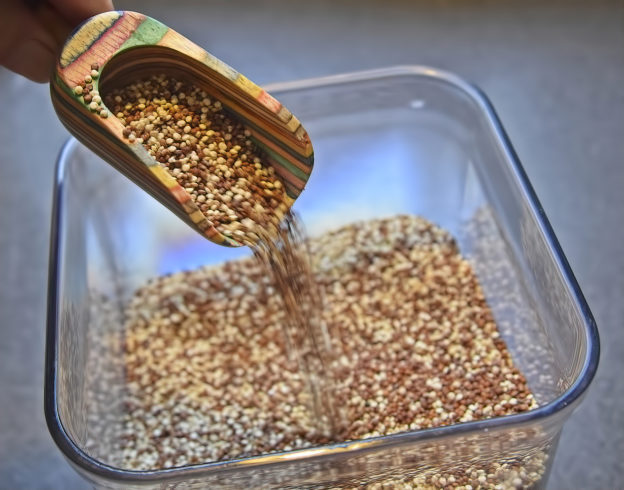
There are different varieties of quinoa, usually denoted by their color. We see white or ivory quinoa most often in American grocery stores. But it can also be found in various shades of yellow, red and black. The white or ivory variety has the mildest flavor and cooks the fastest. The flavor of red and black quinoa is described as stronger and more earthy. Nevertheless, all varieties of quinoa have a nut-like flavor. Quinoa is naturally gluten-free is rated as being low in allergenic properties.

Nutrition and Health Benefits of Quinoa
For its size, this tiny seed offers a lot of nutrients. It supplies a lot of manganese, phosphorus, copper, magnesium, folate, fiber (both soluble and insoluble), and zinc. It also has small amounts of omega-3 fatty acids, and more monounsaturated fats than cereal grains. A three-fourth cup serving has 222 calories and 8 grams of high-quality protein (16% Daily Value). Its high fiber and protein content work together to qualify quinoa as a low-glycemic index food.

Furthermore, quinoa is also high in anti-inflammatory phytonutrients, giving this seed even more healthful benefits in the prevention and treatment of disease.

How to Select Quinoa
When buying quinoa, be sure there are no rips in the bag or box. Also look for signs of moisture or insects and avoid any such packages.

How to Store Quinoa
Quinoa will last for several months when kept in an airtight container in a cool, dry place. If kept in the refrigerator or freezer, uncooked quinoa will keep for 2 to 3 years. Cooked quinoa will keep well in the freezer for up to a year.

Once quinoa is cooked, store leftovers in an airtight container in the refrigerator. Use leftovers within a few days. If you won’t be able to eat it that quickly, place your container in the freezer.

How to Prepare Quinoa
Quinoa seed is covered with saponin, a type of phytonutrient that is actually a protective coating developed by the plant. Although it may have some positive health properties, saponin has a soap-like flavor. Most quinoa on the market has already been rinsed at the processing plant to remove some of this coating. However, because of this objectionable taste, most people opt to further rinse their quinoa well before cooking. To remove any remaining saponin, place quinoa in a fine mesh strainer and rinse it very well with fresh water as you gently rub the seeds. Drain well.

To cook quinoa, place 1 part seeds to 1-1/2 to 2 parts water in a saucepan. (Use the lesser amount of water if you want your quinoa to be less mushy.) Bring it to a boil, reduce the heat, and cover the pan. It usually takes about 15 minutes to cook. When done, the seeds will become somewhat translucent and the germ will partially release, forming a little white spiraled tail around the seed. Fluff the cooked seed with a fork before serving.

For a nuttier flavor, dry roast your quinoa first. Place the seeds in a dry skillet over medium-low heat. Stir constantly for 5 minutes, then cook as directed. Some people will add oil to the frying pan to add extra flavor and texture to their quinoa before cooking it.

Quick Ideas and Tips for Using Quinoa
* Serve cooked quinoa as a breakfast porridge by adding nuts, fruits, and milk of choice. Sweeten as desired.

* Use quinoa in place of pasta with your favorite pasta or noodle recipe.

* Add quinoa to vegetable soup.

* Add a little ground quinoa flour to cookie or muffin recipes for a protein boost.

* If you enjoy tabbouleh, but must eat gluten-free, substitute cooked quinoa for the bulgur wheat in your favorite recipe.

* To flavor your quinoa, add some herbs or spices to the pot when cooking it. Try a bay leaf, garlic, salt and pepper, or other seasonings of your choice. Some people add thyme to quinoa while it is cooking.

* Try cooking quinoa in broth of your choice rather than plain water. This will add flavor to your cooked quinoa and may add a lot of flavor to the dish you’ll be using it in.

* Add a little flavored oil to your quinoa as it starts to cook. Sesame oil, walnut oil, or coconut oil would all add distinct flavors to your cooked quinoa.

* Top quinoa with your favorite sauce. Alfredo, marinara, pesto, or cheese sauce are some options. Use your imagination!

* Try adding tomato, avocado and lime for a Southwest flavored quinoa.

* Make an interesting succotash by combining quinoa with summer squash, bell peppers, and corn.

* Quinoa soaks up and retains a lot of water. Drain off any extra water after it has cooked to prevent it from becoming soggy.

* Add quinoa to burger patties, whether they are meat or meatless.

* Add quinoa to chili while it’s cooking.

* “Warm up” your cooked quinoa by adding some cilantro and roasted poblano peppers for some heat. Add this to veggies for a quinoa bowl.

* Make quinoa into a pudding by cooking it slowly in the milk of your choice. Add sweetener and fruit, as desired.

Herbs/Spices That Go Well with Quinoa
Basil, cilantro, cumin, garlic, mint, oregano, parsley, salt

Foods That Go Well with Quinoa
Proteins, Legumes, Nuts, Seeds: Almonds, beans (in general), beef, chicken, eggs, nuts (in general), shrimp, turkey

Vegetables: Arugula, beets, bell peppers, carrots, celery, chard, chiles, chives, cucumbers, endive, greens (i.e. beet, collard), kale, mushrooms, onions, scallions, spinach, squash (winter), tomatoes, zucchini

Fruits: Avocados, citrus fruits, dried fruit, pineapple, pomegranate seeds

Grains and Grain Products: Corn, grains (in general, esp. those with mild flavors)

Dairy and Non-Dairy: Almond milk, cheese (esp. feta), yogurt

Other Foods: Oil (esp. olive), stock (i.e. mushroom, vegetable), vinegar

Quinoa has been used in the following cuisines and dishes…
Baked goods (i.e. breads, muffins), cereals (hot breakfast), Mexican cuisine, pilafs, salads (grain, green), soups, South American cuisines, stews, stuffed vegetables, stuffings, sushi, tabbouleh, veggie burgers

Suggested Flavor Combos Using Quinoa
Add quinoa to any of the following combinations…

Almond milk + cinnamon + nuts
Bell peppers + carrots + parsley + rice vinegar + sesame oil/seeds
Black beans + cumin
Black beans + mango
Cashews + pineapple
Cucumbers + feta cheese + parsley + tomatoes
Cucumbers + lemon + mint + parsley
Dill + lemon juice + zucchini

Recipe Links

Kale Salad with Meyer Lemon Vinaigrette https://damndelicious.net/2013/03/25/kale-salad-with-meyer-lemon-vinaigrette/

Quinoa Stuffed Bell Peppers https://damndelicious.net/2013/06/03/quinoa-stuffed-bell-peppers/

Blueberry Breakfast Quinoa https://damndelicious.net/2013/09/13/blueberry-breakfast-quinoa/

Roasted Shrimp Quinoa Spring Rolls https://damndelicious.net/2012/11/14/roasted-shrimp-quinoa-spring-rolls/

Garlic Mushroom Quinoa https://damndelicious.net/2014/05/02/garlic-mushroom-quinoa/

Strawberry Quinoa Salad https://damndelicious.net/2014/01/28/strawberry-quinoa-salad/

50 Creative Ways to Eat Quinoa: Healthy Quinoa Recipes https://greatist.com/eat/creative-ways-to-eat-quinoa#1

Healthy Quinoa Recipes https://www.foodnetwork.com/recipes/photos/healthy-quinoa-recipes

10 Easy Quinoa Recipes https://www.acouplecooks.com/easy-quinoa-recipes/

Resources

http://www.whfoods.com/genpage.php?tname=foodspice&dbid=142

https://www.foodnetwork.com/recipes/articles/healthy-eating-all-about-quinoa

https://www.bbcgoodfood.com/howto/guide/health-benefits-quinoa

https://www.eatbydate.com/grains/quinoa/

https://www.wikihow.com/Add-Flavor-to-Quinoa

https://www.bustle.com/articles/134474-17-ways-to-make-quinoa-taste-better-because-dinner-should-never-be-boring

Page, Karen. (2014) The Vegetarian Flavor Bible. New York, NY: Little, Brown and Company.

About Judi
Julia W. Klee (Judi) began her journey enjoying “all things food” in elementary school when she started preparing meals for her family. That love of food blossomed into a quest to learn more and more about health and wellness as related to nutrition. She went on to earn a BS Degree in Food and Nutrition, then an MS Degree in Nutrition. She has taught nutrition and related courses at the college level to pre-nursing and exercise science students. Her hunger to learn didn’t stop upon graduation from college. She continues to research on a regular basis about nutrition as it relates to health. Her hope is to help as many people as possible to enjoy foods that promote health and wellness.
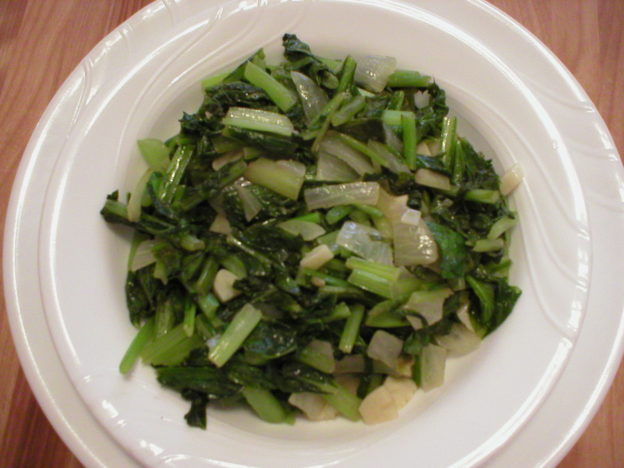
Stir-Steamed Kale with Vegetables and Beans

Stir-Steamed Kale with Vegetables and Beans

Here’s a great way to work in your greens in an easy meal to put together. It can be served over any cooked grain or starchy vegetable like potatoes. It would even be good stuffed into an acorn squash! Below is a video demonstration of how to make this dish. The written recipe follows the video.

Enjoy!
Judi

Stir-Steamed Kale with Vegetables and Beans
Makes 5 (1 cup each) Main Dish Servings

1 cup vegetable broth
½ cup chopped onion
3 cloves garlic, chopped
1 cup diced carrot
2 tsp dried thyme
1 Tbsp dried parsley
1 tsp dried basil
6 cups chopped kale (about ½ pound)
1 cup chopped mushrooms, OR 1 (4 oz) jar of mushrooms, drained
1 cup cooked beans or peas of choice
1 (14.5 oz) can diced tomatoes
1 Tbsp red wine vinegar
Sesame seeds, optional garnish
5 cups (or more) hot cooked grain of choice (i.e. rice, quinoa, millet, polenta, couscous, etc. OR stuff it into an acorn squash instead of on top of a grain)

In a large pot, heat about 1/4 to 1/3 cup of the vegetable broth. Add chopped onion, garlic, carrots and herbs. Sauté about 3 to 5 minutes, until the onions and carrots start to soften. Add the kale, mushrooms, beans, and the rest of the vegetable broth. Stir to combine. Cover the pot and allow the vegetables to cook, stirring often, for about 13 to 15 minutes, until the vegetables are tender and most of the broth is gone. Stir in the tomatoes, and vinegar; allow everything to heat through for a minute or two. Remove from heat. Sprinkle with sesame seeds, if desired. Serve over a hot cooked grain (or grain product) of choice. If preferred, simply mix the grain in with the veggies and serve it all together. OR use this mixture as stuffing for an acorn squash. Enjoy!

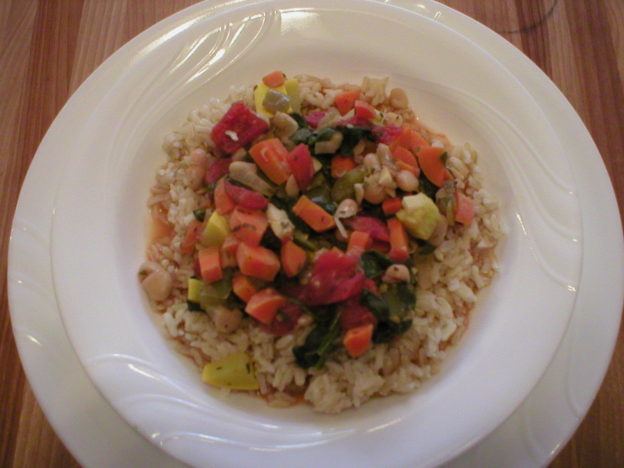
Vegetable-Bean Medley

Vegetable-Bean Medley

Here’s an easy recipe for a vegetable mixture that’s really versatile. It would be excellent served over a bed of any starch you choose…rice, quinoa, couscous, millet, or any other grain product, or even mashed potatoes! It would also be delicious served as a simple soup, suitable for those who like a little broth, but not a lot. The mixture has some liquid in it (deliberately) so there’s something to moisten the base, like mashed potatoes.

Below is a video where I demonstrate how to make this dish. The written recipe is below the video. I hope this helps 🙂

Enjoy!
Judi

Vegetable-Bean Medley
Makes 4 to 5 Servings

1-1/2 cups vegetable broth
1 (14.5 oz) can diced tomatoes with juice
3 cloves garlic, chopped
1/2 cup diced onion
1-1/2 cups diced carrots
3/4 cup diced bell pepper
1-1/2 tsp dried thyme
3/4 tsp dried basil
2 tsp dried parsley

½ tsp salt, optional (or to taste)*
1 cup diced zucchini or yellow squash
2 cups coarsely chopped fresh spinach
2 cups cooked great northern beans
OR 1 (15.8 oz) can great northern beans, rinsed and drained

Cooked starch of choice, like rice, quinoa, couscous, pasta, millet, or even mashed potatoes (optional)

In a medium to large pot with a tight-fitting lid, add the vegetable broth through parsley from the ingredients list. Stir to combine. Cover the pot and bring to a boil. Reduce heat to medium-low and simmer, stirring occasionally for about 10 minutes, until the carrots start to soften.

Taste the mixture to see if seasonings need adjusting to your taste, and if it needs any added salt. Add any seasoning adjustments plus the squash, spinach, and beans. Stir to combine. Cover the pot and allow the vegetables to simmer another 5 to 7 minutes, or until the squash is lightly cooked, the beans are heated through, and the spinach is wilted. Remove from heat and serve over your hot, cooked starch of choice, OR eat it like it is as a soup. Enjoy!

Cook’s Note: At the end of cooking time, there will still be some liquid in the pot with the vegetables. Use this to your advantage to help moisten whatever starch you serve this with. It will only enhance the dish!

* Added salt may or may not be needed in this dish. It depends upon your personal tastes and how much salt was in the vegetable broth.

About Judi
Julia W. Klee (Judi) began her journey enjoying “all things food” in elementary school when she started preparing meals for her family. That love of food blossomed into a quest to learn more and more about health and wellness as related to nutrition. She went on to earn a BS Degree in Food and Nutrition, then an MS Degree in Nutrition. She has taught nutrition and related courses at the college level to pre-nursing and exercise science students. Her hunger to learn didn’t stop upon graduation from college. She continues to research on a regular basis about nutrition as it relates to health. Her hope is to help as many people as possible to enjoy foods that promote health and wellness.
Oats

Oats 101 – The Basics

Oats seem to have gained a lot in popularity in recent years. It’s no wonder why. People have finally realized just how nutritious they are for us to eat! And they have gotten very creative in the ways to include oats in their diets.

If you have questions about oats, hopefully the following article will provide the answers you need. It’s comprehensive, including information from what they are to how to use them, and everything in between! Let me know if your questions are not answered below, and I’ll be glad to help, if I can.

Enjoy,
Judi

Oats 101 – The Basics

About Oats
Oats are the edible seed of a grass in the Poaceae family. They are known as a cereal grass or cereal grain because they are specifically grown for their seeds to be eaten as a grain product. Other cereal grasses include wheat, rye, barley, kamut, spelt, triticale, sorghum, rice, corn, and millet.

After oats are harvested, they are cleaned and the outer hulls are removed. At that point, they are known as “whole oat groats.” In the United States, the oat groats are processed from there into (1) “old fashioned” rolled oats, (2) quick and instant rolled oats, and (3) steel cut oats. Old fashioned rolled oats are whole groats that were first steamed, then rolled to flatten. They are then dried. Quick and instant oats have been either rolled or steamed for a longer period of time, or both, to produce oats that cook faster than traditional rolled oats. Steel cut oats are simply whole groats that have been cut into smaller pieces with a steel blade. Steel cut oats may be referred to as “Irish” or “Scottish” oats, but those types of oats have actually been stone-ground rather than steel cut. Steel cut oats can come in assorted size pieces with different cooking times ranging from 5 to 7 minutes, to 20 to 30 minutes. However they are marketed, oats are considered to be a “whole grain.”

Oats have been enjoyed as a food for thousands of years. Today, Russia produces most of the world’s oats, with Canada being the second largest producer. Oats are also grown around the world, with the United States growing about 4% of the world’s supply, with most being grown in Wisconsin.

Nutrition Tidbits and Health Benefits of Oats
Oats are a nutritious grain to say the least. They are an excellent source of manganese and molybdenum, and a good source of phosphorus, copper, biotin, Vitamin B1, magnesium, chromium, zinc, dietary fiber and protein. They also contain important phytonutrients as well. Here are some of the wonderful health benefits of oats:

Antioxidants: In addition to their abundance of vitamins and minerals, oats are rich in antioxidants, some of which are almost unique to oats. These special compounds may help to lower blood pressure by increasing the production of nitric oxide which relaxes blood vessels, reducing inflammation and reducing itching from skin disorders.

Protects against heart disease: Oats contain the soluble fiber, beta-glucan, which forms a thick gel-like solution in the digestive tract. Beta-glucan is known to reduce LDL and total cholesterol levels. Beta-glucan is also known to help protect LDL-cholesterol from oxidative damage, which causes inflammation in the arteries and raises the risk of heart attacks and strokes.

Improves blood sugar control: The soluble fiber in oats, beta-glucan, is also known to help to improve blood sugar control. The fiber delays stomach emptying which slows the absorption of glucose into the blood. Beta-glucan also appears to improve insulin sensitivity, further aiding in the management of blood sugar.

Weight management: Oats are very filling and help us to feel full longer, aiding in weight management. The beta-glucan in oats appears to promote the release of a satiety hormone, leading to a reduced food intake, decreasing the risk of obesity.

Skin care: Finely ground oats, known as “colloidal oatmeal,” have long been used in skin care regimens. Oats applied topically have been shown to relieve itching and inflammation from various skin conditions, including eczema.

Childhood asthma: Researchers believe that introducing solid foods too early in infants can spark the development of asthma and other allergic conditions. Studies have shown that early introduction of oats to infants can help to ward off such developments.

Constipation relief: Studies have found that oat bran can help relieve constipation in elderly people when fed oat bran daily for 12 weeks. Most of the patients were able to stop their use of laxatives after the 3-month study.

Improved gut microbiome: In a study reported in Science News in 2015 (from the journal Applied and Environmental Microbiology), researchers found that people who ate beta-glucan-enriched pasta for two months had increased populations of beneficial bacteria and reduced numbers of harmful bacteria in their intestinal tracts. The subjects also had reduced LDL-cholesterol after the trial. This study was in an effort to find prebiotic foods that encourage the growth of healthful bacteria in the gut.

How to Select Oats
Oats have a slightly higher fat content than other grains, so they can go rancid faster than other grains. With that in mind, it may be helpful to purchase smaller amounts at one time if you don’t go through them quickly. Oats are usually sold prepackaged. However, some stores sell oats in bulk bins. When buying oats from bulk bins, be sure there is no sign of moisture, and also smell them to be sure they are fresh. If they have an “off” odor, they may be going rancid and would not be good to buy.

How to Store Oats
For best shelf life, store oats in an airtight container in a cool, dry, dark place. Oats will usually come with a “best by” date, so for the best quality be sure to use them before that date.

Do oats contain gluten?
The answer: no and yes. Oats themselves do NOT contain gluten, and are usually safe to consume by people who are gluten-sensitive. However, oats are often processed in a facility that also processes gluten-containing grains such as wheat, rye and barley. If oats are processed in the same facility, remnants of the other grains often remain on the equipment and thus “contaminate” the oats with their gluten. Hence, if oats are not labeled as being “gluten-free” they were most likely processed in such a facility and therefore DO contain contaminant gluten.

Oats that are labeled as being “gluten-free” were processed in a facility dedicated to processing only gluten-free grains. Therefore, they can be safely consumed by those who are sensitive to gluten.

There is a small subset of gluten-sensitive people who do react to oats labeled as being gluten free. Scientists are not certain as to why, but they have found that some gluten-sensitive people react to some (non-gluten) proteins that are found in some, but not all varieties of oats. Furthermore, oats grown in fields next to fields growing gluten-containing grains may also become contaminated with gluten. It might be possible that these people are reacting to gluten contamination from neighboring fields, or to the non-gluten proteins that are found in some varieties of oats. Therefore, if you are gluten-sensitive and find that you have reacted to oats labeled as being gluten-free, it might be best to avoid eating oats altogether.

Can you eat uncooked oats?
Some raw food enthusiasts have wondered if oats can be eaten raw. The oats we buy have already been processed to some degree, so technically speaking they are not “raw.” Then the question remains, “Can we eat oats uncooked?” Yes, they can be eaten uncooked, but it’s not advised to eat them dry. Eating uncooked dry oats can cause them to build up in your stomach or intestines, causing indigestion or constipation. Furthermore, raw oats contain phytic acid, which binds to the minerals in oats, making them hard for the body to absorb. Soaking oats before consuming them reduces the phytic acid content, making them easier to digest and preventing constipation.

Healthful ways to eat uncooked oats include adding them to smoothies or stirring them into yogurt. Oats may also be soaked overnight (in the refrigerator) in water or milk. They will absorb a lot of the liquid, making them more digestible in the morning. So, uncooked oats can be included in a healthy diet as long as they are soaked or moistened in some way beforehand so they are not consumed dry.

How to Prepare Oats
Oats are usually prepared by being placed in cold water, then brought to a simmer and cooked until tender. The time will depend upon the type of oat being cooked. Usually 1 part of oats is cooked in 2 parts of water; however, steel cut oats will require more water, often up to 3 parts water to 1 part of oats. Follow the package directions to be sure.

Tips and Quick Ideas
* For a delicious breakfast, add some of your favorite nuts and cut fruit to a bowl of hot oatmeal.

* Substitute up to 25% of oat flour for wheat flour in baked goods for a nutrition and flavor boost.

* Do you need oat flour for a recipe? Simply place some oats in a coffee grinder, food processor, or high-speed blender, process, and you’ll have oat flour in no time!

* Oats can be used as a thickener for soups or stews simply by adding a tablespoon or two of oats or oat flour to your food after it has cooked or while it’s cooking. Allow 5 to 10 minutes for it to thicken the liquid.

* When you’re short on time to prepare breakfast, try overnight oats that are soaked in milk or water overnight in the refrigerator. When you’re ready to eat in the morning, your breakfast will be waiting for you.

* Adding oats to a smoothie is a great way to thicken it while adding lots of nutrients and healthful fiber.

* Use oats to bind the ingredients of veggie patties and burgers.

* Use oats as a basis for homemade granola cereal or granola bars.

* Oats can be used in place of crushed graham crackers in pie crusts, such as in a cheesecake or tart.

* Make your own oat milk simply by blending 1 cup of oats with 2-1/2 to 4 cups of water. Strain it or not…it’s up to you. Add a little sweetener and/or vanilla, if you want. Stir it before you use it. Store extra in the refrigerator and use it within 2 or 3 days. If you elect to strain your oat milk, use the pulp in veggie patties, meatloaves, baked goods, smoothies, pancakes, or any other way you can sneak it into your foods.

* Rolled (old-fashioned) and quick cooking oats are interchangeable in most recipes. Instant oats are not interchangeable, since they have already been fully cooked then dried.

* When making yeast breads, oat flour can be combined with wheat flour (up to 25% substitution). A 100% oat flour yeast bread will not rise because yeast needs gluten to rise.

Herbs and Spices That Go Well With Oats
Cardamom, cinnamon, dill, fennel seeds, ginger, mace, nutmeg, parsley, sage, vanilla

Other Foods That Go Well With Oats
Proteins, Nuts, Seeds: Almonds, cashews, chicken, eggs, nuts (in general), pecans, pork, seeds (esp. flax, pumpkin, sesame, sunflower), walnuts

Vegetables: Celery

Fruit: Apples, apple juice, apricots, bananas, berries (esp. blueberries, raspberries), coconut, dried fruits (esp. cherries, cranberries, currants, dates, figs, peaches, plums, raisins), fruit juice (in general), oranges, peaches, pears, plums, raisins

Other Grains and Grain Products: Baked goods, breading

Milk and Non-Dairy: Butter, buttermilk, cheese, cream, milk (dairy), milk (non-dairy, esp. almond, coconut, hemp, rice, soy), yogurt

Other Foods: Honey, kefir, maple syrup, molasses, oil (esp. coconut, flaxseed, safflower, sesame), salt, stock (vegetable), sugar (esp. brown)

Oats have been used in the following dishes and cuisines:
Baked goods (esp. biscuits, breads, cakes, cookies, muffins, quick breads), breading, cereals (esp. hot breakfast), desserts (esp. fruit crisps and crumbles), Irish cuisine, vegetarian meatballs, burgers or meatloaf, muesli, pancakes and waffles, Scottish cuisine, soups (esp. Irish, Scottish, and as a thickener to make it creamier), trail mix

Suggested Flavor Combos Using Oats
Combine oats with the following…
Almonds + Cinnamon + Fruit + Maple Syrup
Almonds + Cashews + Cinnamon + Maple Syrup + Vanilla
Almonds + Cinnamon + Yogurt
Apples + Brown Sugar + Cinnamon + Raisins
Apples + Cheddar Cheese
Apples + Cinnamon + Honey + Raisins
Bananas + Cinnamon + Maple Syrup
Brown Sugar + Nuts + Raisins
Cinnamon + Figs + Honey + Vanilla
Cinnamon + Maple Syrup
Cranberries + Nuts
Ginger + Plums
Pecans + Sweet Potatoes + Vanilla

Recipe Links
25 Ways to Use Oats When You’ve Had Enough Oatmeal https://greatist.com/eat/oat-recipes-that-arent-just-oatmeal

51 Oats Recipes That Go Beyond Oatmeal https://www.epicurious.com/ingredients/15-ways-to-eat-your-oats-gallery

13 Wonderful Ways to Eat Your Oats https://www.thekitchn.com/13-wonderful-ways-to-eat-your-oats-227179

Savory Oats With Ontario Greenhouse Grown Tomatoes https://producemadesimple.ca/savory-oats-with-ontario-greenhouse-grown-tomatoes/

Overnight Oats with Stone Fruit https://producemadesimple.ca/overnight-oats-with-stone-fruit/

Breakfast Oatmeal Cupcakes to Go https://chocolatecoveredkatie.com/2013/01/08/breakfast-oatmeal-cupcakes-to-go/

50 Things to Make with Oats https://www.foodnetwork.com/recipes/articles/50-things-to-make-with-oats

50 Best Oatmeal Recipes https://fitfoodiefinds.com/the-50-best-oatmeal-recipes-on-the-planet/

Oat Breaded Pork Medallions with Dijon Mushroom Sauce https://oatseveryday.com/blog/elegant-main-dishes-oats/

17 Next-Level Ways to Eat Oats https://nutritiouslife.com/eat-empowered/creative-oat-recipes/

Easy Recipes to Make the Most of Oat Pulp https://www.plantmilk.org/2018/06/28/easy-recipes-to-make-the-most-of-leftover-oat-pulp/

Oat Milk—Here’s Everything You Need to Know https://chocolatecoveredkatie.com/2019/04/25/oat-milk-recipe-how-to/

How to Use Oat Flour https://www.everydayglutenfreegourmet.ca/how-to-use-oat-flour/

Resources
http://www.whfoods.com/genpage.php?tname=foodspice&dbid=54

https://www.thekitchn.com/the-oat-conundrum-are-oats-glu-137074

https://www.healthline.com/nutrition/9-benefits-oats-oatmeal#section3

https://www.sciencedaily.com/releases/2015/09/150918152005.htm

https://www.healthline.com/nutrition/raw-oats#downsides

https://www.thespruceeats.com/great-uses-for-oats-3371560

https://www.womenshealthmag.com/food/a19496524/oat-milk/

https://www.everydayglutenfreegourmet.ca/how-to-use-oat-flour/

https://www.thespruceeats.com/oatmeal-and-oats-tips-1808054

Page, Karen. (2014) The Vegetarian Flavor Bible. New York, NY: Little, Brown and Company.

About Judi
Julia W. Klee (Judi) began her journey enjoying “all things food” in elementary school when she started preparing meals for her family. That love of food blossomed into a quest to learn more and more about health and wellness as related to nutrition. She went on to earn a BS Degree in Food and Nutrition, then an MS Degree in Nutrition. She has taught nutrition and related courses at the college level to pre-nursing and exercise science students. Her hunger to learn didn’t stop upon graduation from college. She continues to research on a regular basis about nutrition as it relates to health. Her hope is to help as many people as possible to enjoy foods that promote health and wellness.
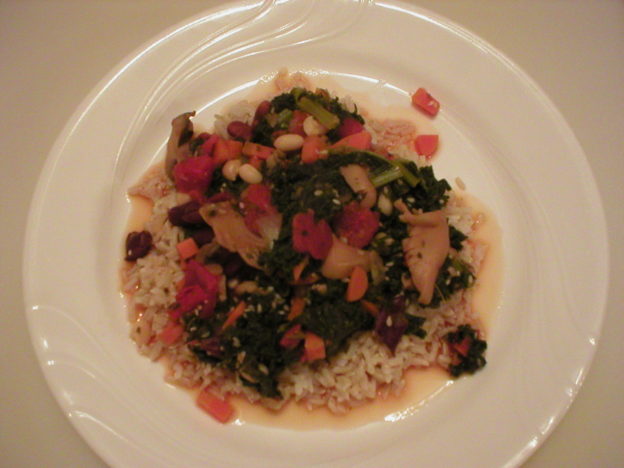
Easy Sauteed Turnip Greens

Easy Sauteed Turnip Greens

Here’s a recipe for turnip greens that is really simple, fast, and delicious too. Also, it can very easily be tailored to your liking and needs…oil or no oil, salt or no salt, whatever you prefer. It’ll be yummy no matter what changes you need to make! Give it a try.

Below is a video demonstration of how to cook the greens. The written recipe follows the video.

Enjoy!
Judi

Easy Sautéed Turnip Greens
Makes 4 Servings

1 Tbsp extra virgin olive oil (or 2-3 Tbsp water or vegetable stock)
½ cup chopped yellow onion
3 large cloves garlic, chopped
1 bunch turnip greens
Water or vegetable stock, as needed
Salt and pepper to taste
Juice of ½ to 1 lemon or lime (or 1 Tbsp vinegar of choice)

Wash and drain the turnip greens, but do not dry or spin them. Coarsely chop the greens; removing the stems is optional. Set aside.

Heat a large pot over medium heat. Add the oil (or water or stock, if preferred). Sauté the chopped onion for about 1 minute, until it starts to soften. Add the garlic and sauté for 1 minute more, until the garlic starts to soften. Add the prepared turnip greens, and salt and pepper to taste. Raise the heat to medium-high if needed to keep the vegetables cooking. Sauté for about 5 minutes, or until the greens are wilted and as tender as you like. If needed, add a small amount of liquid (water or stock) at a time to the pan to keep the vegetables from getting too dry as they cook. Turn off the heat and stir in the citrus juice or vinegar, using as much or as little as desired. Serve.