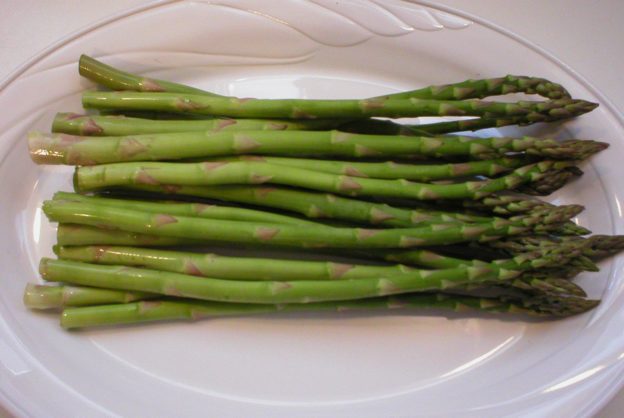
Asparagus

Asparagus 101 – The Basics

If you need to know something about asparagus, you’re in the right place! Below is a lot of information from what asparagus is and how it grows to suggested recipe links and everything in between. I hope this helps!

Enjoy,
Judi

Asparagus 101 – The Basics

About Asparagus
Asparagus spears, as we find them in grocery stores, are actually young shoots of a plant that (if not harvested) would grow into a large fern-like structure. Most asparagus commonly sold in the United States is green. In Europe, asparagus is usually grown in a different manner yielding a white, mild flavored variety of the plant. Creative farmers have recently learned how to cultivate a purple variety of asparagus that is starting to be found in some grocery stores.

Asparagus is native to Africa, Asia and Europe. Over time, it spread to North and South America, New Zealand, and Australia. China, Peru and Mexico currently produce most of the world’s asparagus crop. Most of the asparagus grown in the United States is produced in California, Washington and Michigan.

Nutrition Tidbits
Asparagus is an excellent source of Vitamin K, assorted B-Vitamins, copper, selenium, and Vitamins C and E. It is also a good source of fiber and other vitamins and minerals including manganese, calcium, potassium, phosphorus, iron, magnesium, and zinc. Of course, being a plant food, it has no cholesterol. One cup of raw asparagus has a mere 27 calories.

Some people express concern about a particular odor in their urine after eating asparagus. This is nothing to be concerned about. It’s actually due to the breakdown of a particular antioxidant in asparagus that has numerous health benefits, especially in aerobic metabolism. In fact, researchers have identified almost 100 different phytonutrients in asparagus that make this vegetable a unique nutritional workhorse, unlike any other. The antioxidants in asparagus make it a powerful anti-inflammatory food.

How to Select Asparagus
When shopping for asparagus, look for firm, brightly colored stalks. Opt for thinner stalks because they are more tender than the thicker ones. Choose stalks with closed and deeply colored tips as they will be fresher. Also, opt for ones with less woody, tough stems so there will be less to discard when you prepare them.

How to Store Asparagus
Store asparagus in the refrigerator and use it as soon as possible after bringing it home. There are two suggested ways to store asparagus while in the refrigerator: (1) Wrap the ends in a damp paper towel, or (2) Stand the stalks upright in a container wide enough to hold them. Add enough water to allow the bottoms of all the stalks to rest in about one inch of water. The upper stalks may be loosely covered with a plastic bag. Change the water if it starts to look cloudy.

Here’s a video on “The Best Way to Store Asparagus” …

How to Freeze Asparagus
To freeze asparagus, wash it, then remove the woody ends and cut it into desired lengths. Blanch it in boiling water for 1 to 3 minutes, depending on the thickness of the stalks and length of the pieces. If steam-blanching is preferred, place the asparagus pieces in a steamer basket over boiling water. Cover with a tight-fitting lid and allow to steam for 3 to 6 minutes, depending on the thickness and length of the stalk pieces.

Immediately transfer the blanched asparagus to a bowl of ice water and allow it to cool completely. Drain and place the asparagus in an air-tight freezer container.* It may be stored in the freezer for 8 to 12 months. It is not mandatory to thaw the asparagus pieces before cooking.

* To keep the pieces from bunching up and freezing into one big lump, you could place your blanched and drained asparagus pieces on a tray. Place the tray in the freezer for one or two hours until the asparagus pieces are frozen. Then transfer them to a container or freezer bag for storage in the freezer.

Blanching vegetables before storing them in the freezer is an important step in stopping the enzyme activity which will continue to age them even in the freezer. Some people choose to freeze vegetables without blanching them first. If you opt to do this, be sure to label them with the date and use them within four to six weeks. Beyond that, they will start to deteriorate with changes in color, texture, and flavor.

Fresh vs Frozen vs Canned
Asparagus is available canned, frozen and fresh in most grocery stores. As is the case with most vegetables, fresh is best with regard to flavor, aroma, texture, and nutritional value. Frozen vegetables are a close second choice with regard to those same aspects and are a wonderful convenience when fresh is not available or you are short on prep time in the kitchen. Canned asparagus spears are found year-round in most grocery stores and can be a good staple food to have available in a pinch. Since the canning process actually cooks vegetables along the way, canned asparagus spears are extremely tender and will not have the crispness of fresh or even frozen asparagus pieces. They simply need to be briefly heated and are ready to serve. However nutritionally speaking, the canned variety comes in last on the list.

How is asparagus usually eaten…raw or cooked?
Asparagus is usually cooked before being eaten; however, the thinner, tender stalks can be enjoyed raw. They can be a nice crunchy addition to a green salad.

How to Prepare Asparagus
Of course, give your asparagus a good wash first. Some people will opt to peel the bottom portion of the asparagus stalks with a vegetable peeler if they are thick and somewhat woody, although this is not mandatory. Cut or break off the woody area toward the bottom of the stalks, and discard or save them for stock. Cut the remaining portion into desired lengths or leave whole.

Cooking/Serving Ideas
Asparagus can be boiled, steamed, sautéed, roasted, pickled, grilled, and included in frittatas, omelets, soups, and stir-fries. Thin, tender stalks can be eaten raw. Most importantly, asparagus cooks up and becomes soft quickly, so less is best when working with asparagus. Thinner stalks take less time to cook than thicker ones, so this is important when determining cooking times.

To boil asparagus, bring water to a boil in a skillet or saucepan. Add prepared asparagus to the pan and boil for 5 to 7 minutes, or until as tender as desired.

To microwave your asparagus, place your prepared asparagus pieces into a microwave-safe dish. Add 2 tablespoons of water, cover, and microwave on high for 4 to 6 minutes, rearranging spears midway to allow them all to cook evenly.

To steam asparagus, lay the stalks in a steamer basket over boiling water. Cover and steam for 5 to 7 minutes, until crisp-tender.

To stir-fry asparagus, cut it into one-inch pieces, and stir-fry it in a wok or skillet with 1 or 2 tablespoons of butter or oil, for 5 to 7 minutes.

To roast asparagus, arrange prepared stalks in a single layer in a large shallow baking pan. Drizzle with 1 or 2 tablespoons of olive oil and sprinkle with salt and pepper. Roast at 425°F for 10 to 15 minutes, until tender, but firm to the bite.

To BBQ asparagus, follow the same preparation method as roasting (above), but lay the asparagus spears on aluminum foil on the BBQ grill.

Quick Ideas for Using Asparagus:

* When cooking asparagus, remove it from the heat a minute or so before you think it is done. It will continue to cook briefly after being removed from the heat.

* Add cooked, cold asparagus to your favorite green salad.

* Add asparagus to your favorite omelet.

* Add asparagus to cooked pasta dressed with some olive oil, herbs and Parmesan cheese.

* Sauté asparagus with garlic, onions, mushrooms, and beans, tofu or chicken. Serve over a bed of rice.

* Save freshly cooked leftover asparagus for use the next day in an egg, pasta, or rice dish.

* Cook asparagus in your favorite way and top it with a little vinaigrette dressing.

* Marinate asparagus with teriyaki sauce, then grill it and sprinkle with sesame seeds.

Herbs/Spices That Go Well With Asparagus
Basil, bay leaf, capers, chervil, chili paste and chili pepper flakes, chives, cilantro, dill, fennel seeds, garlic, ginger, hoisin sauce, hollandaise sauce, horseradish, mint, miso, mustard (Dijon), nutmeg, parsley, pepper, rosemary, sage, salt, sorrel, soy sauce, tarragon, thyme

Other Foods That Go Well With Asparagus

Proteins, Nuts, Seeds: Bacon, beans, eggs, nuts, peanuts and peanut sauce, pine nuts, prosciutto, salmon, sesame, tofu

Vegetables: Artichokes and artichoke hearts, arugula, bell peppers, corn, fennel, greens (salad), leeks, mushrooms, onions, peas, potatoes, shallots, spinach, tomatoes, watercress

Fruits: Avocado, lemon, lime, olives (black), orange

Grains: Bread crumbs, noodles, pasta, polenta, quinoa, rice, whole grains (ie barley, couscous, farro)

Dairy and Non-Dairy: Butter and browned butter, cheese, cream, cream cheese, crème fraiche, Parmesan cheese, yogurt

Other: Honey, mayonnaise, oil, vinaigrette, vinegar, wine (dry white)

Asparagus has been used in: Custards, French cuisine, pizza, quiche, risotto, salads, soufflés, stir-fries, sushi (vegetarian), and tarts (vegetable)

Suggested Flavor Combos:
Pair asparagus with…
Avocado + lime + mint + olive oil
Basil + olives
Bell peppers + eggs + garlic + lemon juice + thyme
Citrus + garlic + herbs (ie parsley, tarragon) + olive oil
Couscous + orange
Fava beans + mint
Garlic + ginger + scallions + sesame + sesame oil + soy sauce + vinegar
Ginger + hoisin sauce + sesame oil + soy sauce
Goat cheese + lemon + olive oil + pistachios
Hazelnuts + Parmesan cheese + parsley
Lemon + Parmesan + risotto
Lemon + pecans + rice
Onions + orange
Sesame + tofu

Recipe Links
Mediterranean Pasta Salad http://www.whfoods.com/genpage.php?tname=recipe&dbid=152

Warm Asparagus Salad http://www.whfoods.com/genpage.php?tname=recipe&dbid=188

5-Minute Healthy Sautéed Asparagus http://www.whfoods.com/genpage.php?tname=recipe&dbid=296

Garlic Shrimp Salad http://www.whfoods.com/genpage.php?tname=recipe&dbid=84

15-Minute Healthy Sautéed Chicken and Asparagus http://www.whfoods.com/genpage.php?tname=recipe&dbid=139

How to Cook Asparagus in the Oven https://www.thekitchn.com/how-to-cook-asparagus-in-the-oven-cooking-lessons-from-the-kitchn-202675

Asparagus, Prosciutto, and Goat Cheese Frittata https://producemadesimple.ca/asparagus-prosciutto-and-goat-cheese-frittata/

Asparagus and Mushroom Tart https://producemadesimple.ca/ontario-asparagus-mushroom-tart/

Breaded Asparagus Spears with Smoked Maple Bacon Dip https://producemadesimple.ca/breaded-asparagus-spears-smoked-maple-bacon-dip/

Asparagus and Cheese Quiches https://producemadesimple.ca/ontario-asparagus-cheese-quiches/

Asparagus Penne Bake https://producemadesimple.ca/ontario-asparagus-penne-bake/

Shaved Asparagus Salad https://producemadesimple.ca/shaved-asparagus-salad/

77 Healthy Ways to Cook With Asparagus https://www.cookinglight.com/food/in-season/cooking-with-asparagus

The 16 Most Delicious Things You Can Do To Asparagus https://www.self.com/gallery/the-most-delicious-things-you-can-do-to-asparagus

30+ Amazing Asparagus Recipes https://www.afamilyfeast.com/asparagus-recipes/

33 Asparagus Recipes for Salad, Pasta, Grilling, and More https://www.bonappetit.com/recipes/slideshow/asparagus-recipes

26 Amazing Asparagus Recipes https://cooking.nytimes.com/68861692-nyt-cooking/999915-26-amazing-asparagus-recipes

About Judi
Julia W. Klee (Judi) began her journey enjoying “all things food” in elementary school when she started preparing meals for her family. That love of food blossomed into a quest to learn more and more about health and wellness as related to nutrition. She went on to earn a BS Degree in Food and Nutrition, then an MS Degree in Nutrition. She has taught nutrition and related courses at the college level to pre-nursing and exercise science students. Her hunger to learn didn’t stop upon graduation from college. She continues to research on a regular basis about nutrition as it relates to health. Her hope is to help as many people as possible to enjoy foods that promote health and wellness.

Resources
https://www.thespruceeats.com/all-about-asparagus-2215775

http://www.whfoods.com/genpage.php?tname=foodspice&dbid=12

https://www.livestrong.com/article/514845-the-best-way-to-freeze-asparagus-blanch-it-or-just-freeze-it/

https://www.thekitchn.com/the-best-way-to-store-asparagus-203442

https://producemadesimple.ca/asparagus/

https://producemadesimple.ca/savoury-asparagus-recipes-spring/

https://www.ncbi.nlm.nih.gov/pubmed/26592472

Page, Karen. (2014) The Vegetarian Flavor Bible. New York, NY: Little, Brown and Company.
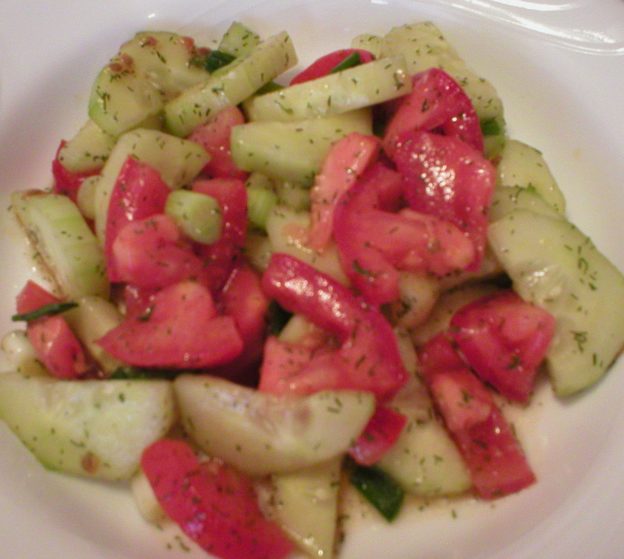
Cucumber Tomato Salad with Dill

Easy Cucumber Tomato Salad with Dill

This simple salad is easy and fast to make, and oh so delicious! It can be made ahead of time, since marinating for a while in the refrigerator allows the flavors to blend, making it that much tastier. Click the video link for a demonstration on making the salad. The recipe is below the video. Enjoy!

I hope this helps!
Judi

Cucumber Tomato Salad with Dill
Makes About 4 Servings

1 cucumber
2 Roma tomatoes
2 scallions, or 1/3 to ½ cup chopped onion of choice
2 Tbsp extra virgin olive oil
1 Tbsp apple cider vinegar or fresh lemon juice
1/2 tsp dried dill weed (or ½ Tbsp fresh dill weed), or more if desired
Salt to taste

Cut cucumber (peeling is optional), tomatoes, and scallion into bite-size pieces and place in a serving bowl. Top with the olive oil, vinegar or lemon juice, dried dill weed and salt. Toss to combine. Serve or cover and refrigerate until needed.

This salad can be allowed to marinade in a covered container in the refrigerator for up to 24 hours. This gives time for the flavors to blend. It is delicious served immediately but is even better when made in advance.

About Judi
Julia W. Klee (Judi) began her journey enjoying “all things food” in elementary school when she started preparing meals for her family. That love of food blossomed into a quest to learn more and more about health and wellness as related to nutrition. She went on to earn a BS Degree in Food and Nutrition, then an MS Degree in Nutrition. She has taught nutrition and related courses at the college level to pre-nursing and exercise science students. Her hunger to learn didn’t stop upon graduation from college. She continues to research on a regular basis about nutrition as it relates to health. Her hope is to help as many people as possible to enjoy foods that promote health and wellness.

Mangos

Mangos 101 – The Basics

If you haven’t tried a mango, let me personally invite you to venture into this delicious taste sensation. Ripe mangos are sweet, juicy, and delicious. They are similar to ripe peaches and can often be used interchangeably in recipes calling for peaches. Many people are not aware that you can also eat unripe mangos. The unripe fruit has a peppery flavor and can easily be used in savory dishes where a peppery flare is welcomed.

If you’re new to mangos, the information below should help you out. If you’re already familiar with mangos, yet are looking for something different to do with them, you’re in the right place! There is a LOT of information on what to do with mangos! I hope this helps!

Enjoy,
Judi

Mangos 101 – The Basics

About Mangos
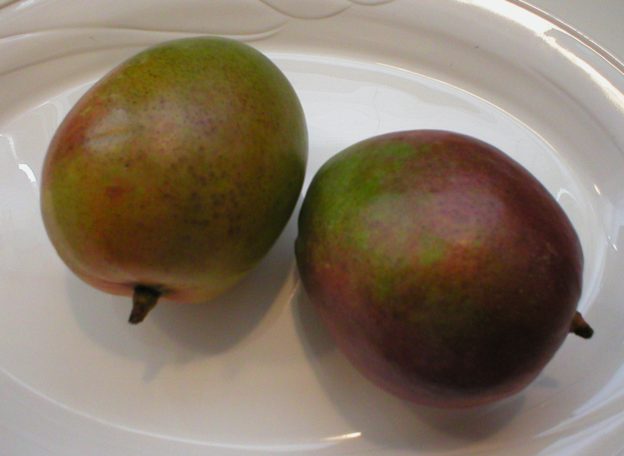
Mangos are a popular fruit around the world. Botanically, it’s a drupe, with an outer skin, an edible pulp, and a central stone that houses a single seed. Peaches and plums are also drupes. Mangos are fruits of an evergreen tree in the cashew family. There are over 1,000 different varieties of mangos, with some being round while others are oval.

Mangos were first grown in India over 5,000 years ago. From there, mangos were slowly introduced around the world. Spanish explorers brought mangos to South America and Mexico in the 1600s. Mangos were first introduced to America in 1833 when they were brought to Florida. In India, a basket of mangos is considered to be a sign of friendship, with the mango itself being a symbol of love.

Nutrition Tidbits
One cup of mango meets 100% of our recommended amount of Vitamin C and about a third that of Vitamin A. Mangos also supply fiber, folate, Vitamin B6, copper, Vitamin K and potassium. They have no cholesterol, sodium nor fat. One cup of mango has about 100 calories.

How to Choose a Mango
Color is not always the best indicator of ripeness with mangos. A ripe mango will give a little when squeezed, like a peach or avocado. A red color will appear on some varieties of ripe mangos, but not all. Also, a fruity aroma can be detected at the stem end of many (but not all) varieties of mangos. With all things considered, the squeeze test is the best way to determine if a mango is ripe.

Avoid mangos with bruises or shriveled skin. Those are past their prime and are not the best selections.

Unripe mangos are very edible, but are not sweet. They have somewhat of a peppery flavor and can be used in savory applications. Ripe mangos are deliciously sweet and are used in most recipes calling for mango as a sweet fruit.

How to Ripen and Store a Mango
Store unripe mangos at room temperature. Green mangos will ripen at room temperature over several days. To hasten ripening, place green mangos in a paper bag kept at room temperature.

To slow down the ripening process, store ripe mangos in the refrigerator for up to five days. Storing mangos too long in the refrigerator will cause them to turn black.

Peeled and cubed mango may be stored in an airtight container in the refrigerator for several days or in the freezer for up to six months.

How to Cut a Mango
First wash your mango. The peel will need to be removed as it can cause irritation in the mouth. The stone inside needs to be removed. It is large and somewhat flattened. Observe how the mango lays on your counter. It will position itself so the stone is parallel with the counter. Stand the mango up on the stem end and slice it parallel to the stone on each side of the stone. Then make narrow slices down the sides of the mango along the wide side of the stone. If your knife hits the stone in the process, simply move the knife outward just a bit and try again.

After removing the stone, with a knife cut away the peel, then slice or cube the mango as needed. Sometimes, the peel of very ripe mango slices can simply be peeled back with fingers and removed that way. The flesh of ripe mango can be very slippery to handle, so use caution when slicing it so you don’t cut yourself.

One large mango may yield up to two cups of mango cubes.

Important note! Mango juice can stain clothes, so take precaution when preparing it.

Serving Ideas
Mangos are usually eaten fresh, but there are some recipes available where creative individuals have incorporated them into baked goods, pies, mousses, curries, cobblers, and crisps (see recipe links below!). They may also be grilled or roasted.

Here are some quick ideas for including mango into your day:

* Serve mango cubes with your favorite yogurt.

* Make popsicles with pureed mango.

* Top pancakes or waffles with cut mango, then drizzle with maple syrup. Yum!

* Include mango in a breakfast smoothie.

* Drizzle pureed mango over cooked chicken, fish, or pork.

* Include cubed mango in a fruit or green salad.

* Mangos can be used in place of peaches in recipes.

* Add fresh ripe mango to a spinach salad.

* Top baked or grilled salmon with mango salsa.

Herbs/Spices That Go Well With Mangos
Basil, cardamom, cayenne, cilantro, cinnamon, cloves, coriander, cumin, fenugreek, garlic, ginger, lavender, mint, oregano, paprika, parsley, salt, star anise, vanilla, vinegar

Foods That Go Well With Mango
Proteins, Nuts and Seeds: Almonds, beans, cashews, chicken, chickpeas, duck, fish, legumes, nuts, peanuts, pork, sesame, tempeh, tofu

Fruit: Avocado, banana, berries, coconut, kiwi, lemon, lime, melon, nectarines, orange, papayas, passion fruit, peaches, pears, pineapple, plantains, tamarind, tropical fruits

Vegetables: Arugula, bell peppers, chayote squash, chiles, corn, cucumbers, fennel, jalapenos, jicama, lettuce, red onions, rhubarb, scallions, seaweed, shallots, snow peas, tomatillos, tomatoes

Grains: Corn, noodles (esp. Asian), quinoa, rice, tortillas

Dairy and Non-Dairy: Almond milk, coconut milk, cream, ice cream, yogurt

Other: Honey, rum, sugar, tapioca, wine

Suggested Flavor Combos:
Mango + avocado + chiles + cilantro + lime + onions + vinegar
Mango + bananas + honey + lime juice + orange juice
Mango + beans + cilantro + lime + onions
Mango + bell peppers + cilantro + lime
Mango + cardamom + honey + yogurt
Mango + chiles + cilantro + lime + red onions
Mango + chiles + cumin + garlic + lime + orange
Mango + coconut milk + sticky rice
Mango + honey + mint + yogurt
Mango + honey + orange juice + yogurt
Mango + lime + mint + orange + papaya
Mango + lime + raspberries + vanilla
Mango + peach + raspberries

Types of dishes and cuisines that mangos are often included in:
Beverages, chutneys, coulis (a thin sauce), crepes, curry, desserts (ie. Cheesecake), Indian cuisine, lassis (a sweet or savory Indian beverage), Mexican cuisine, puddings, salads, sauces, smoothies, soups (ie fruit soup), stir-fries, tarts

Recipe Links
Jicama Mango Carrot Salad https://youtu.be/2LTb5QeLjfY

25 Mango Recipes You Need to Try https://www.huffpost.com/entry/mango-recipes-dessert_n_1432676?guccounter=1&guce_referrer=aHR0cHM6Ly93d3cuZ29vZ2xlLmNvbS8&guce_referrer_sig=AQAAAIGcJP1n1Ri5h0Iq2Dv1bKBU9oTDNqgBDRPzkVg0qQ-8zf5i6rplqWCAkCrwosqCg2n-nEHCGmA8lDS-8nGSftRRNKfX2nVVmVgE7m9wmD5CzxR9TAkTIqR8UOF504szPGcqjEysfxKxyKttc786iKIELtom6PJpxgZn1X7dZ4RW

Easy Mango Banana Smoothie https://www.allrecipes.com/recipe/231851/easy-mango-banana-smoothie/?internalSource=streams&referringId=16131&referringContentType=Recipe%20Hub&clickId=st_trending_b

Quick Mango Salsa https://www.allrecipes.com/recipe/217283/quick-mango-salsa/?internalSource=streams&referringId=17193&referringContentType=Recipe%20Hub&clickId=st_trending_s

Too Many Mangos? Ideas to Help You Use Them https://delishably.com/fruits/mango-ideas

5 Easy Mango Recipe Ideas https://www.realsimple.com/food-recipes/recipe-collections-favorites/popular-ingredients/mango-recipe

Chicken Mango Curry https://producemadesimple.ca/chicken-mango-curry/

Mango Smoothie https://producemadesimple.ca/mango-smoothie/

Mango Salsa https://producemadesimple.ca/mango-salsa/

All-Purpose Mango Salsa https://www.mango.org/recipes/all-purpose-mango-salsa/

Mango Protein Smoothie https://www.mango.org/recipes/mango-protein-smoothie/

Mango Quinoa Salad https://www.mango.org/recipes/mango-quinoa-salad/

Mango Quinoa Tabbouleh https://www.mango.org/recipes/mango-quinoa-tabbouleh/

Tropical Mango Sorbet https://www.mango.org/recipes/tropical-mango-sorbet/

Baja Fish Tacos with Mango Salsa https://www.mango.org/recipes/baja-fish-tacos-with-mango-salsa/

Check out the MANY recipes listed under the “Recipes” tab on this comprehensive site https://www.mango.org

Mango Pico De Gallo https://www.mango.org/recipes/mango-pico-de-gallo/

Roasted Mango https://www.turnips2tangerines.com/2015/08/roasted-mango.html

About Judi
Julia W. Klee (Judi) began her journey enjoying “all things food” in elementary school when she started preparing meals for her family. That love of food blossomed into a quest to learn more and more about health and wellness as related to nutrition. She went on to earn a BS Degree in Food and Nutrition, then an MS Degree in Nutrition. She has taught nutrition and related courses at the college level to pre-nursing and exercise science students. Her hunger to learn didn’t stop upon graduation from college. She continues to research on a regular basis about nutrition as it relates to health. Her hope is to help as many people as possible to enjoy foods that promote health and wellness.

Resources
https://www.mango.org/about-mangos/

https://producemadesimple.ca/what-goes-well-with-mango/

https://producemadesimple.ca/mango/

http://www.whfoods.com/genpage.php?tname=preptip&dbid=137

https://www.mango.org/

Page, Karen. (2014) The Vegetarian Flavor Bible. New York, NY: Little, Brown and Company.
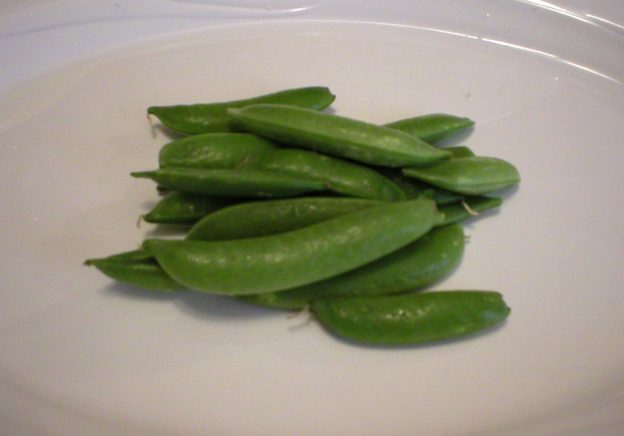
Sugar Snap Peas

Sugar Snap Peas 101 – The Basics

Sugar snap peas are absolutely delicious, whether enjoyed raw or lightly cooked. They’re sweet, crunchy, delicious, and nutritious. AND the pods are edible, so you don’t even need to shell them! Simply give them a quick wash and pop them in your mouth…oh so good! If you haven’t tried them, please do give them a whirl. Below is a lot of information about these delectable goodies from what they are, to how to cook and flavor them, to suggested recipes, and much more.

Enjoy!
Judi

Sugar Snap Peas 101 – The Basics

About Sugar Snap Peas
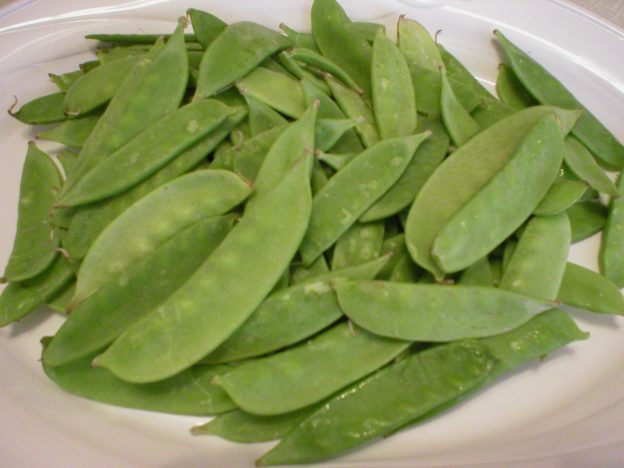
Sugar snap peas, also known as snap peas, are members of the legume family. They are a cross between snow peas (flat pea pods commonly used in Asian stir-fries) and garden peas (shelled, and used in “peas and carrots”). Unlike garden peas, the whole pea, pod and all, of snap peas can be eaten. It is crunchy and sweet. They have tough “strings” at the seams of the pod that some people prefer to remove before eating the whole peas. Snap peas can be eaten whole, raw or cooked.

Nutrition Tidbits
Snap peas contain Vitamins K and C along with a variety of B-Vitamins, folate, iron and beta-carotene. They are a good source of fiber as well. One cup of snap peas has only 41 calories, no fat, and 3 grams of protein.

How to Select Sugar Snap Peas
Look for snap peas that are bright green, smooth, and without blemishes. Avoid those that are spotted, discolored, or wrinkled.

How to Store Sugar Snap Peas
Depending upon how old they are when you purchase them, snap peas can keep for up to five days in a plastic bag in the refrigerator. Discard any that have become soft or discolored.

How to Preserve Sugar Snap Peas
To freeze sugar snap peas, wash them well and remove the ends and strings if desired. Place them in boiling water for 1-1/2 minutes, then immediately place them in a bowl of ice water for 2 minutes. Remove and allow them to drain well. Place them on a tray and freeze for one or two hours, so they are frozen separately. When frozen, place them in freezer containers or bags and return them to the freezer. They will keep well like this for 8 months.

Some people choose to freeze snap peas without blanching, by simply placing the washed peas (that have been frozen individually on a tray) in a freezer bag and storing them in the freezer. If you choose to do this, use them within 4 to 6 weeks. If frozen that way, the longer they are stored, the more they will lose their color, flavor, and nutritional content.

Can they be eaten raw?
Snap peas can be enjoyed raw or cooked. The pod is edible, so you can just pop the whole thing in your mouth and enjoy the natural sweetness and crunchiness of the pea for a snack or in salads.

Quick cooking methods such as stir-frying or blanching snap peas will help to maintain their sweetness and crunchy texture.

How to Prepare Sugar Snap Peas
Of course, give your snap peas a good wash before using them. Some people prefer to remove the ends and the string that runs along the seam on the pod, although this step is not mandatory. They can be enjoyed whole or cut as needed for your recipe.

Cooking/Serving Ideas
Sugar snap peas can be eaten raw as a snack or used as a healthful and crunchy addition to any salad. They can be steamed, blanched, boiled, braised, sautéed, stir-fried, or added to soups, pasta dishes, and casseroles. To keep the crispiness of snap peas, eat them raw or cook them very briefly.

Here are some easy ideas for using sugar snap peas:

* Eat them raw as a simple snack…delicious!

* Slice them and add them to your favorite salad for sweetness and crunch.

* Sauté your sugar snap peas and top them with a little lemon zest, salt and pepper.

* Lightly coat them with olive oil, sprinkle them with garlic powder and roast at 400°F for 15 to 20 minutes (turn once during roasting), until they are as crisp and brown as you like. Sprinkle with a little Parmesan cheese and enjoy!

* Add them to a chicken or beef stir-fry dish.

* Stir-fry sugar snap peas with shredded carrots, onion, garlic, salt, pepper, and a little tamari. Serve over cooked quinoa, then top with a little lemon juice or white wine vinegar, and toasted pepitas.

* Add them to your favorite stir-fry noodle dish.

* Add sugar snap peas to orange stir-fried chicken served over rice.

* Add them to your favorite vegetable stir-fry combination.

* Slice sugar snap peas and add them to a veggie pizza.

* Add them to a salad with strawberries, avocado and walnuts on a bed of mixed greens. Top with a lemon honey vinaigrette. (See recipe link below.)

* Blanch peas for 1-1/2 minutes, then cook them for 2 minutes in a bowl of ice water. Drain then transfer them to a bowl. Top with your favorite Italian salad dressing. Enjoy!

Herbs/Spices That Go Well With Sugar Snap Peas
Basil, butter and browned butter, chervil, chives, cilantro, cumin, curry powder, dill, garlic, ginger, horseradish, marjoram, mint, mustard (Dijon), parsley, pepper (black), sage, salt, scallions, shallots, soy sauce, sugar, tarragon, thyme

Foods That Go Well with Sugar Snap Peas
Proteins, Nuts, Seeds: Beef, cashews, peanuts, peas, pine nuts, pistachios, sesame, tofu

Vegetables: Asparagus, bell peppers, broccoli, carrots, cauliflower, chiles, fennel, mushrooms, onions, radishes, water chestnuts

Fruit: Lemons

Dairy and Non-Dairy: Cheese (ie Parmesan), coconut milk, yogurt

Grains: Noodles, pasta, rice, whole grains of any sort

Other: Miso, oils, vegetable stock

Some Suggested Flavor Combinations:

Try sugar snap peas with…
basil + garlic
chiles + garlic + lemon
cumin + thyme
dill + olive oil + scallions
garlic + lemon zest + pasta
garlic + mushrooms
garlic + pine nuts
ginger + sesame oil
lemon + mint
mustard + olive oil + vinegar
noodles/pasta + peanut sauce + soy sauce
sesame oil + sesame seeds

Recipe Links
Black Pepper and Garlic Sugar Snap Pea Pasta https://www.slenderkitchen.com/recipe/black-pepper-and-garlic-sugar-snap-pea-pasta#recipe

Snap Pea and Japanese Eggplant Stir-Fry https://www.slenderkitchen.com/recipe/snap-pea-and-japanese-eggplant-stir-fry#recipe

Garlic Sugar Snap Peas https://www.slenderkitchen.com/recipe/garlic-sugar-snap-peas#recipe

Sesame Sugar Snap Peas https://www.slenderkitchen.com/recipe/sesame-sugar-snap-peas#recipe

Citrus Shrimp Salad and Sugar Snap Peas with Romaine Hearts https://producemadesimple.ca/citrus-shrimp-salad-sugar-snap-peas-with-romaine-hearts/

5 Easy Lunch Ideas with Sugar Snap Peas https://producemadesimple.ca/5-easy-lunch-ideas-sugar-snap-peas/

Scallop Fettuccine and Sugar Snap Peas https://producemadesimple.ca/scallop-fettuccine-sugar-snap-peas/

10 Minute Sugar Snap Peas With Lemon https://www.asweetpeachef.com/sugar-snap-peas/#wprm-recipe-container-20390

14 Spring Sugar Snap Pea Recipes You Need to Try This Season https://www.delish.com/cooking/g74/sugar-snap-pea-recipes/

Asian Been with Sugar Snap Peas https://www.thechunkychef.com/asian-beef-sugar-snap-peas/#wprm-recipe-container-8743

Summer Strawberry, Snap Pea, Avocado, and Walnut Salad http://healthcheflindsey.com/summer-strawberry-snap-pea-avocado-and-walnut-salad/

About Judi
Julia W. Klee (Judi) began her journey enjoying “all things food” in elementary school when she started preparing meals for her family. That love of food blossomed into a quest to learn more and more about health and wellness as related to nutrition. She went on to earn a BS Degree in Food and Nutrition, then an MS Degree in Nutrition. She has taught nutrition and related courses at the college level to pre-nursing and exercise science students. Her hunger to learn didn’t stop upon graduation from college. She continues to research on a regular basis about nutrition as it relates to health. Her hope is to help as many people as possible to enjoy foods that promote health and wellness.

Resources
https://www.thekitchn.com/whats-the-difference-between-snow-peas-sugar-snap-peas-and-english-peas-ingredient-intelligence-205118

https://www.slenderkitchen.com/article/sugar-snap-peas

https://producemadesimple.ca/the-difference-between-garden-peas-snow-peas-and-sugar-snap-peas/

https://www.thespruceeats.com/blanch-and-freeze-sugar-snap-peas-1327654

https://www.leaf.tv/articles/how-to-freeze-fresh-peas-without-blanching/

Page, Karen. (2014) The Vegetarian Flavor Bible. New York, NY: Little, Brown and Company.
Honey Glazed Carrots (Using Fresh Carrots)

Honey Glazed Carrots (Using Fresh Carrots)

Honey glazed carrots are simply delicious and not hard to make! Here’s an easy way to make them. See the recipe below the video demonstration. Enjoy!

I hope this helps!
Judi

Honey Glazed Carrots (Using Fresh Carrots)
Makes About 4 Servings

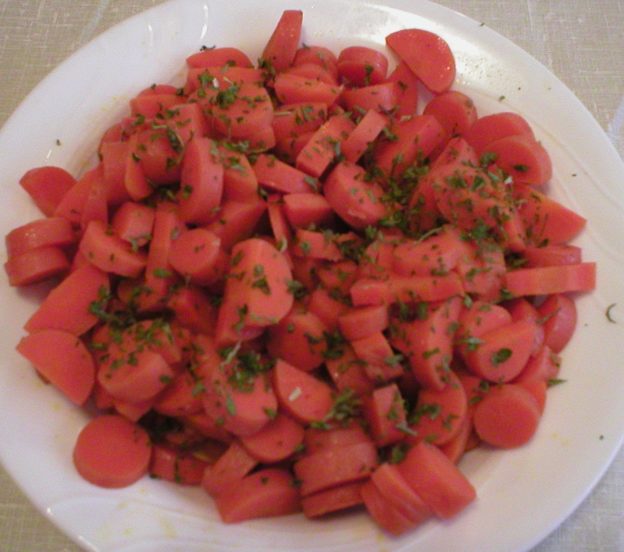
3-1/2 cups sliced fresh carrots (About 1 pound)
2 Tbsp butter*
2 Tbsp honey*
½ cup water
1 Tbsp lemon juice*
Parsley flakes, optional garnish

Wash the carrots and cut off both ends. Peeling them is optional. Cut into slices about ¼-inch to 3/8-inch thick.

Heat a skillet over medium heat. Add the butter and allow it to melt, then add the carrots. Stir to coat the carrots with the butter. Add ½ cup of water and cover the pan. Raise the heat to bring the liquid to a boil, then lower the heat to a simmer. Drizzle the carrots with the honey; stir to combine. Cover the pan and allow the carrots to cook until almost as tender as you want them to be, adding a small amount of water if needed, so all the water does not completely evaporate. When they are almost as tender as you like, remove the lid from the skillet and allow the liquid to reduce, and form the glaze. Stir often to coat the carrots. When they are glazed and cooked to your liking, remove the pan from the heat and drizzle the carrots with the lemon juice. It should take about 12 minutes to cook the carrots to crisp-tender. Sprinkle with dried or fresh parsley flakes, if desired. Serve.

*For a lighter, less sweet glaze, use 1 tablespoon of butter and 1 tablespoon of honey. Also, the lemon juice can be reduced to ½ tablespoon, if desired.

About Judi
Julia W. Klee (Judi) began her journey enjoying “all things food” in elementary school when she started preparing meals for her family. That love of food blossomed into a quest to learn more and more about health and wellness as related to nutrition. She went on to earn a BS Degree in Food and Nutrition, then an MS Degree in Nutrition. She has taught nutrition and related courses at the college level to pre-nursing and exercise science students. Her hunger to learn didn’t stop upon graduation from college. She continues to research on a regular basis about nutrition as it relates to health. Her hope is to help as many people as possible to enjoy foods that promote health and wellness.

Snow Peas

Snow Peas 101 – The Basics

If you want to know something about snow peas, look no further! The following article covers many aspects about the vegetables, from what they are to how to use them along with links to suggested recipes. I hope this helps!

Enjoy,
Judi

Snow Peas 101 – The Basics

About Snow Peas
Snow peas are cousins with sugar snap peas and are in the legume family. They have large flattened green pods with tiny peas inside. They may be called Holland peas in other parts of the world. Interestingly, snow peas were grown and enjoyed in Holland as early as the 1500s. They were very popular in Europe in the 1800s. From there they spread to China where they quickly became a mainstay in their cuisine.

The peak season for snow peas is spring through early summer. Both the pods and peas are edible having a sweet flavor and crisp-tender texture. They are commonly used in Asian cuisine, being included in stir-fries, fried rice, and noodle dishes. Snow peas can also be a nice addition to soups, curries and meat dishes.

Nutrition Tidbits
Snow peas are extremely high in Vitamin C and low in calories. One cup of snow peas has about 67 calories. They are also good sources of fiber, folate and other B-vitamins, Vitamin K, an array of minerals such as calcium, iron, zinc, selenium, copper, and manganese, and antioxidants such as the carotene, lutein, and zeaxanthin. Their nutrient profile helps to fight free radicals and cellular damage, lower cholesterol levels, protect our bones, fight cancers, and protect our brain from dementia.

How to Select Snow Peas
Snow peas are at their best in the spring, but they are available year-round in many grocery stores. Choose ones that look fresh, flat, and are brightly colored with little to no blemishes. Avoid those that look dry or wilted. Also, watch for cracks, bruising, and discoloration, as they are older and less desirable.

How to Store Snow Peas
Refrigerate snow peas in a plastic bag or in the crisper drawer set on high-humidity. Use them as soon as possible, preferably within two or three days of buying them.

How to Freeze Snow Peas
Place washed and trimmed snow peas in boiling water for 1-1/2 minutes. Promptly transfer them to a bowl of ice water for 2 minutes, until completely cooled. Drain, then place them on a tray in the freezer for one or two hours, until frozen.* Transfer the frozen peas to a freezer container or bag. Properly prepared, they will keep frozen for about 8 months.

*Freezing them separately is not mandatory, but will prevent them from freezing into one big lump, making them hard to use without breaking them into smaller pieces.

If you opt to freeze your peas without first blanching, use them within four to six weeks because their quality will quickly deteriorate.

Raw vs Cooked
Snow peas have a mild flavor and may be eaten raw or cooked. Since both the pod and peas are edible, they can be added to salads (whole or cut up) for a nice fresh flavor and light crunch.

In Asian cuisine, they are typically cooked and added to dishes with other foods, like stir-fried vegetables and fried rice.

How to Prepare Snow Peas
Wash your snow peas in cold water and pat them dry. Remove the ends and the string along the seam, if desired, and use them whole or cut them as needed for your recipe.

Cooking/Serving Ideas
Snow peas may be enjoyed raw or boiled, blanched, steamed, stir-fried, sautéed, and added to soups, stews, and curries. When cooked, they are at their best when cooked only briefly, as this retains their crispness, color and nutrients.

To steam snow peas, place them in a steamer basket over boiling water. Cover with a lid and allow them to steam for 3 to 5 minutes, or until crisp-tender.

Here are some ideas for using snow peas:

* Add snow peas to your favorite salad for freshness and a light crispy addition.

* When making an appetizer tray with veggies and dip, include snow peas and sugar snap peas to the options. They would make great vehicles for collecting dip!

* Add snow peas to your favorite stir-fried vegetables.

* Sauté snow peas with garlic in oil and/or butter. Top with a drizzle of lemon juice.

* Include snow peas with other vegetables when making fried rice or noodles.

* Try a stir-fried or stir-steamed medley of snow peas, broccoli, cauliflower, bell peppers, carrots and onions. Add some ginger and garlic for a little zing in the veggies.

* Sauté carrots and snow peas in butter, then glaze with a little honey for some sweetness. A small drizzle of lemon juice can help balance the sweetness, if desired.

* Combine your favorite cooked pasta with some butter and/or olive oil, snow peas, sun dried tomatoes, red pepper flakes, and some Parmesan cheese.

* Try roasting snow peas. Lightly coat washed and trimmed peas with olive oil and a sprinkle of garlic powder. Place in a 400°F oven for 15 to 20 minutes until crispy (turn once during roasting). Sprinkle with grated Parmesan cheese and enjoy!

Herbs/Spices That Go Well With Snow Peas
Cilantro, curry paste, curry powder, five-spice powder, garlic, ginger, hoisin sauce, lemongrass, mint, miso, mustard, pepper (black, Szechuan), salt, soy sauce, tarragon, Worcestershire sauce

Other Foods That Go Well With Snow Peas
Proteins, Nuts, Seeds: Beef, cashews, chicken, peanuts and peanut sauce, peas, pork, poultry, scallops, seafood, sesame, shrimp, tofu

Vegetables: Bamboo shoots, bean sprouts, bell peppers, bok choy, broccoli, cabbage, carrots, cauliflower, celery, chiles, kale, mushrooms, onions, radishes, scallions, squash (summer), sugar snap peas, water chestnuts, zucchini

Fruits: Coconut, lemon, lime, orange

Grains: Noodles, rice (esp. basmati, brown, wild)

Dairy and Non-Dairy: Butter, coconut milk

Other: Chili sauce, oil (esp. peanut, sesame), soy sauce, sugar, tofu, vegetable stock, vinaigrette, vinegar (esp. rice)

Cuisines and dishes that go well with snow peas:
Asian cuisine, Chinese cuisine, salads, slaws, soups, stir-fries, Thai cuisine

Suggested Flavor Combos:
Snow peas + Asian noodles + lime + peanut sauce
Snow peas + Asian noodles + mirin (a type of Japanese rice wine)
Snow peas + bell peppers + curry powder + scallions + tofu
Snow peas + carrots + ginger
Snow peas + carrots + honey + orange
Snow peas + chiles + ginger + lemongrass
Snow peas + coconut milk + garlic + lime
Snow peas + garlic + ginger
Snow peas + garlic + peanut oil + pepper
Snow peas + ginger + scallions

Recipe Links
Summer Pea and Roasted Red Pepper Salad https://smittenkitchen.com/2009/08/summer-pea-and-roasted-red-pepper-pasta-salad/

Extra Vegetable Fried Rice https://cookieandkate.com/vegetable-fried-rice-recipe/#tasty-recipes-24427

Lemon Herb Summer Linguine with Chicken, Asparagus, and Snow Peas https://www.willcookforsmiles.com/lemon-herb-summer-linguine-chicken-asparagus-snow-peas/

Brown Buttered Snow Peas https://www.livinglou.com/brown-buttered-snow-peas/

Sesame Snow Pea Salad http://www.savynaturalista.com/2014/03/11/sesame-snow-pea-salad/

Moo Goo Gai Pan https://pickledplum.com/moo-goo-gai-pan-recipe/print/41175/

One Pot Coconut Curry Shrimp https://www.platingpixels.com/one-pot-coconut-curry-shrimp/#wprm-recipe-container-9305

Thai Red Curry with Prawns and Snow Peas https://vikalinka.com/thai-red-curry-with-prawns-and-snow-peas/

Asian Beef with Snow Peas https://www.allrecipes.com/recipe/15679/asian-beef-with-snow-peas/

Quick and Easy Snow Peas With Butter and Lemon https://www.thespruceeats.com/snow-peas-with-butter-and-lemon-4056256

Sesame Snow Peas in Apricot Sauce https://www.cooks.com/recipe/xq0i64so/sesame-snow-peas-in-apricot-sauce.html

Stir-Fried Chicken and Snow Peas https://www.cooks.com/recipe/6e9986lk/stir-fried-chicken-and-snow-peas.html

Mushroom Snow Pea Stir-Fry https://www.cooks.com/recipe/pj04e8hm/mushroom-snow-pea-stir-fry.html

Fettuccine with Salmon and Snow Peas https://www.cooks.com/recipe/jz9xg575/fettuccine-with-salmon-snow-peas.html

Shrimp and Snow Pea Salad https://www.foodnetwork.com/recipes/ellie-krieger/shrimp-and-snow-pea-salad-recipe-1972960

About Judi
Julia W. Klee (Judi) began her journey enjoying “all things food” in elementary school when she started preparing meals for her family. That love of food blossomed into a quest to learn more and more about health and wellness as related to nutrition. She went on to earn a BS Degree in Food and Nutrition, then an MS Degree in Nutrition. She has taught nutrition and related courses at the college level to pre-nursing and exercise science students. Her hunger to learn didn’t stop upon graduation from college. She continues to research on a regular basis about nutrition as it relates to health. Her hope is to help as many people as possible to enjoy foods that promote health and wellness.

Resources
https://www.specialtyproduce.com/produce/Snow_Peas_425.php

https://www.nutrition-and-you.com/snow-peas.html

https://www.nutritionix.com/food/snow-peas

https://www.farmersalmanac.com/freezing-snow-peas-and-sugar-snap-peas-96

https://www.leaf.tv/articles/how-to-freeze-fresh-peas-without-blanching/

Top 10 Ways to Enjoy Snow Peas

https://diethood.com/garlic-parmesan-sugar-snap-peas/

https://www.saveur.com/how-to-buy-cook-store-spring-peas#page-3

Page, Karen. (2014) The Vegetarian Flavor Bible. New York, NY: Little, Brown and Company.
Spaghetti Squash

Spaghetti Squash 101 – The Basics

If you’re avoiding traditional pasta for whatever reason and are missing it, have you tried spaghetti squash? It’s a nutrient-dense food that is low in calories and carbohydrates. It’s easy to cook and can be used in many dishes that call for traditional pasta noodles. Give it a try sometime! Below is a lot of information that can help as you explore this versatile food.

I hope this helps!
Judi

Spaghetti Squash 101 – The Basics

About Spaghetti Squash
Spaghetti squash are members of the Cucurbitaceae family. They are cousins with pumpkins, zucchini, and gourds. They are also known as vegetable spaghetti, noodle squash, mandarin squash, and vegetable marrow. Historians have found written records of the use of spaghetti squash in China from the early 1800s. It has since become popular around the world as a low-carbohydrate alternative to traditional spaghetti.

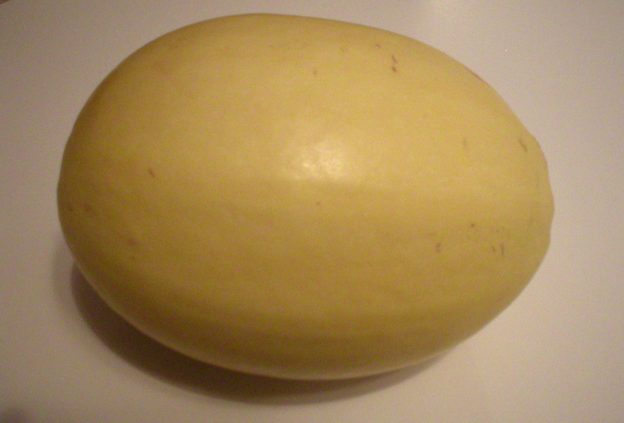
Spaghetti squash are small to medium in size with an oblong shape and are heavy for their size. The flesh is thick, dense and moist, and separates into long, translucent strings that look similar to pasta. When cooked, the flesh is tender and has a slight crunch and mild flavor. Spaghetti squash is often paired with marinara sauce, meatballs and Parmesan cheese, making a delicious mock spaghetti meal.

Nutrition Tidbits
Spaghetti squash is a nutrient dense food, meaning it is high in nutrients relative to its low number of calories. It is a good source of fiber, Vitamin C, manganese, and Vitamin B6. One cup of cooked spaghetti squash has a mere 42 calories.

Spaghetti squash is also high in antioxidants, particularly beta-carotene, known to help protect our cells from free-radical damage and ward off chronic diseases.

How to Select a Spaghetti Squash
Choose squash that are firm and free of spots and cracks. They should be heavy for their size. If possible, choose one that still has a bit of stem attached, as it can help prevent bacteria from entering the squash.

How to Store Spaghetti Squash
Store unwrapped squash in a cool, dry, and well ventilated place for up to 3 months, depending upon how old they are when you buy them. The ideal storage temperature would be 55 to 60°F. If you refrigerate them, they will keep for 1 or 2 weeks in the refrigerator.

To store cut squash, tightly wrap the cut section in plastic wrap and store it in the refrigerator and use it as soon as possible.

How to Preserve Spaghetti Squash
Cooked spaghetti squash strands can be stored in the freezer for up to 8 months. It’s helpful to remove any excess water first. Place the baked squash in a colander over a large bowl. Cover and place it in the refrigerator overnight. This will help drain off any excess water. Then carefully place the drained strands in a freezer bag and squeeze out the air, or place them in an air-tight freezer container. Store in freezer.

How to Prepare Spaghetti Squash
Preparing a spaghetti squash is easy. Simply wash it, then cut it in half lengthwise. Remove the seeds by scraping them out with a spoon. Place each half, cut side down, on a parchment paper-lined baking sheet and roast at 400F until fork tender. The time will vary depending upon the size of the squash.

When tender, remove from the oven and allow it to cool slightly until it can be comfortably handled. Then turn it over and loosen the squash strands with a fork. Remove them to a bowl and proceed with your recipe. The squash strands can be flavored to your liking and eaten right away without further cooking, if desired.

If you prefer not to cut the squash, simply wash it then poke holes in it with a sharp knife. Roast on a parchment paper-lined baking sheet or pan at 400F until fork tender. Allow to cool until it can be handled. Cut the squash in half and remove the seeds. With a fork, release and remove the strands and prepare as desired.

Cooking/Serving Ideas
Use cooked spaghetti squash strands as if they were cooked spaghetti. Their use is only limited to your imagination!

For a decorative way to serve spaghetti squash, reserve the halved shells after removing the strands. Prepare your recipe, then use the shell halves as serving bowls.

Simple serving ideas:

* Toss the cooked squash strands with your favorite tomato sauce. Add meat of choice, if desired, and sprinkle with cheese. Serve in the shell halves for a decorative touch!

* Combine cooked squash strands with your favorite stir-fried veggies.

* Toss cooked squash strands with your favorite pesto. Top with cut grape tomatoes and your favorite cheese.

* Sauté chopped garlic in butter or olive oil. Stir in cooked spaghetti squash strands until heated. Remove to a serving platter and sprinkle generously with Parmesan cheese.

* Sauté cooked squash strands in some butter or olive oil with a mixture of fresh basil, parsley and chives. A touch of garlic would be a nice addition. Sprinkle with salt and pepper to taste. Top with Parmesan cheese, if desired.

* Toss cooked squash strands with steamed broccoli, a little olive oil, and a sprinkle of lemon pepper. If desired, top with Parmesan cheese.

* Spread cooked spaghetti squash strands on an ovenproof baking pan. Top with tomato sauce and your favorite pizza toppings. Sprinkle with some oregano and mozzarella cheese. Bake at 400F until the topping is hot and cheese is bubbly, about 20 minutes.

* Incorporate cooked spaghetti squash into your favorite pasta casserole in place of the pasta.

Suggested Flavor Combos:
* Spaghetti squash + balsamic vinegar + kidney beans

* Spaghetti squash + basil + garlic

* Spaghetti squash + basil + tomatoes

* Spaghetti squash + brown butter + hazelnuts

* Spaghetti squash + garlic + tomatoes

* Spaghetti squash + mozzarella cheese + tomatoes

* Spaghetti squash + mushrooms + onions

The following tips for cooking spaghetti squash were provided by https://producemadesimple.ca/spaghetti-squash/

* If you roast spaghetti squash whole (not cut it half), make sure you poke a few holes in it with a fork for the steam to escape or you just may end up with a squash explosion to clean up!

* 1 pound of squash yields about 1-½ cups cooked spaghetti squash.

* Microwaving spaghetti squash will yield a softer “pasta” with shorter strands, while baking squash will yield more of an al dente bite to the squash with longer strands.

* Check the doneness of squash by pressing on the skin. It should give slightly when the squash is tender and cooked.

* If you don’t have a sharp knife for cutting the raw squash in half, you can pierce the squash a few times, the microwave it on high for 2 minutes. It will be easier to slice this way before roasting.

Herbs/Spices That Go Well With Spaghetti Squash
Basil, bay leaf, black pepper, cilantro, garlic, ginger, parsley, pesto, salt, rosemary, sage, soy sauce, sugar, thyme

Other Foods That Go Well With Spaghetti Squash
Proteins: Bacon, beans, eggs, lentils, pork, sausage, seafood, toasted nuts, walnuts

Dairy: Butter and browned butter, cheese, cream

Vegetables: Bok choy, broccoli, carrots, fennel, mushrooms, onions, parsnips, peppers (bell and chiles), scallions, tomatoes, zucchini

Grains: Bulgur, quinoa

Other: Oil, lemon, vinegar

Recipe Links
68 Healthy Spaghetti Squash Recipes That Are Full of Flavor https://www.countryliving.com/food-drinks/g2682/spaghetti-squash-recipes/

23 Spaghetti Squash Recipes That Will Make You Forget You’re Eating Veggies https://www.delish.com/cooking/g3001/spaghetti-squash/

Our Top Spaghetti Squash Recipes https://www.foodnetwork.com/recipes/photos/top-spaghetti-squash-recipes

50 Ways to Cook Spaghetti Squash https://aggieskitchen.com/50-ways-to-cook-spaghetti-squash/

About Judi
Julia W. Klee (Judi) began her journey enjoying “all things food” in elementary school when she started preparing meals for her family. That love of food blossomed into a quest to learn more and more about health and wellness as related to nutrition. She went on to earn a BS Degree in Food and Nutrition, then an MS Degree in Nutrition. She has taught nutrition and related courses at the college level to pre-nursing and exercise science students. Her hunger to learn didn’t stop upon graduation from college. She continues to research on a regular basis about nutrition as it relates to health. Her hope is to help as many people as possible to enjoy foods that promote health and wellness.

Resources
https://www.specialtyproduce.com/produce/Spaghetti_Squash_4145.php

https://www.healthline.com/nutrition/spaghetti-squash#nutrition

https://www.sparkpeople.com/resource/perfect_prod_detail.asp?ppid=88

https://www.thespruceeats.com/how-to-freeze-spaghetti-squash-1388431

https://producemadesimple.ca/?s=spaghetti+squash

https://producemadesimple.ca/goes-well-spaghetti-squash/

https://www.thekitchenismyplayground.com/2014/09/spaghetti-squash-with-fresh-herbs.html

Page, Karen. (2014) The Vegetarian Flavor Bible. New York, NY: Little, Brown and Company.
Lentils

Lentils 101 – The Basics

The whole-foods, plant-based diet is increasing in popularity. So, lentils, beans, and seeds are being enjoyed by many. Even if you’re a meat eater, having a meatless meal at least once a week is encouraged. Lentils have been around for thousands of years and many people enjoy them. Yet, many others are new to lentils and just aren’t sure what to do with them. Here’s some help for you. Below is a lot of basic information about lentils, covering what they are, the various types of lentils, the nutritional and health benefits of lentils, how to flavor them and what other foods pair well with them, recipe suggestions, and more! Let me know if you need further information about lentils and I’ll do my best to help!

Enjoy!
Judi

Lentils 101 – The Basics

About Lentils
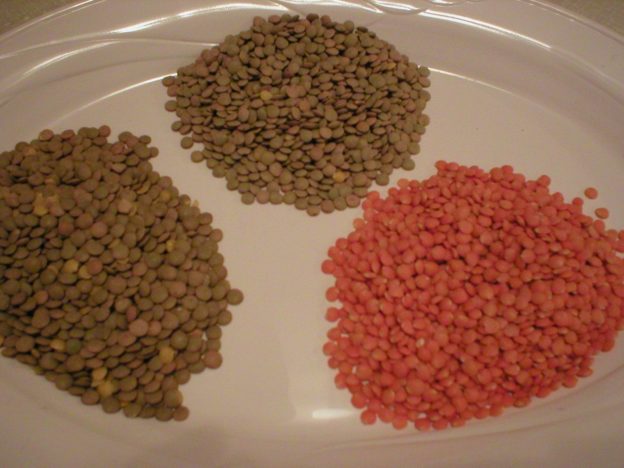
Lentils are in the legume family. They are actually pulses, which are the edible seeds that grow in pods containing only one or two seeds per pod. They are believed to have originated in central Asia, and have been eaten since prehistoric times. They are one of the first foods be cultivated. Lentil seeds dating back 8000 years have been found at archeological sites in the Middle East. Today, most lentils are grown in India, Turkey, Canada, China and Syria. There are many varieties with the most common types in American grocery stores being brown, green and red (but actually more orange in color). There are also yellow, black, and puy lentils.

The brown lentils are the variety most commonly found in American grocery stores. They have a mild, earthy flavor, and hold their shape well when cooked. Brown lentils are “universal” in the lentil family as they can be used in whatever recipe that calls for lentils. They can be mashed and used in meatless burgers, blended into soups, used in salads, and used in casseroles and literally any recipe calling for lentils. They pair well with grains.

Green lentils have a bit of a peppery flavor. This makes them particularly suitable to add to salads or any dish where a pepper flavor is welcome. They take a little longer to cook then the brown variety, but still hold their shape well while maintaining a little firmness. This type of lentil is not as commonly found in American stores as the brown lentils, and can be a little more costly.

Red lentils have a sweet, nutty flavor. They cook up faster than other varieties because they are actually split and the seed coat has been removed. This makes them soft and mushy when cooked, making them a natural thickening agent for soups, purees, and stews.

Yellow lentils are split like red lentils. They have a sweet-nutty flavor, like their red counterpart. Since they are split, they also cook up quicker than brown or green lentils, in 15 or 20 minutes. Yellow lentils are commonly used in Indian cuisine.

Black lentils are also called beluga lentils. These are the most flavorful lentils. They have a somewhat thicker skin than brown lentils, so if you want them tender, they may need to cook a little longer like the green lentils, perhaps up to 40 minutes. If you want to maintain some of their crispness, cook them for less time, about 30 minutes.

Puy (pronounced pwee) lentils come from the French region of Le Puy. They look like green lentils, but are smaller and have a peppery flavor.

Nutrition Tidbits
Lentils are an excellent source of molybdenum and folate, and a very good source of dietary fiber, copper, phosphorus and manganese. Also, they are a good source of iron, protein, Vitamin B1, pantothenic acid, zinc, potassium and Vitamin B6. Lentils contain no fat. One cup of cooked lentils provides about 1/3 of our daily protein needs (18 grams) and 230 calories.

Lentils are a good source of both soluble and insoluble fiber. The soluble fiber helps to keep our cholesterol in check (by binding with bile in the digestive tract, removing it from the body and forcing the body to use cholesterol in the system to make more bile). The insoluble fiber in lentils helps to prevent constipation while reducing the risk of irritable bowel syndrome and diverticulosis.

The fiber in lentils not only helps to regulate cholesterol levels, but also regulates blood sugar. This helps in controlling diabetes, insulin resistance and hypoglycemia. Research has confirmed that eating lentils as part of a high fiber diet helps to release energy slowly and steadily, showing dramatic effects in diabetics by controlling blood sugar and lowering cholesterol levels.

The fiber content, combined with its folate and magnesium content, works wonders in helping to lower the risk of heart disease by lowering homocysteine levels and improving blood flow around the body. Homocysteine is an important amino acid needed in certain metabolic reactions. When our folate level is low, homocysteine levels increase, causing damage to arterial walls and raising our risk for heart disease.

Lentils are also a good source of iron, with one cup of cooked lentils providing over a third of our daily needs. Iron is critical for carrying oxygen throughout the body in the bloodstream. Eating lentils on a regular basis can help keep our energy levels up and prevent iron deficiency.

How to Select Lentils
Most lentils available today are either found in bulk bins or are prepackaged. When buying lentils, make sure there is no sign of moisture or insect damage. Look for ones that are whole and not cracked.

How to Store Lentils
Store lentils in an airtight container in a dry, cool, dark place. They should keep for about a year.

How to Preserve Lentils
Once cooked, lentils will keep in the refrigerator for about one week. Cooked lentils can be frozen and should be used within three months.

How to Prepare Lentils
Compared to other beans or legumes, lentils are very easy to prepare since they need no presoaking. Before cooking them, check them for stones or debris and remove anything as needed. Place the dry lentils in a strainer and rinse them under cold water, then cook as desired.

How to Sprout Lentils
Here is my video on how to sprout lentils, from start to harvest…


How to Cook Lentils
When boiling lentils, use one part lentils to three parts water. It is not mandatory, but bringing the water to a boil first before placing the lentils in the water helps to make them more digestible. When the water returns to a boil, turn down the heat and simmer, covered, for about 30 minutes until tender. Brown lentils usually take about 30 minutes to cook. Red lentils take about 20 minutes, and black lentils may take up to 45 minutes to cook. Some recipes call for slightly more firm lentils, requiring a little less cooking time, while other recipes call for very soft lentils, requiring a little more cooking time.

Some suggested ways to use lentils:
* Try mixing lentils with rice or another grain. The combination will make a complete and very digestible protein. Vegetables can be added to make a simple meal. Suggested vegetables include dark leafy greens like kale or spinach, or crunch vegetables like carrots or bell peppers.

* Add cooked lentils to stir-fries or casseroles.

* Use pureed cooked lentils in hummus.

* Cook lentils in your favorite broth to add more flavor to them. Add some herbs to flavor them to your liking.

* Add lentils to soups and stews for a protein boost.

* Use lentils in a curry served over rice.

* Serve chili-spiced lentils with cheese and nacho chips or use them as a taco filling.

* Stuff sweet potatoes with your favorite cooked lentils. Top with cheese.

* Try a creamy red lentil soup.

* Try a lentil salad. Many can be served warm, room temperature or cold…a perfect addition to a summer gathering (or any time for that matter!).

Herbs/Spices That Go Well with Lentils
Bay leaf, cardamom, chili powder, cilantro, cinnamon, cloves, coriander, cumin, curry, garam masala, garlic, ginger, mint, oregano, paprika, parsley, rosemary, tarragon, thyme, turmeric

Other Foods That Go Well with Lentils
Meats and other proteins: Beef, eggs, fish, lamb, sausage

Grains: Rice, pasta and any just about any grains or grain product

Vegetables: Carrots, celery, leafy green vegetables, mushrooms, onion, tomatoes

Dairy: Cheese

Recipe Links
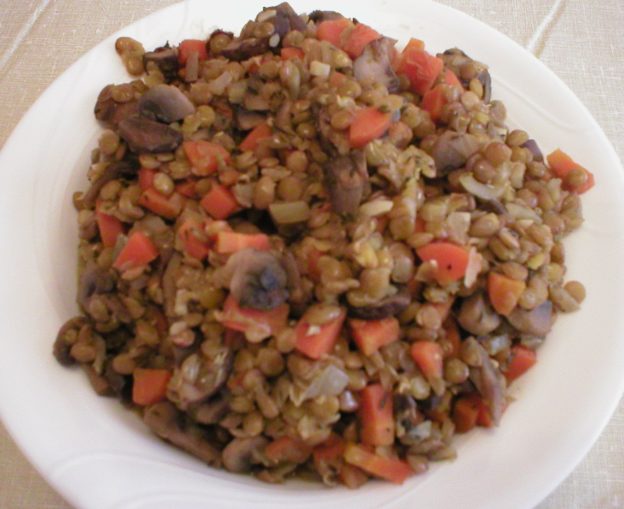
Lentils with Mushrooms and Carrots https://www.judiklee.com/2019/06/04/lentils-with-mushrooms-and-carrots/

Sweet and Savory Lentils https://www.judiklee.com/2019/05/28/sweet-and-savory-lentils/

Lentils with Vegetables over Spaghetti Squash https://youtu.be/_wrLM_1s-ZI and https://www.judiklee.com/2019/08/27/lentils-with-vegetables-over-spaghetti-squash/

Mexican Lentils and Rice https://www.lentils.org/recipe/mexican-lentils-rice/

Roasted Spring Vegetable Medley with Crispy Lentils https://www.lentils.org/recipe/roasted-spring-vegetable-medley-with-crispy-lentils/

Teriyaki Stir-fry with Lentils and Quinoa https://www.lentils.org/recipe/teriyaki-stirfry-with-lentils-quinoa/

Instant Pot Lentils Braised with Beets and Red Wine https://www.lentils.org/recipe/instant-pot-lentils-braised-with-beets-red-wine/

Shrimp with White Wine, Lentils and Tomatoes https://www.lentils.org/recipe/shrimp-with-white-wine-lentils-tomatoes/

Quick Pasta with Lentils https://www.lentils.org/recipe/quick-pasta-with-lentils/

25 Ways to Turn Lentils into Dinner https://www.thekitchn.com/25-ways-to-turn-lentils-into-dinner-248332

10 Delicious Ways to Eat Lentils https://www.onegreenplanet.org/vegan-food/delicious-ways-to-eat-lentils/

Warm Winter Greens with Balsamic Lentils and Roasted Pears https://producemadesimple.ca/warm-winter-greens-with-balsamic-lentils-and-roasted-pears/

8 Surprisingly Fast and Delicious Lentil Recipes https://www.foodandwine.com/blogs/8-surprisingly-fast-and-delicious-lentil-recipes

25 Creative Lentil Recipes That Go Way Beyond Soup https://www.bonappetit.com/recipes/slideshow/lentil-recipes

Sweet Potato and Red Lentil Curry https://www.cookinglight.com/recipes/sweet-potato-and-red-lentil-curry

15 Best Lentil Recipes https://www.acouplecooks.com/best-lentil-recipes/

Mediterranean Lentil Salad https://www.allrecipes.com/recipe/14260/mediterranean-lentil-salad/

Lentil Salad https://www.skinnytaste.com/lentil-salad/

Greek Lentil Salad https://cookieandkate.com/greek-lentil-salad-recipe/

Sexy Lentil Salad https://www.recipetineats.com/sexy-lentil-salad/

Lentil Salad https://simpleveganblog.com/lentil-salad/

Lentil and Rice Salad https://www.bonappetit.com/recipe/lentil-and-rice-salad

Quinoa Lentil Salad with Lemon Vinaigrette https://www.asweetpeachef.com/quinoa-lentil-salad-lemon-vinaigrette/

About Judi
Julia W. Klee (Judi) began her journey enjoying “all things food” in elementary school when she started preparing meals for her family. That love of food blossomed into a quest to learn more and more about health and wellness as related to nutrition. She went on to earn a BS Degree in Food and Nutrition, then an MS Degree in Nutrition. She has taught nutrition and related courses at the college level to pre-nursing and exercise science students. Her hunger to learn didn’t stop upon graduation from college. She continues to research on a regular basis about nutrition as it relates to health. Her hope is to help as many people as possible to enjoy foods that promote health and wellness.

Resources
http://www.whfoods.com/genpage.php?tname=foodspice&dbid=52#descr

https://www.lentils.org/about-lentils/

https://www.weightwatchers.com/util/art/index_art.aspx?tabnum=1&art_id=82311&sc=3022

https://www.livestrong.com/article/528308-how-to-spice-up-lentils/

https://www.simplyhealthyfamily.org/lentils-taste/

https://kitchenbyte.com/what-do-lentils-taste-like/

https://www.cookinglight.com/cooking-101/different-types-lentils

https://www.wideopeneats.com/5-different-types-of-lentils/

https://www.bonappetit.com/story/types-of-lentils

https://www.healthline.com/nutrition/lentils#types

https://www.mindbodygreen.com/0-5488/7-Health-Benefits-of-Lentils.html

https://www.thekitchn.com/flavor-combinations-beans-herb-75364

Lentils with Mushrooms and Carrots

Lentils with Mushrooms and Carrots

Lentils are oh so good for you and very easy to cook…no soaking needed! This is a really easy and tasty lentil dish to make. Once the ingredients are added to the pot, it’s simply a matter of letting them cook until the lentils are as tender as you like, about 30 minutes. The recipe is below the video demonstration. Enjoy!

I hope this helps!
Judi

Lentils with Mushrooms and Carrots
Makes 4 to 6 Servings

1 Tbsp extra virgin olive oil
1/3 cup chopped onion
1 cup diced carrots
2 cloves garlic, chopped
2 cups sliced mushrooms (fresh, frozen or canned)
½ cup brown or green lentils, rinsed and drained*
1-1/2 cups vegetable broth or water**
1 tsp dried thyme
½ tsp salt
Black pepper to taste
Pinch of red pepper flakes, or more to taste

Warm a medium size pot over medium heat. Add the oil, onion, carrots, mushrooms, and garlic, and briefly sauté until aromatic. Add the lentils, broth, and seasonings. Turn the burner up to bring the liquid to a boil, then lower the heat to simmer on medium to medium-low heat. Cover and allow it to cook, stirring occasionally, until the lentils are softened, about 25 to 30 minutes. Taste and adjust seasonings, if needed, and serve.

This can be served as a main dish or a side dish. It would pair well with rice or another grain, potatoes, or pasta.

Cook’s Note: To add another flavor dimension to this dish, you could add some chopped fresh tomatoes at the beginning if you want them to break down, or toward the end of cooking time to keep them more intact.

* If using green lentils, they may need a little longer to cook. Just be sure the mixture doesn’t boil dry in the process.

** If you don’t have vegetable broth available, water may be used in its place. However, it won’t have as much flavor as when broth is used. You may want to increase the seasonings a bit to compensate.

About Judi
Julia W. Klee (Judi) began her journey enjoying “all things food” in elementary school when she started preparing meals for her family. That love of food blossomed into a quest to learn more and more about health and wellness as related to nutrition. She went on to earn a BS Degree in Food and Nutrition, then an MS Degree in Nutrition. She has taught nutrition and related courses at the college level to pre-nursing and exercise science students. Her hunger to learn didn’t stop upon graduation from college. She continues to research on a regular basis about nutrition as it relates to health. Her hope is to help as many people as possible to enjoy foods that promote health and wellness.

Sweet Potatoes

Sweet Potatoes 101 – The Basics

Sweet potatoes are delicious root vegetables that we have incorporated into everything from appetizers to desserts and snacks. They are loaded with nutritional benefits and are excellent to include in a healthful diet. In the video below, I cover a wide range of information about sweet potatoes from how to choose them, store them, preserve them, to cooking with them, and more. My notes are below the video link so you use them for your personal endeavors. Enjoy!

I hope this helps!
Judi

Here’s how to get the most benefit from your sweet potatoes!

Sweet Potatoes 101 – The Basics

About Sweet Potatoes
Sweet potatoes are root vegetables that belong to the morning glory family. They are not the same thing as yams. In fact, yams are in a whole different plant family than sweet potatoes and are not commonly found in the United States (except perhaps in international markets).

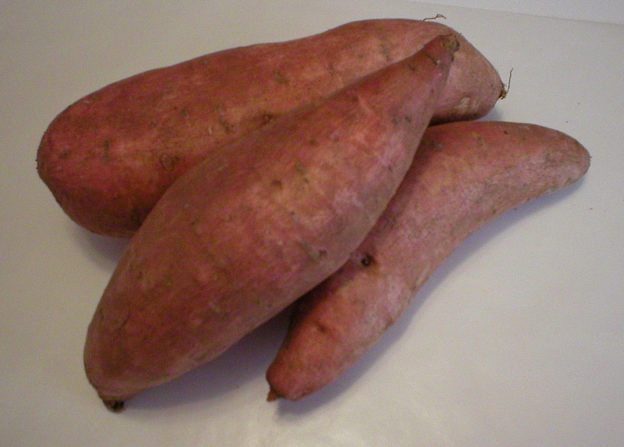
There are many varieties of sweet potatoes, with skin color being white, yellow, purple, red or brown. Flesh color can be white, yellow, orange, or orange-red. They are typically grown in warmer climates and harvested in the fall.

Nutrition Tidbits
Sweet potatoes are very high in beta-carotene and Vitamin C. Orange-fleshed sweet potatoes are one of our best food sources of beta-carotene, a precursor to Vitamin A. There are plenty of other vitamins and minerals in sweet potatoes, too, but those two are especially noteworthy. One cup of boiled, mashed sweet potato has about 250 calories.

A little fat will do ya: To get the most benefit from the beta-carotene content of sweet potatoes, it is helpful to include some fat with the meal, since sweet potatoes contain no fat. Beta-carotene is a fat-soluble substance, so fat is needed for its best absorption. Note, that just a small amount of fat-containing food will do. There is NO need to slather your sweet potato with butter. A mere 3 to 5 grams of fat in a meal can be enough to aid in the absorption of the beta-carotene in sweet potatoes. For instance, 1 tablespoon of extra virgin olive oil has 14 grams of fat. Doing the math, a mere teaspoon of oil (providing 3-1/2 grams of total fat) per meal is enough fat to do the job. Or, instead of olive oil, only 3-1/2 walnut HALVES (that’s less than two whole walnuts) could also do the trick, providing about 4-1/2 grams of total fat. So, a little fat will go a long way in helping us to absorb the beta-carotene in sweet potatoes!

Boil or steam: Boiling with the skin on appears to retain most of the antioxidants in sweet potatoes, when compared to roasting and steaming. The skin has nearly ten times the antioxidants as the flesh, which is drastically reduced when the potatoes are baked. The glycemic index of boiled sweet potatoes is much more favorable than that of baked ones. Steaming seems to also be a good way to preserve the nutrients in sweet potatoes, following second to boiling with the peel on.

Fiber and the Glycemic index: Some people are concerned about the sugar content of sweet potatoes. Yes, they do contain some sugar. However they are very high in fiber, which gives them a low glycemic index and are very effective in stabilizing blood sugar. When tested with a group of diabetics, those who consumed an extract of white sweet potatoes every day for three months had lower blood sugar than those given placebos. It is important to note that a boiled sweet potato has a glycemic index of 46 whereas that of a baked sweet potato is 86.5. So how you cook them makes a difference.

Boost your health: When examining the diets of people who live in the Blue Zones, considered to be the world’s healthiest people, researchers found that most of their carbohydrates come from eating sweet potatoes, rice, and legumes. Fat is kept to a minimum, using mostly vegetable fats like olive oil. Among the Blue Zone populations, the Okinawans (of Okinawa, Japan) who ate their traditional diet focused on eating whole plant foods including a lot of sweet potatoes. According to Dr. Michael Greger at https://nutritionfacts.org/2018/01/11/what-do-the-longest-living-people-eat/, “If you look at the traditional diets of more than 2,000 Okinawans, it breaks down as follows: Only 1% of their diet was fish, less than 1% of their diet was other meats, and less than 1% was dairy and eggs, so it was more than 96% plant-based and more than 90% whole food plant-based as they ate few processed foods. And their diet was not just whole food plant-based; most of their diet was made up of vegetables, one vegetable in particular: sweet potatoes. The Okinawan diet was centered on purple and orange sweet potatoes.” Okinawans had 8 to 12 times fewer heart disease deaths than the United States, 2 to 3 times fewer colon cancer deaths, 7 times fewer prostate cancer deaths, and 5½ times lower risk of dying from breast cancer. It is important to state that the traditional diet of Okinawans is a thing of the past. The modern food industry has infiltrated the area and influenced people to change their ways, resulting in a far less healthy population than it once was.

So, if you’re not already eating sweet potatoes, it’s time to add them to your food list!

How to Select Sweet Potatoes
Choose sweet potatoes that are firm and without cracks, bruises or soft spots. Small to medium size sweet potatoes will tend to be sweet and creamy, whereas larger ones tend to be more starchy.

How to Store Sweet Potatoes
Store sweet potatoes in a cool, dark, well ventilated place away from a heat source. Ideally they should be stored below 60F (but above 40F, refrigerator temperature), which would be equivalent to a root cellar. Since most of us don’t have root cellars, a cool, well ventilated place will usually suffice. Refrigeration is not recommended as it will alter the flavor.

How to Preserve Sweet Potatoes
Sweet potatoes can be dehydrated, frozen or canned.

To Dehydrate Sweet Potatoes
Wash them and leave the peel on. Roast them (dry without added oil or spices on them) on a rimmed baking sheet at 375F until they are fork-tender, about 1 hour or more, depending on the size. Remove from oven and allow them to cool so they can be handled. Remove the peel and slice them about ¼- to 3/8-inches thick. Place them in a single layer on your dehydrator rack, making sure the slices do not touch each other. Follow your dehydrator manufacturer’s instructions for time and temperature for drying your sweet potatoes. When finished, store them in air-tight containers.

See also my video on dehydrating sweet potatoes at https://youtu.be/SmalFyoROgU

Sweet potatoes can be frozen in a number of ways depending on how they will be used later. Here are directions for various ways to freeze sweet potatoes:

To Freeze Boiled Sliced or Diced Sweet Potatoes
Bring a large pot of water to a boil. Scrub the sweet potatoes, and peel them if the way you plan to use them calls for peeling them. Otherwise, you could leave the peel on them. Slice or dice them to the preferred size. Make sure they’re all around the same size, so they cook evenly. Add the potatoes to the boiling water and cook for about 10 minutes, or until they just begin to get tender but are still quite firm. Remove the sweet potatoes and let them stand at room temperature until cooled. Put the sweet potatoes in freezer storage bags. Remove as much of the air from the bags as possible. Freeze for up to 12 months.

To Freeze Baked Sweet Potatoes
Preheat the oven to 375F. Scrub the sweet potatoes and place them on a baking sheet on the rack in the middle of the preheated oven. Bake the sweet potatoes for about 1 hour (or more depending on their size), or until fork-tender. Let the potatoes cool. Wrap the cooled sweet potatoes in foil and transfer them to freezer bags to freeze whole. Or, freeze the baked potatoes individually on a baking sheet. Once frozen, place them in freezer bags. Freeze the sweet potatoes for up to 12 months. To reheat whole baked sweet potatoes, remove the foil (if foil was used) and rewrap them in a new sheet of foil and bake in a 350 F oven for about 25 to 35 minutes.

To Freeze Mashed Sweet Potatoes
Bake the sweet potatoes as directed above. Slip the skins off the cooled potatoes, and put the flesh in a large bowl or food processor. Beat or process the sweet potatoes until smooth. Add a tablespoon of lemon juice for each pint (2 cups) of sweet potatoes, if desired. Lemon juice helps to prevent browning, but it isn’t absolutely necessary. Pack the sweet potato mixture into bags and flatten the bag to remove as much air as possible. The mashed sweet potatoes can be added to casseroles, breads, puddings, cakes or cookies, and pies.

Fresh vs Frozen vs Canned
Sweet potatoes can be found fresh, frozen (in some grocery stores), and canned. Fresh sweet potatoes offer the most versatility, but frozen ones (if you can find them) are a great convenience. Frozen sweet potatoes can be used for just about any cooking application and save time in the kitchen. Canned sweet potatoes are a nice third option, but are usually packed with added sugars and possibly other ingredients. They may be convenient and time-saving, depending upon your intended use of them. They are a handy kitchen staple to have in the cupboard in case of emergencies or when time is running short.

How to Prepare Sweet Potatoes
Wash the sweet potatoes and peel, if desired. The peel is edible, so it is not mandatory to peel them. Sweet potatoes will darken after being cut or peeled, so use them immediately after cutting into them. If needed, they can be placed in a bowl of water to prevent oxidation, until you are ready to cook with them.
To minimize nutrient loss, it is helpful to cook them with the peel on. Then remove the peel, if desired, after they are cooked. The peel is edible and nutritious. However, they may be coated with wax or even dyed if purchased commercially. In this case it may be wise to remove the peel before eating your sweet potatoes. Eating the peel of those grown in your own garden should be no problem.

Cooking/Serving Methods
Sweet potatoes can be baked, steamed, boiled, microwaved, fried, juiced, made into soups, added to casseroles, baked into breads, muffins, cakes, cookies and pies, added to pancakes, and even eaten raw.

Steaming sweet potatoes seems to be a valuable way to enjoy them, while preserving nutrients, keeping the glycemic index low, and cooking them quickly. Steam ½-inch sweet potato slices for 7 minutes then top with a small amount of fat (or serve with a fat-containing food) to help utilize the beta-carotene in them.

One serving suggestion provided by https://whfoods.com sounds delicious… Purée cooked sweet potatoes with bananas, maple syrup and cinnamon. Top with chopped walnuts.

Herbs/Spices That Go Well With Sweet Potatoes
Warm herbs and spices: Chili pepper, cinnamon, garlic, ginger, nutmeg, rosemary, allspice, cinnamon, clove
Sweet and savory: cilantro, coconut, thyme, salt, maple sugar or syrup, honey, brown sugar

Foods That Go Well With Sweet Potatoes
Lime, onions, carrot, pecans, pine nuts, walnuts, oranges, pineapple, apples, potato, butter, cream, rum, and rich meats such as pork, duck, ham, and poultry

Recipe Links
Butter Roasted Sweet Potatoes https://www.thekitchn.com/recipe-butter-roasted-sweet-potatoes-248389

Sweet Potato Pancakes https://www.thekitchn.com/recipe-sweet-potato-pancakes-224305

7-Minute “Quick Steamed” Sweet Potatoes http://www.whfoods.com/genpage.php?tname=recipe&dbid=325

Healthy Mashed Sweet Potatoes http://www.whfoods.com/genpage.php?tname=recipe&dbid=94

Sweet Potatoes with Ginger and Cinnamon http://www.whfoods.com/genpage.php?tname=recipe&dbid=205

Maple Mashed Sweet Potatoes with Bacon https://producemadesimple.ca/maple-mashed-sweet-potatoes-bacon/

Sweet Potato Muffins https://producemadesimple.ca/sweet-potato-muffins/

Spicy-Sweet Roasted Sweet Potatoes https://spicysouthernkitchen.com/spicy-sweet-roasted-sweet-potatoes/

Rosemary Roasted Sweet Potatoes https://tasty.co/recipe/rosemary-roasted-sweet-potatoes

50+ Delicious New Ways to Prepare Sweet Potatoes https://www.countryliving.com/food-drinks/g877/sweet-potato-recipes-1009/

Glazed Sweet Potatoes https://www.tasteofhome.com/recipes/glazed-sweet-potatoes/

Roasted Sweet Potatoes with Honey and Cinnamon https://www.foodnetwork.com/recipes/tyler-florence/roasted-sweet-potatoes-with-honey-butter-recipe-1946538

57 Killer Sweet Potato Recipes to Make This Fall https://www.delish.com/holiday-recipes/thanksgiving/g622/sweet-potato-recipes/

Sweet Potatoes with Apple Butter (Note this 5-star recipe has over 5,000 reviews!) https://www.foodandwine.com/recipes/sweet-potatoes-apple-butter

20 Diners That All Start with Sweet Potatoes https://www.thekitchn.com/15-ways-to-turn-sweet-potatoes-into-dinner-236137

6 Amazing Ways to Stuff a Sweet Potato https://www.onelovelylife.com/6-amazing-ways-to-stuff-a-baked-sweet-potato/

Honey Roasted Chicken and Sweet Potatoes Skillet https://www.lecremedelacrumb.com/honey-roasted-chicken-sweet-potatoes-skillet/

About Judi
Julia W. Klee (Judi) began her journey enjoying “all things food” in elementary school when she started preparing meals for her family. That love of food blossomed into a quest to learn more and more about health and wellness as related to nutrition. She went on to earn a BS Degree in Food and Nutrition, then an MS Degree in Nutrition. She has taught nutrition and related courses at the college level to pre-nursing and exercise science students. Her hunger to learn didn’t stop upon graduation from college. She continues to research on a regular basis about nutrition as it relates to health. Her hope is to help as many people as possible to enjoy foods that promote health and wellness.

Resources
http://www.whfoods.com/genpage.php?tname=foodspice&dbid=64

http://www.sweetpotatoes.com/About/SweetPotatoFacts.aspx

https://www.everydayhealth.com/diet-nutrition/diet/sweet-potato-nutrition-benefits-recipes-more/

https://www.thekitchn.com/whats-the-difference-between-yams-and-sweet-potatoes-word-of-mouth-211176

https://nutritiouslife.com/eat-empowered/truth-about-sweet-potatoes/

https://draxe.com/sweet-potato-nutrition-facts-benefits/

https://www.ncbi.nlm.nih.gov/pubmed/14747225

https://www.runtastic.com/blog/en/7-eating-habits-of-the-worlds-healthiest-populations/

https://nutritionfacts.org/2018/01/11/what-do-the-longest-living-people-eat/

https://curiouschef.com/wordpress/crisp/blog/flavors-pair-well-sweet-potato/

https://www.almanac.com/plant/sweet-potatoes#

https://www.realsimple.com/food-recipes/shopping-storing/food/fresh-pick-sweet-potatoes

https://www.thespruceeats.com/how-to-freeze-sweet-potatoes-three-ways-3061558

https://nutritionfacts.org/2015/11/24/is-it-better-to-bake-boil-or-steam-sweet-potatoes/

https://www.ncbi.nlm.nih.gov/pubmed/12002680